Heat a dutch oven over medium heat with 1" of oil (or enough to cover the onion rings). You can use a deep fryer if you have one.: You will smell the faint neutral scent of the oil as it warms, and after a few minutes you may notice tiny wisps of vapor at the surface, indicating increasing temperature. Using a thermometer to reach 375 6F ensures the coating sizzles and seals quickly, locking in moisture. If the oil is too cool, the rings will absorb oil and become greasy; if it is too hot, the exterior will brown before the inside heats through. A common mistake is overcrowding the pot, which drops temperature, so fry in small batches for consistent color and crunch.
In a medium bowl, whisk together 1 cup milk with 1 tbsp vinegar and let sit 5 minutes. Whisk in 1/2 cup sour cream.: As the mixture rests you will see it thicken slightly and take on a tangy aroma, which helps tenderize the onion and gives the batter a subtle brightness. Whisking in 1/2 cup sour cream creates a silkier, thicker wet mix that clings better. If you skip the resting time, the acid will not have time to act on the milk, leading to a milder flavor and slightly thinner batter; let it rest to develop proper texture.
In a separate bowl, whisk together: 1 cup flour, 1/2 tbsp salt, 1/4 tsp black pepper, and 1 tsp garlic powder.: Mixing the dry ingredients produces a uniform, seasoned base that will coat evenly. You should notice an even, pale mixture without lumps, and a subtle savory scent from the garlic powder . Proper seasoning in the dry mix ensures each ring is flavorful; under-seasoning here results in bland crust. Avoid overmixing if you later combine wet and dry; the goal is an even distribution, not gluten development.
Separate the onion rings and dip each ring in the milk mixture, then dredge with flour. (I used a fork to transfer from the wet bowl to the dry bowl so my hands didn't get as gunky). Repeat by dipping in milk mixture a second time and dredging again in flour. Place the finished onion rings on a plate until ready to fry.: When you dip the onion , the wet batter should coat it thinly and cling without pooling. Dredging in flour next creates the first layer that roughens the surface for the second wet coat to adhere to. I like using a fork to transfer rings to keep my hands clean and maintain a neat station. A typical error is letting rings sit too long between coats, which can dry the first layer and prevent adhesion; keep a steady rhythm and work efficiently.
Once the oil is at 375˚F on a thermometer, or hot enough for the onion rings to sizzle, place 3-4 double battered onion rings in a single layer in the hot oil and cook for about 3 minutes, flipping halfway and fry until exterior is crisp and light golden brown. Let onion rings cool on paper towels so soak up any excess oil then sprinkle with salt while still hot.: The double coat builds a thicker, more resilient crust. After the second dredge, the rings feel substantial and slightly tacky, which tells you the second layer will adhere in hot oil. This technique is what gives the finished rings a sustained crunch. Avoid pressing or compacting the flour layers, as that can produce a dense, heavy crust rather than a light, crispy shell.
Place the finished onion rings on a plate until ready to fry: Resting the battered rings on a plate creates a short window for the coating to settle, and you may notice the texture firm slightly to the touch. This holding period helps the layers bind just enough to survive being placed into oil. Do not let them crowd the plate, because sticking can remove the coating. A common mistake is stacking rings, causing uneven frying and torn batter during transfer to oil.
Once the oil is at 375 6F on a thermometer, or hot enough for the onion rings to sizzle: A quick test is to drop a small piece of batter into the oil, listening for an immediate, lively sizzle. At the correct temperature, the exterior will begin to firm and form tiny bubbles around the edges. If the oil temperature drops when you add rings, the sound will subside and the rings will become greasy, so monitor and adjust the heat to maintain consistent temperature. Overheating produces an immediate dark brown color and a bitter taste.
Place 3-4 double battered onion rings in a single layer in the hot oil and cook for about 3 minutes: As they fry, you will hear a steady sizzle and see small bubbles racing up the sides, and the rings will gradually shift from pale to a light golden brown. Flip halfway to encourage even coloring and to expose all surfaces to hot oil. The interior will feel tender when pierced with a skewer, and the exterior will be crisp to the touch. A frequent issue is frying too many at once, which reduces the oil temperature and leads to soggy results; keep batches small for best texture.
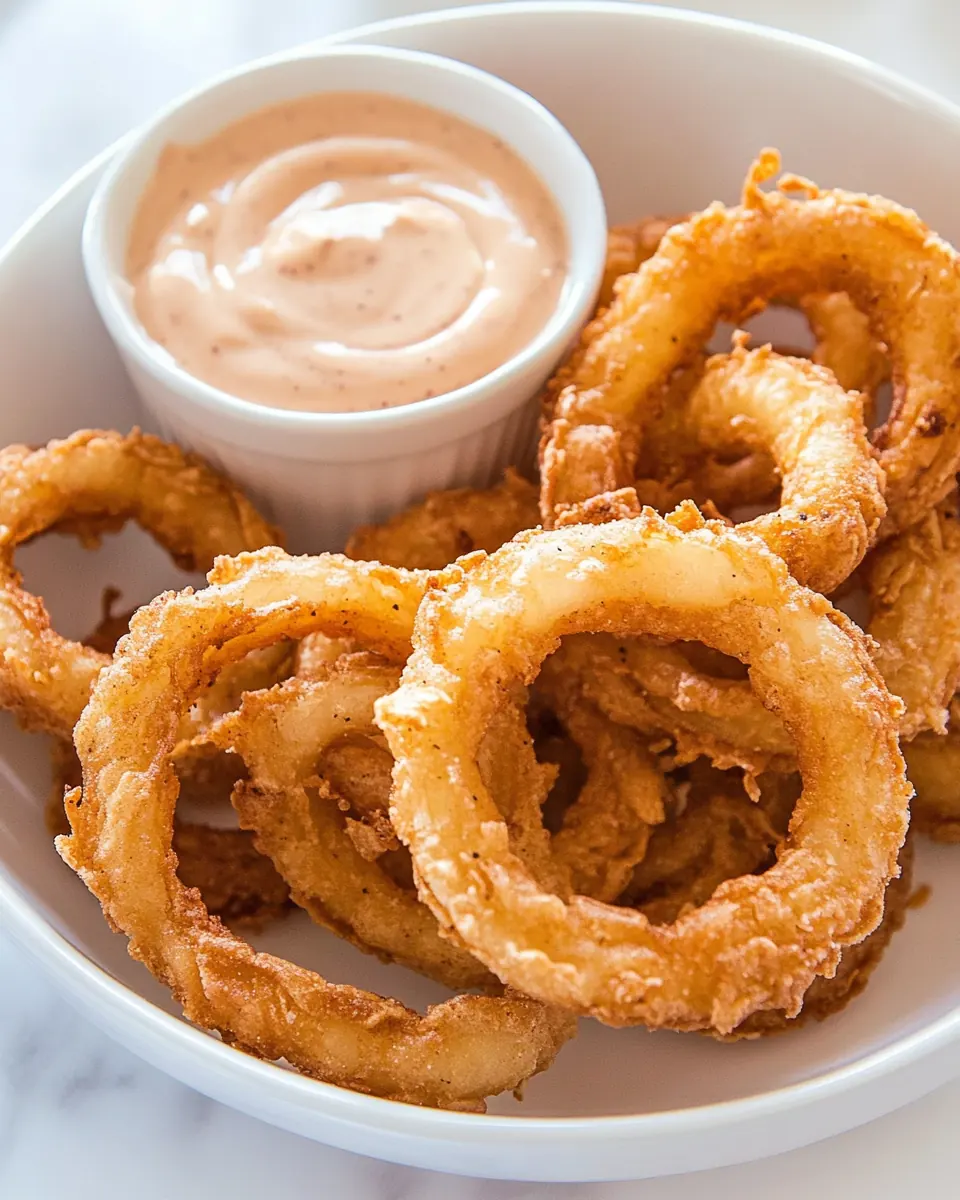
Fry until exterior is crisp and light golden brown: Visual cues matter here, watch for an even golden hue and a lively surface texture with tiny crisp bubbles. Remove rings when they reach this color because carryover heat will not significantly darken them further. If you wait until they are deeply brown, you risk a bitter crust and overcooked interior. Use a slotted spoon to lift them cleanly to avoid tearing the crust.
Let onion rings cool on paper towels so soak up any excess oil then sprinkle with salt while still hot: The first few minutes after frying are when the oil drains and the crust sets; placing rings on paper towels helps draw away surface oil, and sprinkling salt while hot makes it stick and season the crust deeply. You will notice a satisfying crackle when you bite into them and a warm, sweet interior. A common mistake is skipping the draining step, which leaves rings heavy and greasy instead of crisp and airy.