Preheat the oven to 450 degrees. Toss the cauliflower florets with the olive oil, making sure they are all coated well. Stir together the sugar, salt, paprika, garlic powder, pepper and cayenne. Sprinkle it over the cauliflower and use your hands to toss, making sure all the bits of cauliflower get the seasoning.: When you open the oven and feel that high heat, you want that immediate sizzle the moment the cauliflower hits the rack. The intense heat encourages rapid browning on the edges, creating crispness while keeping the centers tender. You should smell a faint toasty warmth as the oven reaches temperature. A common mistake is underheating the oven, which leads to limp, steamed florets instead of crisped ones. Make sure your oven is fully up to temperature before roasting.
Roast the cauliflower for 10 to 12 minutes, then flip and roast for 5 to 15 more. If you have really tiny bits of cauliflower that are starting to burn, roast for less time. Keep an eye on it and set the timer in 5 minute increments to check the progress!: Coating each floret in olive oil ensures the seasoning sticks and the surface browns evenly. As you toss, notice the glossy sheen that develops on the cauliflower , indicating proper oil coverage. If you skip this, some pieces will roast dry and pale. Use your hands to gently separate florets so they don’t clump and steam.
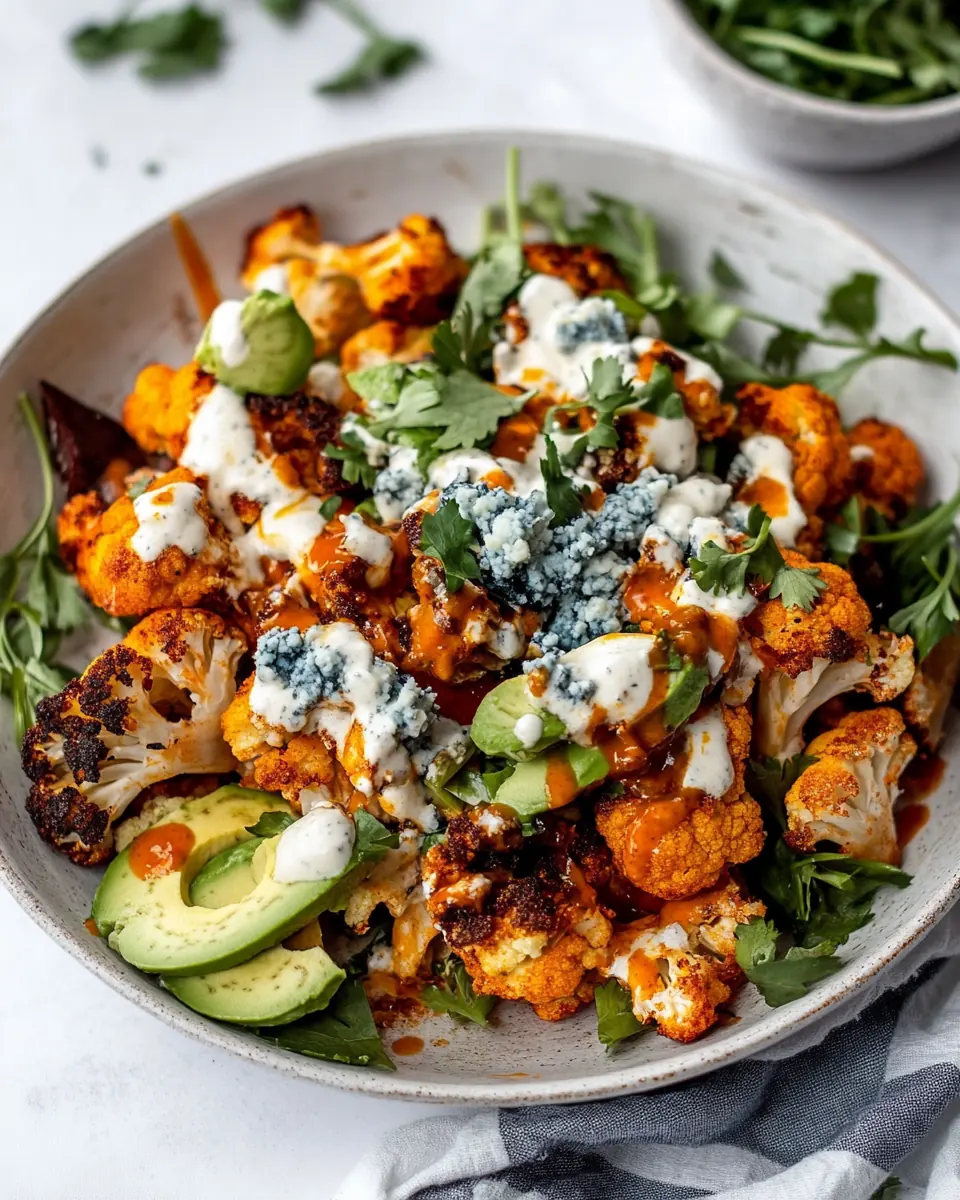
Remove the cauliflower and immediately sprinkle it with the smoked blue cheese. Drizzle it with wing sauce and sprinkle it with the chives. Serve immediately with a handful of microgreens and sliced avocado!: Mixing the dry spices lets each bit of cauliflower receive a balanced hit of seasoning. You should see a uniform spice color that will translate into even flavor after roasting. Smell the blend before you use it to gauge intensity. One pitfall is overdoing any single spice; measure carefully so no flavor overwhelms the others.
Sprinkle it over the cauliflower and use your hands to toss, making sure all the bits of cauliflower get the seasoning: Using your hands helps the seasoning adhere into the nooks of the florets, which leads to pockets of concentrated flavor as they roast. You will hear a slight scraping as spices cling, and you can visually confirm even coverage. Avoid tossing in a crowded bowl where pieces crush each other, which can result in uneven cooking.
Roast the cauliflower for 10 to 12 minutes, then flip and roast for 5 to 15 more: In the first stage you will see the edges begin to pick up color and a nutty aroma will rise. Flipping encourages even browning, and the second roast period deepens the caramelization until small, crispy bits form. Listen for a gentle crackle as moisture leaves the florets. A frequent error is leaving the florets untouched for too long and letting them overbrown; check every 5 minutes during the final stretch to prevent burning.
If you have really tiny bits of cauliflower that are starting to burn, roast for less time: Tiny pieces brown faster because they have more exposed surface area relative to volume; when you see very dark tips, remove those sooner. You want a golden to deep amber hue, not blackened char. The aroma should be nutty rather than acrid. To avoid this issue, keep similarly sized florets when cutting and space them so hot air circulates.
Keep an eye on it and set the timer in 5 minute increments to check the progress: Frequent checks help you manage the thin line between perfectly crisp and overdone. When you open the oven you will notice bursts of steam and a richer roasted scent. If you rely only on time, variations in ovens can mislead you, so use visual cues and probe a thick floret for tenderness. A common oversight is assuming the same time works for every tray; rotate pans if needed for even results.
Remove the cauliflower and immediately sprinkle it with the smoked blue cheese: The residual heat from the roasted pieces gently softens the smoked blue cheese , creating creamy pockets that cling to the florets. You will see the cheese begin to melt slightly and release aromatic smoke notes. Add the cheese right away so it melds into warm nooks. If you wait too long, the cheese will remain crumbly and won’t integrate as luxuriously.
Drizzle it with wing sauce and sprinkle it with the chives: The buffalo wing sauce brings bright vinegar and spicy heat that will glisten on the hot florets, while the fresh chives add a sharp, green counterpoint. When the sauce hits hot florets, you’ll notice a quick hiss and the color will deepen. A misstep is adding too much sauce, which can mask the roasted notes; a light drizzle keeps balance intact.
Serve immediately with a handful of microgreens and sliced avocado: Placing the peppery arugula microgreens and silky avocado on top adds freshness and cooling texture that contrasts the heat and savory elements. The first bites should combine warm, crisp cauliflower with cool, creamy avocado and a pop of pepper from the microgreens. Avoid plating too early because the components are best enjoyed when the florets are still warm and the contrast is at its peak.