Combine all ingredients in the rub and mix to combine.: The scent of paprika , garlic powder , onion powder , oregano , salt , black pepper , brown sugar , and cayenne pepper will bloom as you mix, creating a warm, inviting aroma that signals the rub is ready to flavor the meat. Mixing the rub thoroughly ensures every grain touches the brisket evenly, which promotes consistent seasoning through each bite. A common mistake is mixing hastily and ending up with clumps of sugar or spice, which can cause patchy flavor pockets. Take a moment to break up any lumps and feel the texture with your fingers, it should be uniform and slightly sandy.
Rub the brisket on all sides thoroughly with the brisket rub.: As you press the rub into the surface, you will notice the meat take on a darker, slightly sticky coating that promises depth after cooking. This contact seasons the exterior and begins to form a flavor crust during the final oven finish. Press firmly so the rub adheres, but do not tear the meat with rough motions. A typical error is under rubbing the edges, which leaves perimeter bites bland; make sure you cover every side and the fat cap if present.
Combine the barbecue sauce and broth in the bottom of the crock pot and mix. Lay the brisket on top of the BBQ sauce.: When the bbq sauce and beef broth meet they create a rich, glossy liquid that will hug the brisket while it cooks, carrying flavors into the meat and keeping it moist. Stir until the sauce is smooth and slightly thinner, which helps it circulate heat evenly. If you pour a thick sauce straight in it may not distribute well, leading to uneven basting. Always whisk to a uniform consistency so pockets of thick sauce do not stay in one place.
Cover and cook on low for 6-8 hours or until the meat is tender and cooked through.: Laying the brisket fat side up allows rendered fat to baste the meat as it cooks, enriching the sauce and preventing dryness. You will see the meat settle into the liquid, and after a few hours bubbles will rise slowly, signaling steady simmer. Avoid submerging the brisket fully, the exposed surface benefits from dry heat later, and full submersion can dilute the crust development. A common oversight is crowding the crock pot with extra items, which can change cooking time and prevent adequate circulation.
Remove brisket and slice, or shred, and return to sauce mixture.: Over the long cook the kitchen will fill with a savory, sweet aroma as collagen breaks down and the liquid thickens. The fork should slide into the meat with minimal resistance when it is ready, and juices will run clear. Resist the urge to lift the lid often, each peek releases heat and extends the cook. One mistake is expecting a fixed clock time; brisket size and shape vary, so always check tenderness rather than relying only on time.
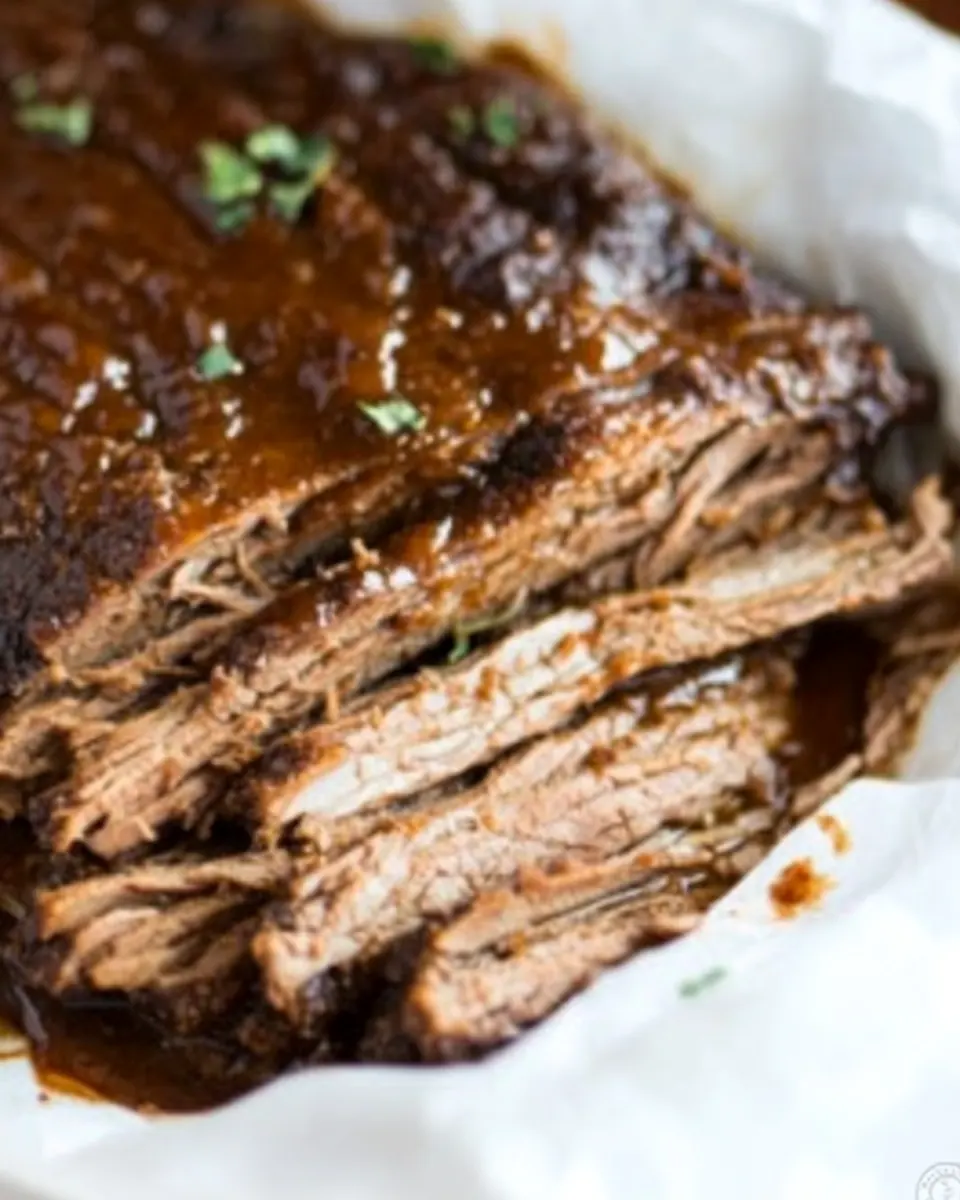
Serve hot with your favorite sides, on a bun, or on a baked potato.: After resting briefly, slicing across the grain reveals silky strands with glistening sauce between them, while shredding produces tender ribbons that soak up the cooking liquid. Tossing the sliced or shredded meat back into the sauce ensures every piece is coated and moist. Cutting too soon while the juices are still moving can cause dryness, and slicing with the grain will yield stringy bites; rest and then cut across the grain.
Once the brisket is done in the slow cooker, remove the brisket (in one piece) and place it on a baking sheet. Line the baking sheet with foil for easy clean up.: The visual contrast of glossy meat against a soft bun or fluffy potato is part of the pleasure, and the steam rising from the plate carries the aroma directly to the nose as you serve. This is when the balance of texture and sauce matters most, so plate generously. A common misstep is serving lukewarm meat, which dulls both texture and flavor, so keep your sauce hot and serve immediately.
Bake for 15 minutes at 450˚F to get the smoked BBQ brisket color and texture on the outside of the brisket. The outside of the brisket will darken in color and the edges will begin to crisp as the inside stays tender and juicy.: Transferring the brisket to a foil lined tray makes cleanup easy and prepares the meat for the final sear that deepens color and texture. The brisket may glisten and feel fragile, handle it gently with tongs or two spatulas. Rushing this transfer can tear the surface, which reduces visual appeal during the final bake.
Line the baking sheet with foil for easy clean up: The foil captures any sticky sauce that drips during the high heat finish so you do not lose precious glaze and your pan stays clean. This small step saves effort and keeps the edges of the brisket from adhering to the tray. Failing to line the sheet can result in burned sauce bits that are difficult to remove.
Bake for 15 minutes at 450 F to get the smoked BBQ brisket color and texture on the outside of the brisket: That intense heat will darken the exterior and crisp the edges while keeping the interior tender, producing a pleasing contrast. You will hear slight crackles and see the surface caramelize, releasing an intensified aroma. Watch closely so the surface crisps without charring; ovens vary, and fifteen minutes is a guide. The mistake here is walking away, since a minute or two too long can push sweet caramel into bitter burn.