Brown ground beef in a large skillet over high heat. Drain any excess grease.: The scent of searing ground beef is immediate and telling, filling the kitchen with rich, meaty aroma as the surface caramelizes to deep brown patches, those Maillard notes add savory complexity the soup will lean on. As you hear the meat sizzle, use a sturdy spatula to break it into small crumbles so it cooks evenly; you want some crisped edges for texture. Browning over sufficiently high heat allows moisture to evaporate and encourages browning, which creates a deeper broth flavor later. A common mistake is crowding the pan which causes the meat to stew rather than sear, producing gray, bland pieces. Drain any visible grease thoroughly to avoid excess oiliness in the final soup, but keep a small bit of fond in the pan to deglaze if you like, scraping up browned bits for extra flavor.
Place the ground beef, potatoes, onions, and carrots in a 6 quart crock pot.: When the skillet falls quiet, carefully tilt it and pour off the rendered fat, the remaining bits should look cooked and slightly crisped at the edges which is perfect. The grease can overpower the soup if left in, making it feel heavy on the palate, so removing most of it helps the broth shine. Use a heatproof container or paper towel to capture the fat safely, and avoid pouring it down the sink to prevent clogging. An easy misstep is leaving too much fat behind, which will make the soup greasy and mask the other flavors.
Add the beef broth, milk, and sour cream over the vegetables. Stir until combined.: As you layer the ingredients into the pot, notice the color contrast: pale Yukon gold potatoes , orange carrots , and caramel flecks of browned ground beef . Even distribution matters so the vegetables cook evenly; try to spread them rather than piling everything in one spot. The potatoes will absorb liquid and starch into the broth, contributing to the final body of the soup. A frequent oversight is adding unevenly sized vegetables, which results in inconsistent textures after long cooking.
Add basil, parsley flakes, pepper, and salt and stir.: Pouring in the beef broth first helps distribute liquid around the solids, then the milk and sour cream will gently fold in creating a creamier base. The milk keeps the texture smooth, while the sour cream brings a subtle tang that brightens the richness. Stirring once at this stage integrates the dairy without overworking it; excessive stirring can break down ingredients prematurely. Be mindful that dairy can separate under rapid boiling, but the slow cooker’s gentle heat minimizes that risk.
Cover crock pot with the lid and cook on low for 6 hours or high for 3 hours.: After adding liquids, the pot should show a homogenous mixture with visible swirls of dairy melding into the broth and vegetable pieces suspended throughout. Use a long-handled spoon to draw a path through the ingredients, ensuring spices and dairy are evenly incorporated. This evenness helps the flavors marry during long cooking. A mistake here is inadequate stirring which leaves pockets of unmixed sour cream or milk, causing uneven texture later on.
Add the butter and Velveeta cheese into the crock pot.: Sprinkling the dried herbs and seasonings introduces aromatic notes that infuse during the slow cook; you should smell a subtle herbal presence as you stir. These seasonings are meant to complement the savory base, not overwhelm it, so measured amounts work best. Stirring them in helps them hydrate and release scent during the long cook. Over seasoning early can result in an overly concentrated flavor after hours of simmering, so taste near the end and adjust rather than over salting now.
Cover again and cook for about 30 minutes on low until the cheese is melted.: This is where patience pays off, the low slow heat allows the potatoes to soften and the flavors to meld gently, producing a rounded depth you can smell as the lid is lifted. On low the soup will simmer quietly, with occasional tiny bubbles, and the texture will be creamier; on high expect a livelier simmer and slightly quicker softening. Resist the urge to frequently lift the lid as each peek releases heat and lengthens the cooking time. A common error is skimping on cook time which leaves potatoes too firm and prevents flavors from marrying.
Serve with your favorite burger toppings.: When you add cubes of Velveeta cheese and pats of butter , the aroma becomes markedly richer and creamier, and you will see glossy pockets of fat begin to disperse. The processed cheese melts uniformly, creating a silky texture that coats the vegetables and meat. The butter helps achieve a smooth finish and adds a rounded mouthfeel. Stirring gently after adding helps the cheese fully incorporate; rushing this or using excessive heat could cause separation or a grainy texture.
Cover again and cook for about 30 minutes on low until the cheese is melted: During this final melt phase, the pot gives off a comforting, cheesy scent and the surface will show a uniform creamy sheen as the cheese dissolves into the broth. You should see the cheese fully incorporated, leaving no distinct chunks, and the soup should look glossy and slightly thickened. If the cheese is slow to melt, allow a bit more time rather than increasing temperature abruptly. One mistake is removing the lid too soon and expecting the cheese to melt instantly, which can leave uneven pockets of unmelted cheese.
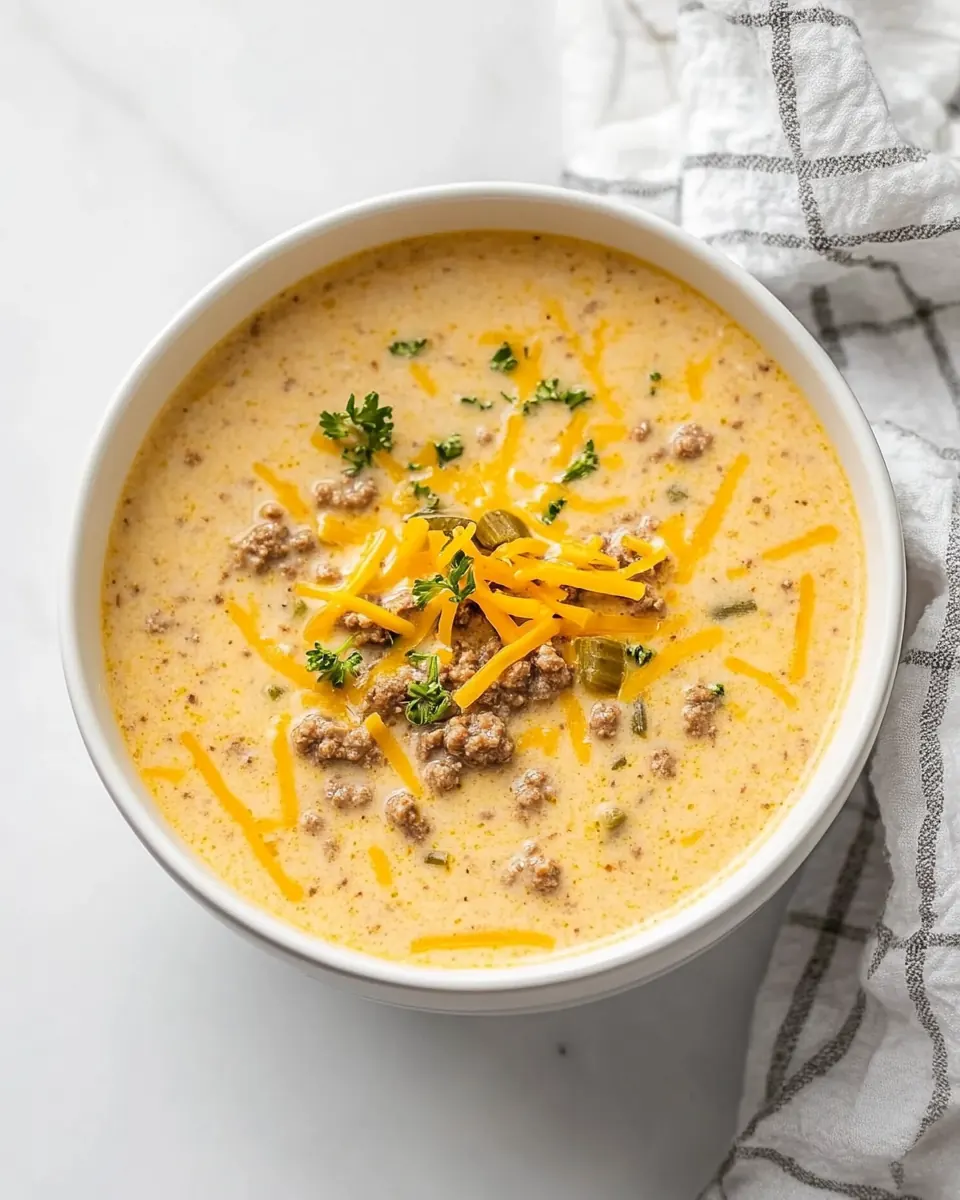
Serve with your favorite burger toppings: The last touch is personal and playful, adding texture and freshness. Sprinkle chosen toppings so each bowl gets a mix of contrasts, the steam will lift fragrant notes and the first spoonful should balance creamy cheese with savory meat and tender vegetables. Don’t overload a single bowl or the toppings will overwhelm the soup’s texture. A typical error is adding toppings too early, which makes them soggy; add them immediately before serving for the best contrast.