Heat the olive oil in a medium skillet over medium high heat. Season the chicken with salt and pepper on both sides. Add the chicken to the skillet and cook 2-3 minutes per side, until browned but not cooked through.: Right away you will notice the faint fruity aroma of the olive oil as it warms, and the skillet should shimmer when it reaches the correct temperature. The goal here is to get a quick sear on the chicken , which creates a golden crust that adds flavor complexity to the finished dish. Listen for a confident sizzle the moment the chicken hits the pan, and watch for deep golden patches rather than a dark brown or black, which signals burning. This initial sear also helps lock in juices so the meat stays moist during long cooking. A common mistake is overcrowding the pan, which cools the surface and prevents browning, so sear in batches if needed.
Add the chicken to the crock pot. Mix together the whole milk, chicken broth, and garlic, and pour it over the chicken. Cook on high heat for 2-3 hours, or low heat for 4-5 hours.: You will feel the texture of the seasoning as you press it into the chicken , and that simple act is essential for flavor to penetrate the surface. Salt enhances the natural savory notes of the meat while pepper provides a faint heat that complements the creamy sauce. Seasoning should be even, and I recommend a light hand at first, adjusting later once the sauce has reduced and concentrated. If you add too much salt at the beginning, the long cooking time can intensify it, so err on the side of caution to avoid an overly salty final dish.
Remove the chicken from the pot and cover with foil to keep warm. Add the fettuccine to the crock pot and stir to coat in the sauce. Cover and cook on high heat for 30 minutes, until tender. Stir in the heavy cream and parmesan cheese.: During this brief sear you will notice the chicken release a savory aroma and the surface develop a golden color that tells you the Maillard reaction is happening. The interior should remain raw to the touch so it finishes gently in the crock pot rather than drying out. If the surface browns too quickly, lower the heat; conversely, if nothing is browning, the pan may not be hot enough. A frequent error is leaving the meat in the pan too long expecting it to finish cooking there, which results in tough, overcooked edges once the slow cooking completes.
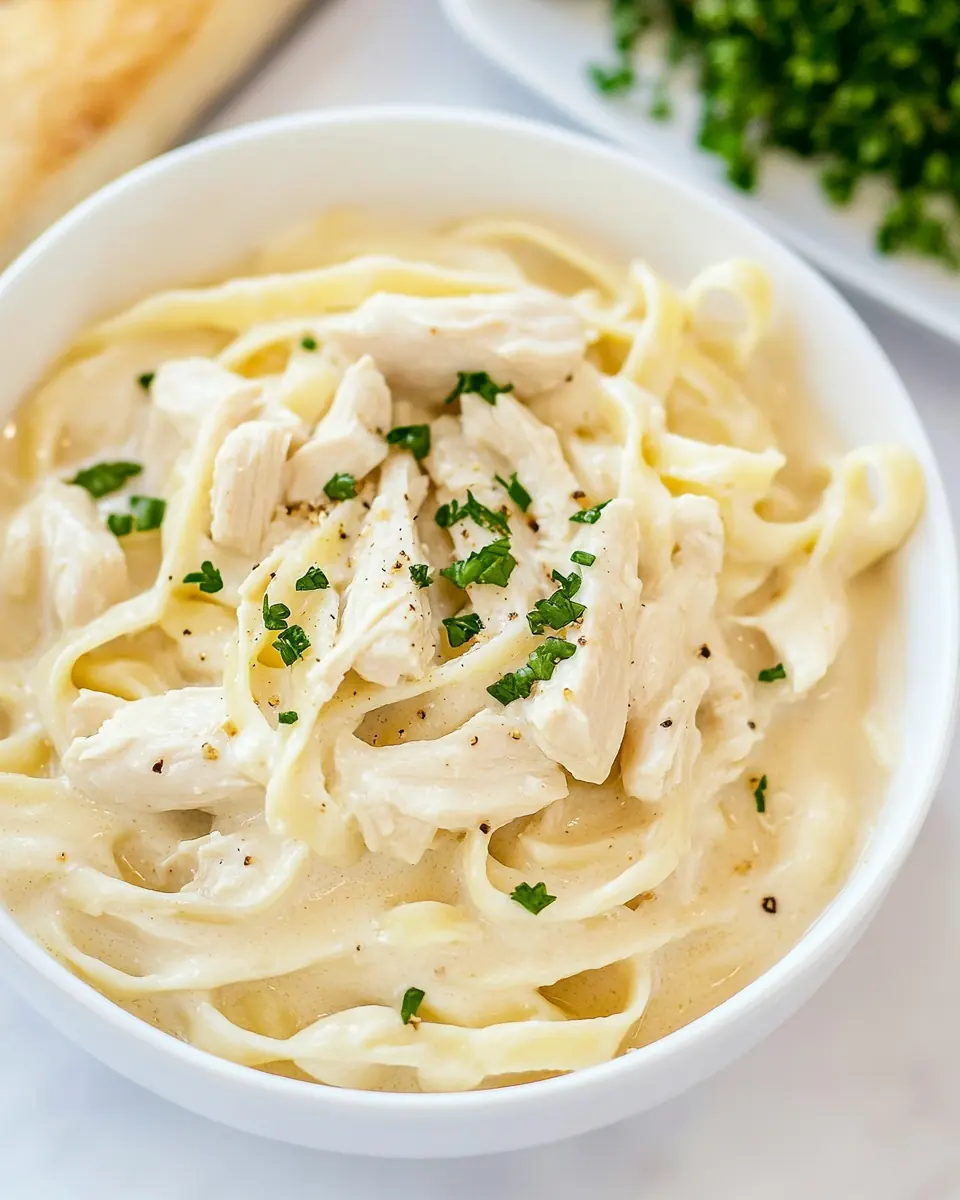
Slice the chicken and add it to the fettuccine in the crock pot. Serve sprinkled with parmesan and fresh parsley, if desired.: When you place the seared chicken in the crock pot you will notice a faint caramel aroma lingering, which will infuse the cooking liquid. The seared bits on the chicken contribute depth to the sauce as they mingle with the broth and dairy over time. Position the breasts in a single layer so they cook evenly, and avoid stacking them tightly which can trap heat unevenly and produce inconsistency in doneness. If the pot contains too little liquid to surround the meat, the top portion can dry out, so ensure adequate coverage from the next step.
Mix together the whole milk, chicken broth, and garlic, and pour it over the chicken: As you whisk the whole milk , chicken broth , and minced garlic you will smell the developing aroma that will form the base of your Alfredo sauce. The liquids should blend smoothly, and pouring them over the seared chicken allows the flavors to permeate during the slow cook. Stir the mixture briefly if needed to distribute the garlic, and keep an eye out for separation; a gentle whisk is enough, avoid vigorous beating which can create foam. A common misstep is using boiling liquids at this stage, which can prematurely denature dairy, so cool or room temperature components are safer.
Cook on high heat for 2 to 3 hours, or low heat for 4 to 5 hours: Over the long cook, the aroma will grow richer and the chicken will become tender enough to slice easily. You'll notice gentle bubbling at the edges on high and faint steam on low, both signs that slow cooking is working. This gentle heat allows collagen to relax and flavors to integrate without boiling off the dairy's subtlety. Avoid lifting the lid repeatedly, because that lets heat escape and lengthens cooking time; one or two checks are fine but frequent peeks can result in uneven texture. If your pot runs very hot, choose the lower time range to prevent overcooking the meat.
Remove the chicken from the pot and cover with foil to keep warm: When the chicken is done, you can feel how tender it becomes when pierced, and the juices should run clear. Covering with foil traps the heat and allows the meat to rest slightly, which helps redistribute juices before slicing. Resting also prevents the meat from drying when it returns to the pot with the pasta. A mistake to avoid is slicing immediately without rest, which can cause juices to run out and leave the meat drier than intended.
Add the fettuccine to the crock pot and stir to coat in the sauce: As you break and add the fettuccine , you will see the sauce cling to the strands, starting to soften their edges. The visual cue to watch for is the pasta absorbing liquid and swelling, looking glossy rather than powdery. Stirring helps distribute heat and sauce evenly, ensuring each strand is coated. Over stirring at this stage can make the pasta break down, so be gentle and deliberate with your motions. If you accidentally add too much pasta for the liquid, the texture will be gummy instead of tender, so keep an eye on the ratio.
Cover and cook on high heat for 30 minutes, until tender: During this period you will hear a low simmer and smell the sauce intensifying as the fettuccine softens. The pasta should be tender with a slight bite, not mushy, and the sauce will thicken as starch is released. Check for doneness a few minutes early to avoid overcooking, and stir once or twice to prevent sticking. A typical pitfall is leaving the pasta in too long, which results in a grainy texture as the starch breaks down too far.
Stir in the heavy cream and parmesan cheese: Off heat or with the pot on the lowest setting, adding heavy whipping cream and grated parmesan cheese creates a silkier, richer sauce. You will see the sauce take on a glossy sheen as the cheese melts and emulsifies with the cream. Stir slowly to avoid clumping and to fully integrate the dairy, tasting for final seasoning. If the cheese becomes grainy, it may have been exposed to too high a heat; lowering the temperature and stirring briskly often helps smooth it out. Avoid adding cheese while the pot is actively boiling, which can cause separation.
Slice the chicken and add it to the fettuccine in the crock pot: After resting, slicing the chicken reveals juicy, tender meat with a soft interior. Adding the slices back to the pasta lets them absorb some sauce while remaining distinct in texture. The final plate should show ribbons of coated fettuccine threaded with slices of chicken and flecks of parmesan cheese . One common mistake is slicing too thinly which can make the meat seem dry; aim for even, modest slices that hold moisture.
Serve sprinkled with parmesan and fresh parsley, if desired: The final garnish of extra grated parmesan cheese and chopped parsley adds visual contrast and a fresh lift. You will notice the bright herb smell against the creamy base, and the extra cheese adds a final nutty punch. Serve while warm so the sauce remains silky. A misstep is letting the dish sit too long, which allows the sauce to thicken and lose that velvety texture.