Rinse the wild rice and place in the crock pot with the chicken, onion, carrot, celery, broth, sage, thyme, rosemary, salt, and pepper. Cook on high for 3 to 4 hours or low for 6 to 8 hours.: As the pot begins its slow work, you will notice the initial steam carrying a nutty rice scent and the faint, savory perfume of herbs. The broth will start to shimmer and tiny bubbles will whisper along the edges, signaling a gentle simmer. This long, low heat allows the wild rice to swell gradually, absorbing the stock and releasing a toasty aroma. The chicken relaxes and fibers separate, making shredding effortless later. Pay attention to the liquid level through the lid; it should barely ripple, not boil vigorously. A common mistake is overcrowding the crock pot which can leave rice undercooked, so ensure there is room for expansion. The slow cooking also lets the onion, carrot , and celery dissolve into the broth, creating layers of flavor that are worth the patience.
Remove the chicken and shred using a fork. Return the chicken to crock pot along with the Greek yogurt. Stir until the soup is smooth.: When you lift the chicken out, it should feel tender and yield easily to a fork with moist, juicy fibers. Shredding produces ribbons that catch the broth and herbs. The act of returning the shredded chicken into the pot releases more savory juices back into the soup, deepening the flavor. Adding the cold, creamy Greek yogurt will mellow the broth and add a silk like texture; stir gently so the temperature change does not cause curdling. You should see a gradual change as the yogurt dissolves into the liquid, softening the surface and creating a velvet sheen. Avoid overheating immediately after adding yogurt, as high residual heat can make it break. A common pitfall is stirring too vigorously, which can produce froth; stir with a spoon in slow, steady motions until integrated.
If the soup needs thickening, combine the optional cornstarch and cold water. Stir until smooth and then gradually add to the soup until desired consistency is reached.: Mixing the cornstarch with cold water creates a slurry that prevents lumps and ensures an even thickening. The sensory cue you are aiming for is a gentle glossy sheen spreading through the broth as the slurry warms. Add a little at a time, and watch the surface settle into a slightly more viscous flow, clinging to the rice and chicken . The aroma will not change much, but the mouthfeel will shift, becoming more spoonable. If you over thicken, the soup can feel pasty, so go slowly and stop when it lightly coats the back of a spoon. A frequent mistake is dumping the dry cornstarch directly into hot liquid which results in clumps; always dissolve first in cold water.
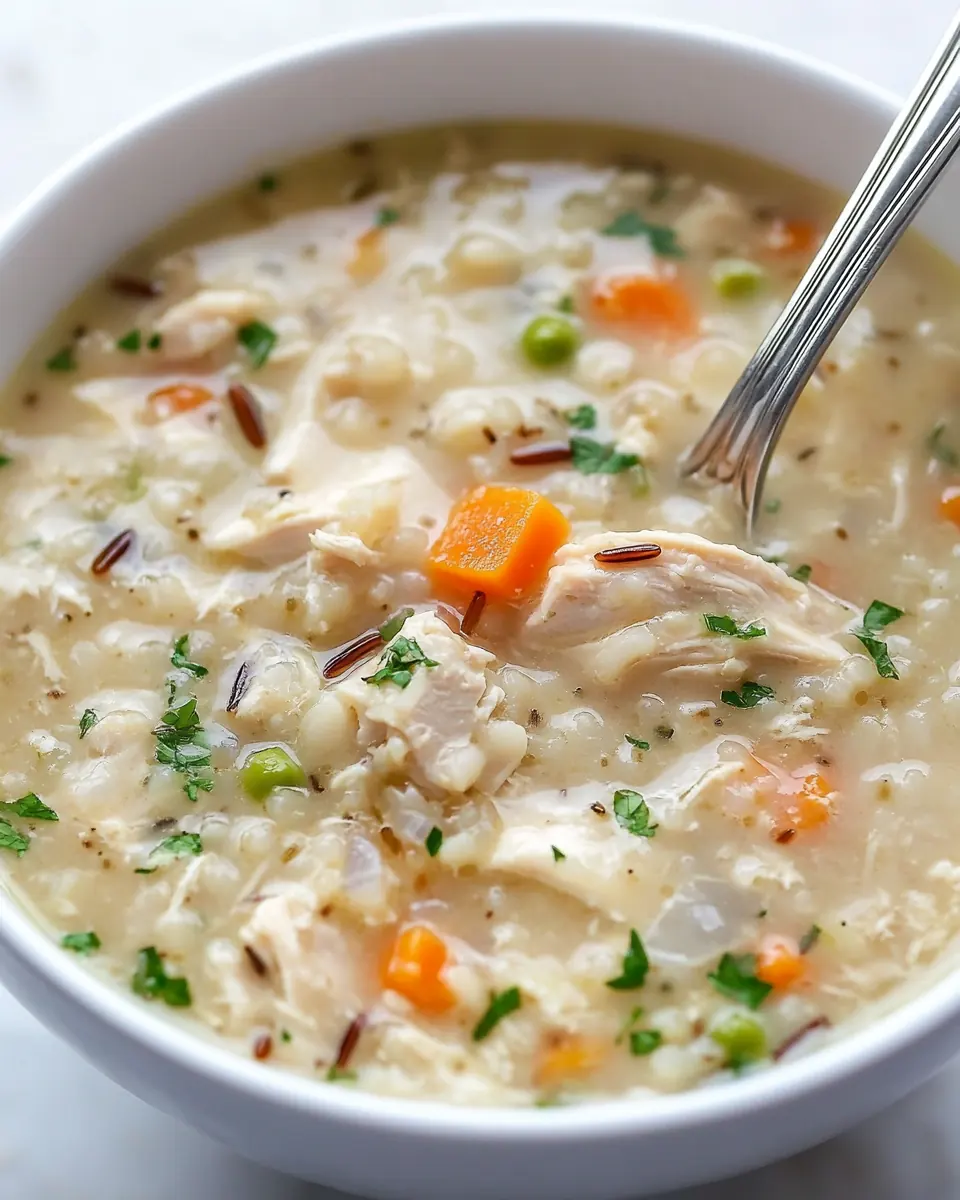
Ladle into serving bowls and top with parsley. Serve and enjoy!: As you ladle, watch the steam rise and carry that final green, herbaceous note up to your face. The surface should glisten, and the parsley sprinkled on top gives a fresh, slightly peppery contrast to the creamy base. The spoon should gather rice, shreds of chicken , and bits of softened vegetable in each bite. Taste one spoonful to confirm seasoning, adjusting with a pinch of salt or pepper if needed. A common oversight is waiting too long to add fresh herbs, which dulls their brightness; add them just before serving so they stay lively and fragrant.