Coat the inside of a 6-quart Crock-Pot or slow cooker with nonstick cooking spray.: The room will smell neutral and slightly plasticky from the spray, but the real benefit is practical, the nonstick layer prevents the base from clinging and makes serving cleaner. This small step matters because it preserves the creamy texture at the edges and avoids overly browned or stuck portions. A common mistake is skimping on spray and then struggling to lift portions cleanly, so be generous and get into the corners with the spray.
In a large bowl, mix together the thawed hash browns, cream of chicken soup, sour cream, chopped onion, 1 cup of shredded cheddar cheese, garlic powder, salt, and pepper until well combined.: As you stir, you will notice creamy streaks and flecks of onion folding into the shredded hash browns , and the mixture should look cohesive and moist but not soupy. The tactile sense of even distribution is important, it ensures every spoonful has the right balance of dairy and potato. Why this matters, because uniform mixing prevents pockets of dry potato or overly salty bites. One mistake people make is overbeating, which can break down the potato texture, so combine until just homogeneous.
Transfer the mixture to the Crock-Pot and spread evenly with a spatula.: When you spread the mixture, you will feel a gentle resistance as the mass levels out, and you should aim for a smooth top so heat circulates evenly. Visually, a uniform surface leads to consistent tenderness across the pot. Doing this carefully avoids gaps that can overcook or dry the edges. A frequent error is piling it unevenly, which results in inconsistent doneness; take an extra moment to press and level.
Cover and cook on low for 240 minutes, or until the potatoes are tender.: During this long, low heat phase you will notice a faint bubbling and a warm, savory steam. The slow heat allows the dairy to meld into the shredded hash browns , producing a creamy interior that holds its shape. This technique matters because rapid heat would separate the fats and make the texture grainy. A misstep is lifting the lid repeatedly, which lets heat escape and lengthens cook time, so resist peeking unless you need to check for tenderness at the end.
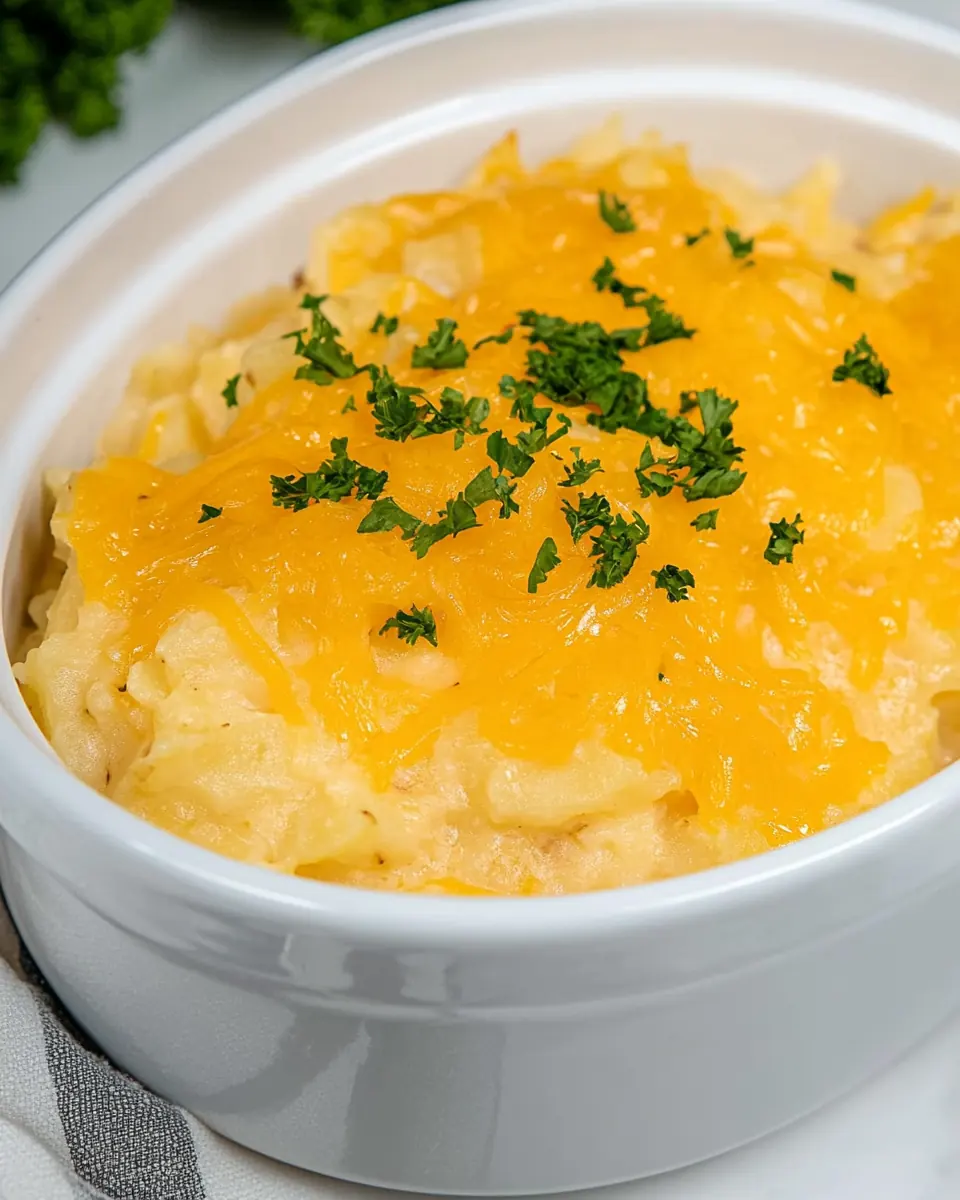
Sprinkle the remaining 1 cup of shredded cheddar cheese over the top of the potatoes. Cover and cook for an additional 10 minutes, or until the cheese is melted.: When you scatter the reserved cheddar cheese , the visual change is immediate, the bright orange shreds dot the surface and promise a melty finish. The top layer melts into a glossy, stringy crown that contrasts with the dense cream beneath. This matters because the split cheese technique ensures both integrated creaminess and a pleasing cheese top. A common pitfall is adding the cheese too early, which can cause it to sink or overbake, so reserve it for the final melting stage.
Serve the funeral potatoes hot as a comforting side dish.: In these last minutes you will hear a soft bubbling and see the cheese go glossy and flow into the crevices, emitting a sharp, cheesy aroma. This short finish seals the dish with luscious melt and slight cohesion on top, which is visually appealing and texturally satisfying. Timing here matters because prolonged heat can make the top overly browned or the cheese greasy. Avoid leaving it uncovered too long, that leads to drying at the edges and a firm crust instead of a silky melt.
Serve the funeral potatoes hot as a comforting side dish: When spooning portions, you should feel a gentle resistance as the scoop holds together, and steam will rise carrying the rich scent of cheddar cheese and savory soup. Present them hot so the top remains melty and the interior plush. Serving right away preserves the textural contrast; a common mistake is letting them sit for too long, which causes them to firm up and lose some creaminess, so plan to serve soon after the finish.