Place ginger, garlic, 1/4 cup dark brown sugar, 1 tablespoon soy sauce, 1/2 teaspoon sriracha sauce, and 1/8 teaspoon cayenne pepper in a food processor and pulse until a paste is formed.: The moment you pulse this mixture you will notice a fragrant steam and a bright, spicy perfume from the crushed ginger and garlic . The paste should be smooth enough to coat the chicken evenly, and the sugars will begin to dissolve into the aromatics, creating a thick base that will carry heat and sweetness into the meat. This texture matters because a coarse paste can leave fibrous pieces that do not meld into the final sauce. If your food processor struggles, add a teaspoon of water to help it along. Avoid overprocessing to the point of turning the mixture watery, which would dilute the flavor.
Place chicken wings and paste in crock pot and toss to coat.: As you toss the wings, you will hear a soft shuffle and see the paste cling, coating each piece in a glossy sheen. The little pockets of paste will lock into crevices, which is exactly what you want for even flavor distribution. This coating ensures the aromatics slowly infuse the chicken during the long cook. A common error here is to add too many wings at once; overcrowding prevents the paste from making contact and yields unevenly flavored pieces.
Cover and cook on LOW for 3 to 4 hours. Use slotted spoon to remove wings and place them in a large bowl lined with paper towels. Discard liquid in crock pot.: The slow, steady heat will coax connective tissue into gelatin, so the meat becomes tender and succulent, while the sauce deepens and concentrates. You will notice steam escaping when you lift the lid, and the aroma will be rich and slightly sweet. Cooking on LOW rather than HIGH preserves juiciness and avoids shrinking the meat prematurely. Resist the urge to lift the lid frequently, as that releases heat and lengthens the cook time, which can result in inconsistent texture.
Let wings cool 20 minutes or you can refrigerate them up to 24 hours.: When you lift the wings with a slotted spoon, they will feel tender and may flake slightly where the meat separates from the bone, a good sign of proper doneness. Placing them on paper towels helps absorb excess braising liquid, which would otherwise prevent caramelization under the broiler. Discarding the liquid avoids a soggy finish. A typical mistake is to skip draining, which leaves the skin too wet to crisp up in the oven.
Place oven rack in lower-middle of oven. It should be 10 to 12 inches from the heating element. Turn oven to BROIL.: This resting period lets the surface firm slightly, making it easier to handle and better able to accept the finishing sauce. Cooling also concentrates flavors as residual heat carries the sauce into the meat. If refrigerating, cover the bowl to prevent drying. Do not let them sit at room temperature for excessive time, as that can be a food safety risk.
Set a wire rack inside a rimmed baking sheet and spray rack with cooking spray.: Positioning the rack at the proper distance determines how intense the charring will be; too close and the glaze can burn in seconds, too far and you will not achieve the desired caramelized edges. When the broiler ignites you will sense an immediate heat wave, so be prepared for a short, active finish. A common pitfall is setting the rack incorrectly, which causes uneven charring.
In a medium bowl, whisk together water, tomato paste, remaining 1/2 cup dark brown sugar, 1/4 cup soy sauce, 1/2 teaspoon sriracha sauce, and 1/8 teaspoon cayenne pepper.: Placing wings on a rack allows hot air to circulate, promoting even browning beneath and around the pieces, while the rimmed baking sheet catches drips for easier cleanup. A light spray prevents sticking and helps the sauce crisp where it contacts metal. If you skip the rack and lay wings directly on the pan, the bottoms will steam and fail to char properly.
Pour half of sauce in bowl with chicken wings and gently toss to coat. Place wings skin side up on prepared rack.: Whisking these ingredients yields a glossy, slightly thick sauce that balances sweet, savory, and spicy notes. You will notice the tomato paste adding body and a subtle tang that prevents cloying sweetness. This balanced viscosity is crucial so the sauce can be brushed on without sliding off the wings during broiling. If the mixture seems too stiff, add a splash more water , but be wary of making it watery, which will lessen caramelization.
Broil until wings are lightly charred, about 10 to 15 minutes. Flip wings over and brush with sauce. Broil 3 minutes. Flip and brush with sauce one more time and broil 2 minutes.: Tossing the wings distributes the finishing sauce so the broiler can transform sugars into golden char. The sound at this stage is a soft clatter as pieces move, and visually you will see them glisten. Placing them skin side up helps the skin crisp and form attractive char marks. Avoid packing them too tightly, which will steam the skin rather than broil it.
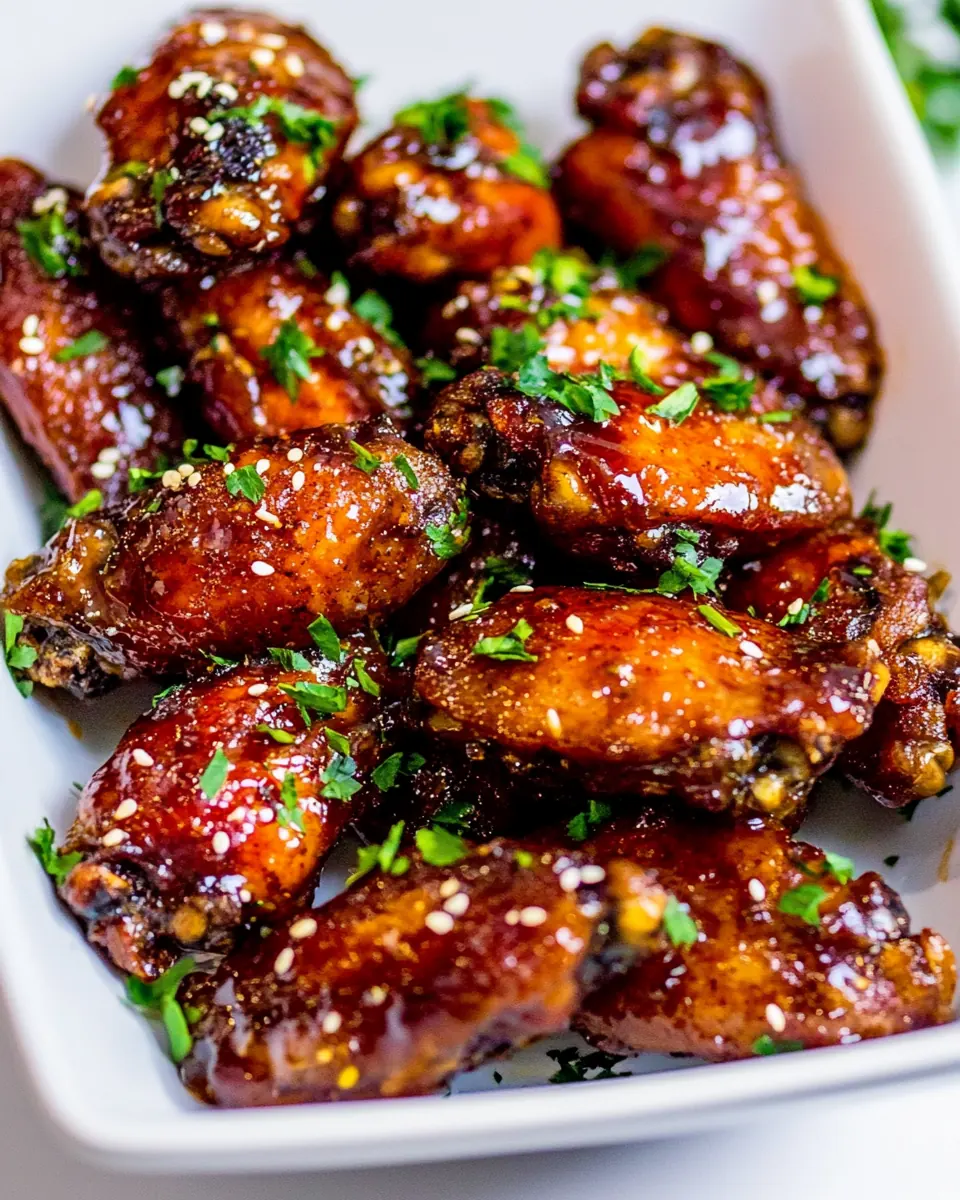
Sprinkle with sesame seeds.: During broiling the aroma will intensify to warm, caramelized notes, and you will see bubbling sauce edges darken to mahogany. Those visual cues tell you the sugars are caramelizing correctly, creating crisp edges and intensified flavor. Flipping and brushing builds layers of glaze, producing that sticky, lacquered finish. Watch closely to prevent burning, since broilers vary; if the edges darken too quickly, move the rack down or reduce time.
Sprinkle with sesame seeds: The final sprinkling adds a subtle toasted crunch and visual contrast to the glossy wings. The sesame seeds will remain pleasantly crisp if added right before serving. If you add them too early they can brown too quickly under residual heat, losing their textural charm.