Remove the chicken from its packaging and lay it on a rimmed baking sheet. Pat chicken dry with paper towels. If the chicken comes with any internal organs such as the liver or neck, remove them from the cavity of the chicken. You can either cook them separately or discard them.: The smell of clean poultry is neutral and slightly sweet, and when you pat the bird dry you will notice the skin change from slick to matte, which helps the rub adhere. Handling the cavity gently so you can fish out any packet of organs is important, as leaving them inside can add unwanted flavors and uneven cooking. A common misstep is being rushed and skipping the drying, which can make the seasonings slide right off; take a couple of minutes to be thorough.
In a small bowl, stir together the garlic powder, dried parsley, paprika, and sea salt.: You will see a warm, earthy color develop from the paprika and a speckled texture from the dried parsley; the mixture should smell savory and slightly smoky. Mixing evenly ensures each bite of the chicken gets balanced seasoning, so whisk until homogenous. Avoid clumping by breaking apart any dense bits with the back of a spoon.
Drizzle the avocado oil (or olive oil) over the chicken and use your hands to rub it over the full surface, ensuring the entire chicken is coated with a light layer of oil. Sprinkle the spice blend over the outside of the chicken, then pat the seasonings into the flesh with your hands to ensure they stick. If you have kitchen twine, secure the legs with a piece of kitchen twine so that they don't bow out during the cooking process.: As you rub the oil in, the skin will take on a faint sheen and the spices will darken slightly where they cling, releasing a gentle aromatic lift. Patting the spices firmly helps them embed into the skin, creating concentrated pockets of flavor that mellow during the slow cook. When tying the legs, you will see a tidier roast shape which aids even cooking; forgetting to truss can cause uneven browning if you broil at the end.
Note: If you have the time, you can let the chicken sit in the refrigerator covered in spices for a few hours prior to cooking it in the slow cooker. This will allow the chicken to tenderize and makes for the most delicious chicken. If, however, you don't have the time, you can immediately proceed to cooking the chicken after seasoning it.: If you have the time, you can let the chicken sit in the refrigerator covered in spices for a few hours prior to cooking it in the slow cooker. This will allow the chicken to tenderize and makes for the most delicious chicken. If, however, you don't have the time, you can immediately proceed to cooking the chicken after seasoning it. : The scent will deepen as the salt and spices mingle with the meat, and the skin will feel slightly tacky to the touch. This brief rest functions like a gentle brine, helping the meat retain moisture and marry flavors. A potential trap is leaving it uncovered and letting the surface dry out, so always cover it if you refrigerate it ahead.
Transfer the chopped onion and carrots (and potatoes if adding) to the bottom of the slow cooker in an even layer. Pour in 1/2 cup of broth or water.: The visual cue is a flat, colorful bed of vegetables that will steam and condense as the cook progresses, releasing sweet and savory aromas. Pouring in the liquid creates a gentle steam environment that prevents scorching and concentrates flavor into a small pool of broth. If you dump ingredients unevenly, some veggies may overcook while others stay firm, so level them out for consistency.
Place the seasoned chicken on top of the vegetables and secure the lid on the crock pot.: When the chicken settles on the vegetable bed you will feel a secure, cozy arrangement; the vegetables cushion the bird and allow hot air to circulate. The slow cooker will begin to sigh as it warms, and you may notice a slow rise of steam around the lid after a few minutes. A mistake here is forcing a too large bird into a small appliance, which restricts even heat flow; ensure the chicken fits comfortably without the lid bowed.
Slow cook on High heat for 210 to 240 minutes, or until the internal temperature of the chicken reaches 165 degrees F. Or, slow cook on low heat for 360 to 480 minutes. The exact cook time depends on the size of your chicken and its temperature going into the crock pot.: You will hear only a soft, steady simmer from the cooker, and the aroma will shift from raw to richly roasted as the hours pass. The meat fibers slowly break down, producing a tender texture that flakes with minimal effort; the vegetables will become soft and infused with juices. A common error is trusting only time and not checking temperature, which can leave you with underdone sections especially around thicker breast areas.
To verify the internal temperature, insert a meat thermometer into the thickest part of the breast (away from the bone) and wait until the numbers stop moving.: The visual cue of safe doneness is juices that run clear when pierced and meat that separates cleanly from the bone, while the thermometer gives you definitive assurance. Wait a few seconds after inserting the probe so the reading stabilizes; moving the probe around can give inconsistent numbers. Avoid touching the bone with the probe, as that will give an inflated reading and may mislead you.
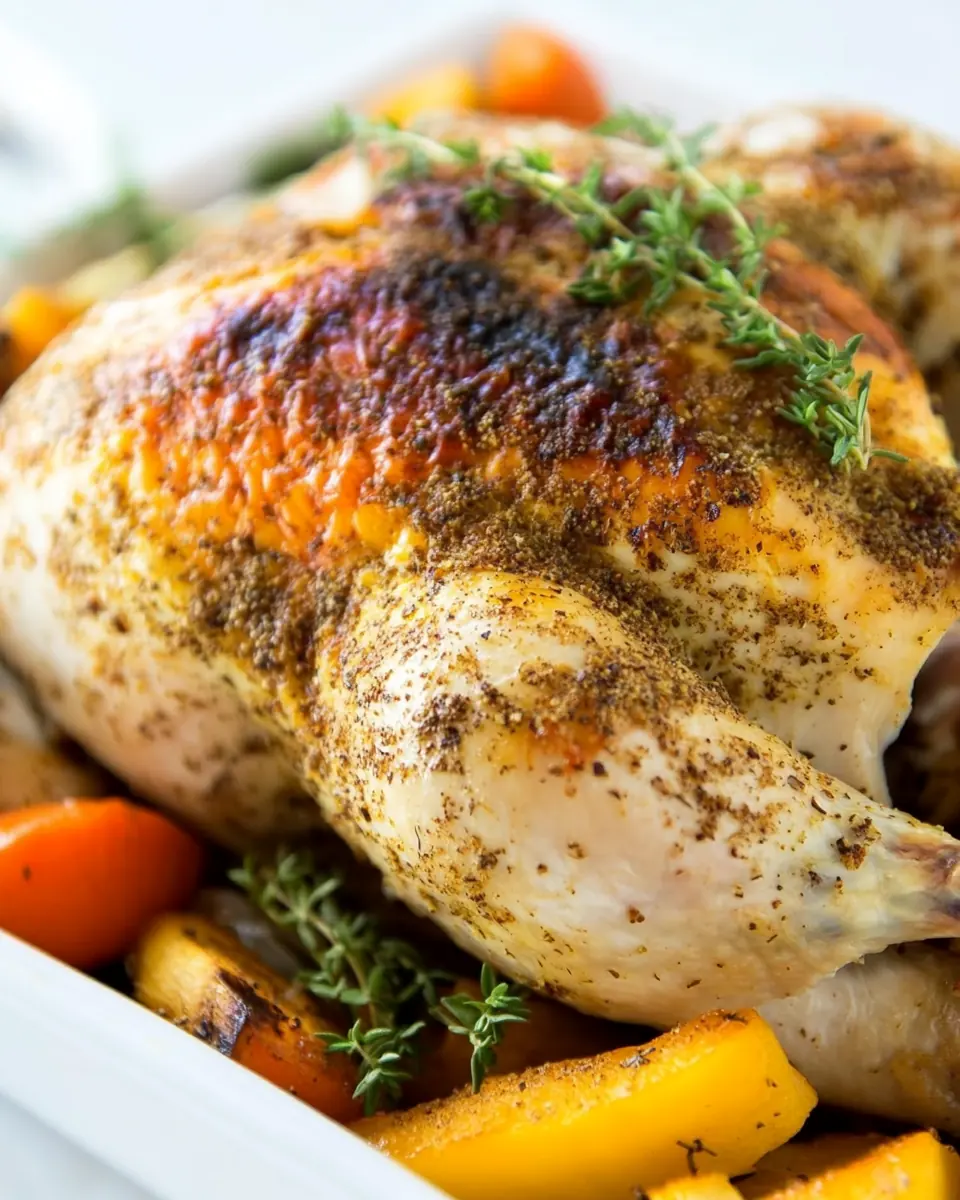
Transfer the chicken to a rimmed baking sheet (to catch any juices). If you'd like golden-brown crispy skin, broil the chicken in the oven for 4 to 8 minutes, or until the skin reaches your desired level of crisp. Let chicken rest for at least 10 to 15 minutes.: When you lift the lid to transfer the bird, a burst of concentrated aroma will greet you and the vegetables will look glossy with juices. Broiling concentrates heat on the skin to create that coveted crispness, and you will see the surface bubble and brown quickly, so watch closely. A very common mistake is skipping the rest; slicing too soon causes the juices to run out and the meat to dry.
Slice the chicken using a sharp knife and serve with veggies and any additional sides.: The sound of the knife meeting tender meat is satisfying, and the sight of juicy slices with glossy vegetables makes for a welcoming plate. Serve portions with a spoonful of the pan juices for added moisture and flavor. Using a dull knife can tear the meat and create an unappealing presentation, so always sharpen before slicing.