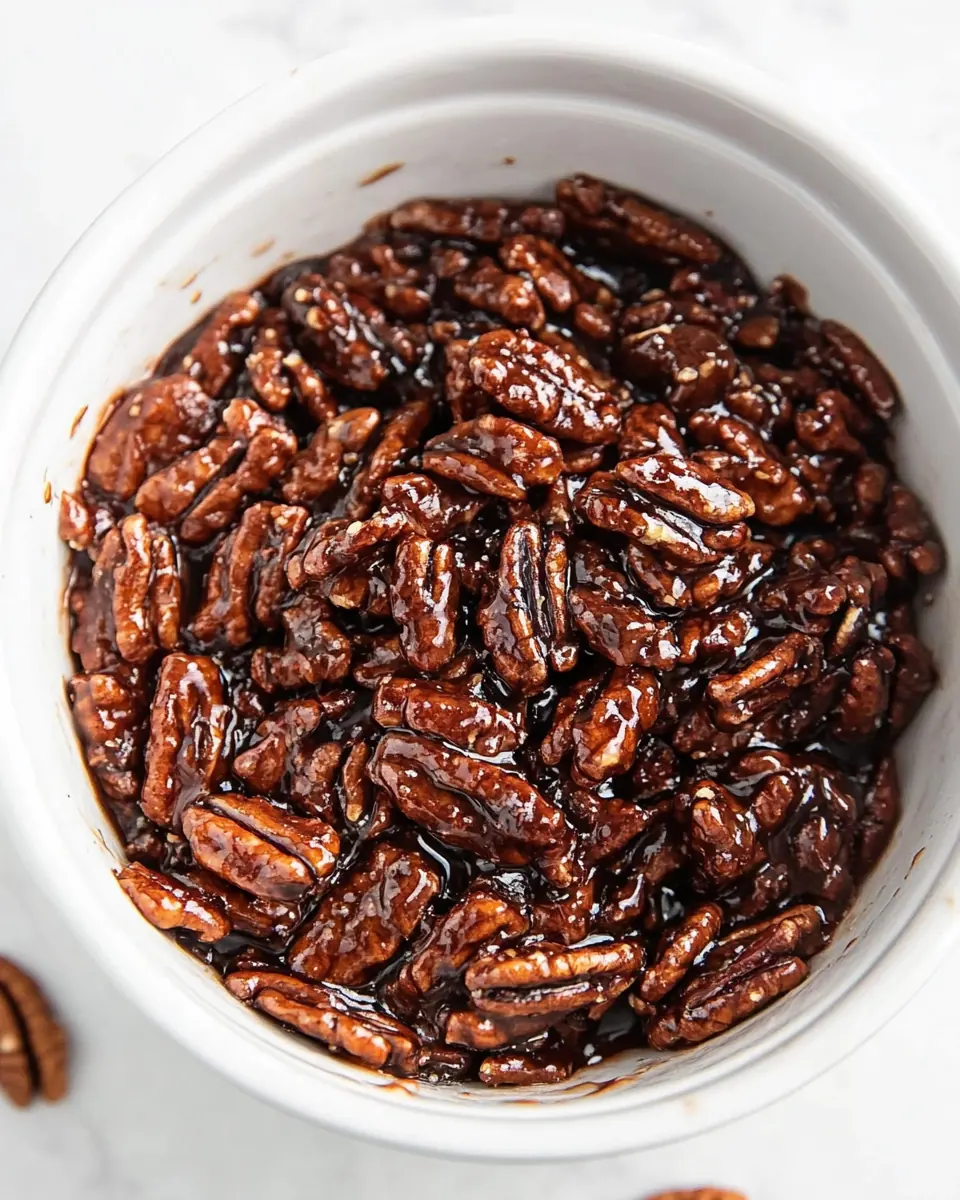
Spray the inside of your crockpot with nonstick spray.: When you approach the pot you will notice a faint scent of neutral oil and a smooth surface that invites the nut mixture. This step matters because a nonstick coating prevents the sugary caramel from bonding permanently to the insert, making cleanup far easier. If you skip this, you risk stubborn burnt patches that are hard to scrub, especially where sugars concentrate along the sides. A common mistake is to overuse spray, which can pool; a light, even mist is enough.
In a large bowl, toss all of the nuts to combine, then add to the crockpot.: The initial toss distributes the two types of nuts so they roast and coat uniformly, and you can already hear a dry, papery rustle as they shift. This mixing step ensures the almonds and pecans will brown at a similar rate and prevents clusters dominated by one nut. If you skip a good toss, you could end up with uneven coating and some nuts clumping together during cooking. Avoid overcrowding the bowl, which can make the mix uneven.
In a small bowl, whisk the egg whites until foamy. Add the sugars, vanilla bean paste, melted butter, and spices. Stir to combine.: As you whisk, the egg whites will become frothy, making the mixture slightly airy and ready to bind. When sugars are added, the mixture smells sweet and rich, with the vanilla and spices blooming. This emulsified blend clings to the nuts and later crisps into a shell, which is why thorough whisking is important. A mistake here is underwhisking the whites, which can lead to patchy adhesion and uneven texture.
Pour the egg/sugar mixture over the nuts in the crockpot. Stir well to coat.: As the liquid meets the dry nuts, you will hear a soft clatter and see glossy pockets form, indicating good coverage. Even coating is crucial for consistent caramelization and texture across the batch. Stirring right after pouring helps prevent isolated pools of sugary liquid that could burn or crystallize. A common pitfall is stirring too vigorously, which can break delicate nuts; use steady, even motions.
Cover and set to cook on HIGH for 3 hours, stirring every 30 minutes as it caramelizes.: Over the cooking period the pot emits a warm, toasty aroma that intensifies with each stir, and you'll observe the sugars slowly darkening and becoming glassy. The high setting allows gradual melting and transformation while the regular stirs prevent localized overheating and clumping. This timing is tuned to balance a slow caramelization with efficient cooking; reducing stir frequency increases the chance of uneven browning or burned patches. Resist the urge to leave it completely unattended, since even slow methods need periodic checks.
During the last stir, add the water.: Introducing the water toward the end softens any overly dry pockets and helps the caramel distribute evenly, creating a beautiful sheen. You may notice a gentle hiss and the mixture loosening slightly, which makes it easier to spread out later. Adding water too early can keep the sugars from reaching the right tackiness for crisping, while adding none can yield sticky clumps instead of separated nuts. A typical mistake is to add too much water and end up with a syrupy finish rather than a crisp shell.
Lay out parchment paper then spread cooked spiced nuts in a single layer to cool completely.: As you spoon the hot nuts onto parchment you will feel the warmth radiating and see steam rise briefly. Spreading them thinly allows air to circulate so the shells set crisp instead of mashing together, and the parchment prevents sticking. Cooling changes the texture dramatically, turning glossy tacky surfaces into snap crisp shells; skipping this step risks clumped, chewy results. Avoid piling the nuts, which traps steam and softens the coating.