Trim large pieces of fat and gristle from chicken thighs. Season with salt and pepper. Place thighs in a single layer, smooth side down, in the slow cooker.: As you trim, listen for the faint scrape of the knife, and notice the different textures between skin, fat, and meat, which helps you remove only what is necessary. Seasoning early allows the salt to begin drawing flavor into the meat, and laying thighs smooth side down helps them cook evenly, producing a uniform tenderness. A common mistake is overcrowding the cooker, which can cause uneven cooking, so keep a single layer. If pieces are uneven, tuck smaller ones toward the center to ensure consistent doneness. This initial arrangement matters because it sets the foundation for how well the sauce will penetrate and coat each piece later.
In a large nonstick skillet over medium-high heat, melt butter. Add onion and sauté until softened, about 5 minutes. Add garlic and cook, stirring constantly, for 30 seconds. Sprinkle flour over onions and whisk for 1 minute. Gradually whisk in chicken broth until smooth and slightly thickened. Remove from heat and pour mixture over chicken in the slow cooker, spreading evenly to cover.: When the butter melts, it should foam and become fragrant; that scent is the start of deep flavor. The onion will shift from opaque to translucent, releasing sweetness and a soft texture you can almost taste through the aroma. When you add minced garlic , the sizzling and brief aroma hit signal you to move quickly, because burnt garlic tastes bitter. Adding flour and whisking creates a light roux that gains a faint nutty smell as it cooks, which helps the sauce thicken and cling to the chicken . Gradually whisking in warm chicken broth prevents lumps and produces a glossy, velvety mixture. Pouring this over the thighs ensures even flavor distribution. Avoid skipping the whisking step, as lumps or undercooked flour can create an unpleasant pasty texture in the sauce.
Sprinkle Italian seasoning and red pepper flakes (if using) over the chicken. Cover and cook on High for 2-1/2 to 3-1/2 hours or on Low for 4-6 hours, until chicken is very tender and shreds easily.: As the crockpot hums, aromas of herbs and slow cooked meat emerge slowly, filling the kitchen with a warm, inviting scent. Cooking on High shortens the time while still coaxing collagen from the thighs into the sauce, making it silky, whereas Low yields even more tender results and deeper melding of flavors. You will know the chicken is ready when it easily pulls apart with a fork and the sauce is noticeably thicker. A frequent misstep is lifting the lid too often, which loses heat and lengthens cook time, so be patient and resist peeking unless necessary. Choosing the right heat setting matters because it affects texture and how concentrated the sauce becomes.
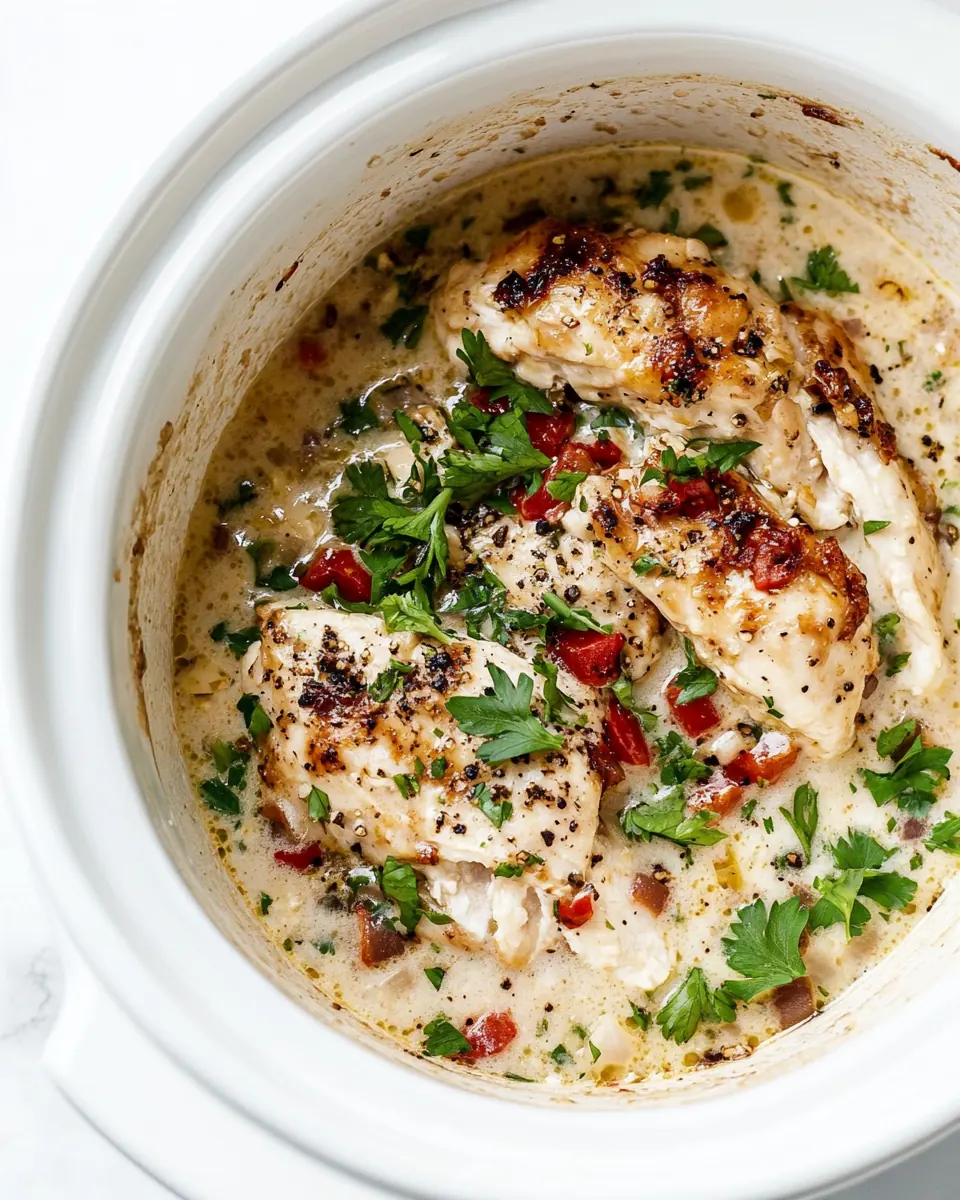
Remove chicken to a plate or bowl and shred or thinly slice. Meanwhile, add sun-dried tomatoes, heavy cream, Dijon, and Parmesan to the slow cooker. Whisk until smooth. Cover and cook for 5–10 minutes while preparing chicken.: When you remove the meat, notice how the juices run clear and the texture gives way under gentle pressure, a sign of proper doneness. Shredding creates ridges that trap sauce, while slicing presents broader surfaces for coating, so pick the style you prefer. Adding the chopped sun dried tomatoes and rich heavy cream produces an immediate visual change, thickening and turning the sauce a creamy, pale hue. Freshly grated Parmesan cheese melts into ribbons and lends a savory gloss. Whisking until smooth yields a cohesive sauce with a slightly thickened sheen. A common error is overheating the cream which can separate; keeping the cook time short at this stage prevents curdling and keeps the sauce silky.
Return chicken to the slow cooker and stir in basil. Taste and adjust seasonings as needed. Serve over spaghetti, if desired.: As you fold the shredded or sliced chicken back into the sauce, feel how the meat soaks up the creamy liquid, gradually becoming infused with tangy, savory flavors. Adding ribboned basil at the end releases a fresh, peppery aroma and bright color that contrasts with the pale sauce. Tasting and adjusting lets you correct balance with an additional pinch of salt or a twist of pepper so each bite tastes lively. Serving over hot spaghetti helps the sauce cling and become part of the pasta, making every forkful rich and comforting. Avoid adding basil too early, as prolonged heat will dim its bright character and turn it limp.