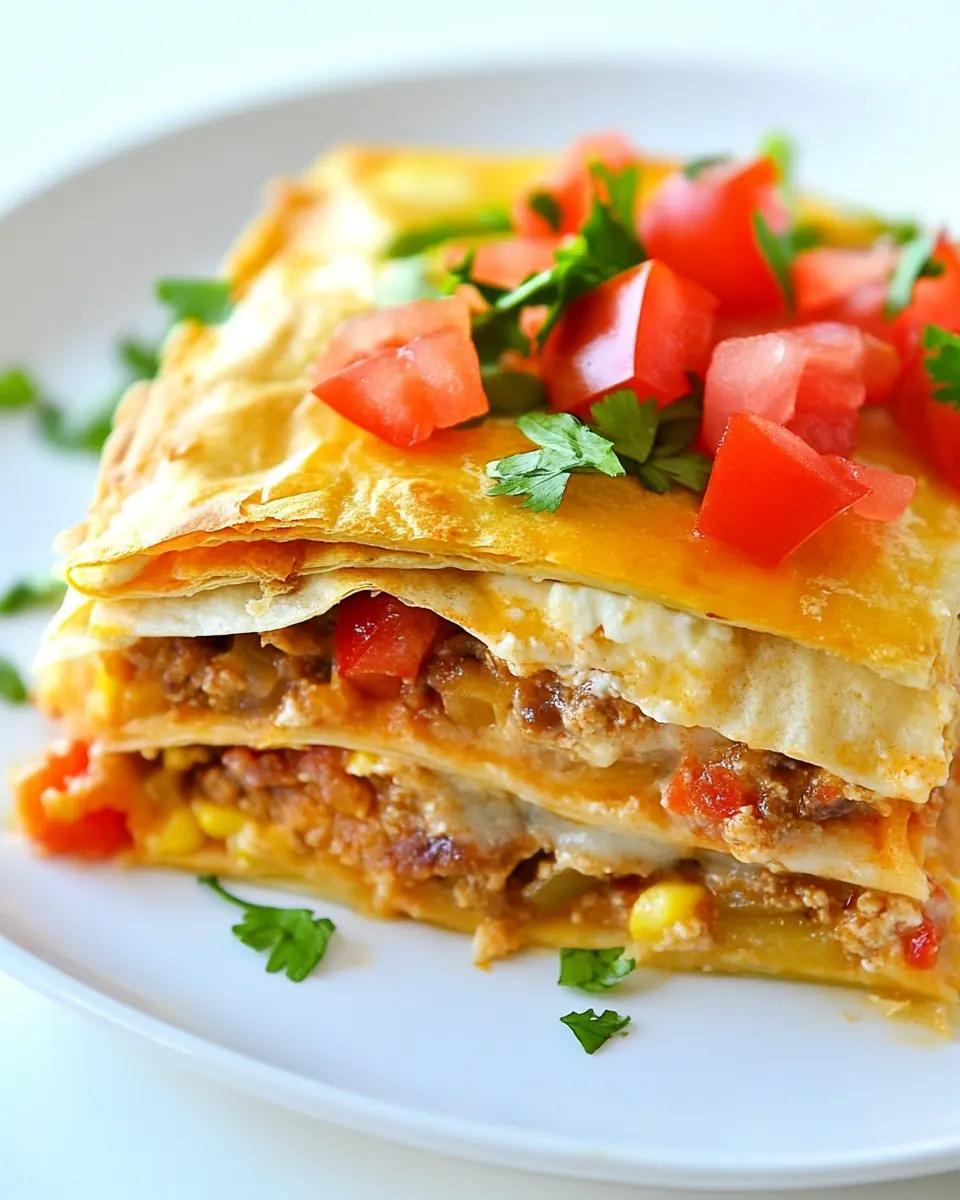
Cook the Beef: In your large skillet, cook the ground beef and chopped onion over medium-high heat. Stir frequently until the beef is browned and the onion is tender. Then, drain any excess grease from the skillet.: The kitchen will fill with the rich, meaty aroma as the ground beef and onion sizzle in the large skillet, creating a warm, savory scent that tells you the Maillard reactions are happening. Listen for a steady, energetic sizzle that mellows as the meat browns and the onion becomes translucent and tender, releasing a gentle sweetness. Browning the meat properly builds depth and prevents a flat flavor profile, so don’t rush this step by cranking the heat too high or crowding the pan. If the skillet steams instead of sizzles, the meat will stew and lose its browned edges, which will reduce flavor. A common mistake is adding seasoning too early; wait until most moisture has evaporated to let the beef caramelize, then drain excess grease before moving on.
Season the Beef: Add the taco seasoning and water to the skillet with the beef. Continue to cook over medium heat for 3-5 minutes, stirring often, until the seasoning is well mixed and the water has evaporated. Remove the skillet from heat.: You will notice the aroma shift when you add the dry taco seasoning and the 1/3 cup water, a fragrant burst of cumin, chili, and garlic notes that bloom as the water helps release the spice oils. As the mixture simmers for 3 to 5 minutes, the liquid should reduce and cling to the ground beef , coating each piece with flavor. This step is critical because it ensures an even distribution of spice, otherwise you risk patches of underseasoned meat. Stir frequently so the seasoning does not settle or burn, and remove from heat once the water has mostly evaporated. A mistake people make is leaving the mixture too wet, which can make the casserole soggy; aim for a glossy, thickened coating on the meat.
Preheat and Prep Pan: Turn your oven on to preheat at 375°F. Use half of the melted butter to grease the bottom and sides of your 9×13 inch baking pan.: The moment you set the oven to 375°F, the kitchen begins to feel purposeful, and using half of the melted butter to grease the 9 x 13 baking dish gives the tortillas a chance to brown evenly and prevents sticking. The scent of warm butter is subtle but inviting, and a well greased pan makes the final inversion clean and intact. Greasing also contributes to the golden top you see after baking, so brush thoroughly into the corners. Avoid skimping, or the outer tortillas may adhere to the pan and tear when you invert the casserole, which is a common frustration.
Layer Tortillas: Arrange the flour tortillas in the greased pan. Each tortilla should hang over the edge of the pan a bit, with them overlapping in the center.: As you arrange the six burrito size flour tortillas in the greased pan, overlapping them so they hang slightly over the edge, you can feel the pliable sheets conforming to the dish. The visual cue of a well covered bottom with overlapping edges tells you the structure will hold once folded. Ensure the tortillas overlap in the center, creating a canvas for the fillings. Press them gently so there are no large air pockets, which can cause uneven baking. A typical error is folding tortillas that are cold and stiff; warm them briefly if needed to make them more flexible and avoid tearing.
Add Cheese and Tomatoes: Sprinkle the shredded cheddar cheese over the tortillas, then add the diced tomatoes.: Sprinkling the shredded cheddar cheese over the tortilla base introduces sharp, milky aromas that will melt into gooey pockets in the oven, while the diced tomatoes add a burst of freshness and slight acidity. The contrast between molten cheese and bright tomatoes is crucial for balancing richness. Distribute them evenly so each slice gets an even mix of melt and brightness. Watch out for overly watery tomatoes which can release liquid during baking; seedless tomatoes reduce this risk.
Drizzle Sour Cream: Put the sour cream into a resealable sandwich bag and cut off one corner of the bag. Squeeze the bag to drizzle sour cream over the tomatoes.: When you put the sour cream into a sandwich bag and snip a corner, the controlled drizzle lets you create an even, silky layer that melds with the cheese and tomatoes. The tang of the sour cream cuts through the heavy cheeses and provides a creamy mouthfeel. Start with a light hand so the layer is thin and cohesive rather than puddled, which can make the center too wet. A common slip is over drizzling, which dilutes the texture; aim for a delicate lattice of cream instead.
Add inner shells and toppings: Place either crunch tostada shells (for a middle crunch) or soft corn tortilla shells (for a creamy center with no crunch) on top of the sour cream layer, making sure they stay inside the center of the dish. It is OK to overlap the flat shells. Then, spread the canned nacho cheese over the center and add the seasoned beef mixture on top.: Placing the crunchy tostada shells or soft corn tortilla shells into the center introduces that deciding factor between a crunchy or creamy heart, and spreading the warmed nacho cheese over them creates a molten core that anchors the seasoned ground beef on top. The contrast between textures is enhanced here, and the nacho cheese helps the beef adhere to the shell, preventing slippage. If you choose crisp shells, expect a satisfying crackle when you bite in; with soft shells, the center will be smoother and more uniform. Avoid over stacking shells which can prevent even heating and lead to a cold center.
Fold and Butter: Fold the overhanging flour tortillas over the beef layer, overlapping them. Brush the top with the remaining melted butter.: Folding the overhanging flour tortillas over the meat layer transforms the assembly into a sealed pie, and brushing the top with the remaining melted butter gives you that gorgeous golden sheen in the oven. As you work, the tactile act of tucking the edges creates a neat package and helps trap steam, which warms the center without drying the exterior. An even butter coat ensures browning; too little and the top will remain pale, too much and it can become greasy. A practical error is uneven folding that leaves gaps, which can cause filling to leak during baking.
Bake the Casserole: Bake in the oven for 30 minutes or until the casserole is golden brown.: As the casserole bakes for 30 minutes at 375°F, the kitchen fills with a toasty, cheesy aroma and the top turns a warm, golden brown, signaling readiness. The internal cheeses should be bubbling gently, and the edges of the tortillas will crisp slightly. Baking at this temperature allows the filling to heat through without burning the top; higher heat risks over browning before the center is warm. A common mistake is pulling it out too early, resulting in a cold center, or leaving it too long which can dry out the edges.
Serve: After removing the casserole from the oven, let it stand for 5 minutes. Then, invert the casserole onto a cutting board or large platter, remove the baking dish, and use a serrated knife to cut the casserole into 8 large squares. Serve with additional chopped tomatoes, black olives, shredded lettuce, sour cream, and hot sauce if you like.: Letting the casserole stand for 5 minutes after removing it from the oven helps it settle, making the inversion clean and the interior less likely to ooze out. When you invert onto a cutting board and remove the dish, the reveal should show distinct layers, and cutting into eight large squares gives a satisfying, structured portion. Serve with extra chopped tomatoes , black olives , shredded lettuce , additional sour cream , and optional hot sauce so everyone can customize their bite. Avoid cutting immediately out of the oven, which often leads to an unruly, falling apart casserole; patience pays off here.