Combine flour, garlic salt, and black pepper in a pie plate or shallow dish. Dredge both sides of cubed steak in flour mixture.: The moment you press the meat into the seasoned flour , you should notice a faint dusting that will turn to a crunchy golden crust when it hits the hot oil. The aroma of seasoned flour warming is subtle but comforting, and the thin coating helps the exterior brown evenly, creating fond in the pan that is critical for the gravy. A common pitfall is overcoating the steak , which causes clumps that burn rather than brown, so shake off the excess. When done correctly, you will see a light, even dusting that adheres without caking, and the texture helps seal juices during cooking.
Heat oil in a large skillet (preferably cast iron) over medium-high heat. Add steak (cooking in 2 batches if necessary). Cook 4 to 5 minutes per side. Remove steak from skillet and set aside.: When the oil is shimmering, it should sizzle the moment the first piece touches the pan, producing an immediate sear and a rich, toasty smell. As the steak cooks, listen for a steady sizzle and watch the edges turn a deep golden brown, which indicates Maillard reaction and flavor development. Cooking in batches prevents overcrowding, which would steam the meat instead of browning it. A frequent mistake is keeping the pieces too close together; that lowers pan temperature and yields less crust. Once seared, transfer the pieces to a plate and tent loosely to keep warm while you make the gravy.
If you want to thicken the gravy some, add a few teaspoons of leftover flour from dredging the steak to the drippings in the pan.: The moment you sprinkle a bit of the reserved flour into the hot drippings, it should sizzle and begin to form a roux, which will darken slightly and smell toasty. Stir continuously so lumps do not form, allowing the flour to absorb the fat and develop a nutty scent that signals readiness. This step matters because it gives body to the gravy without needing separate thickening agents. Be careful not to brown the flour too much, which can impart a bitter note. If lumps appear, whisk vigorously or add a splash of liquid gradually to smooth the mixture.
Add onion, broth, and onion soup mix to the drippings in the pan. Use a wooden spoon to scrape up any browned bits stuck to the bottom of the pan.: When you introduce the sliced onion to the pan, it should start to soften and release sweet aromatics that mingle with the meaty fond. Pour in the beef broth and sprinkle the dry onion soup mix , and you will see the sauce begin to take on a glossy sheen as the browned bits dissolve into the liquid. Scraping the pan with a wooden spoon not only loosens those caramelized fragments, it incorporates intense flavor into the gravy. A common oversight is adding liquid too quickly, which can chill the pan and prevent proper deglazing; instead, add the broth in a steady stream while stirring to maintain temperature and emulsify flavors.
Bring to a simmer and cook until onions are soft.: As the mixture comes to a gentle simmer, it should release a layered aroma of savory broth and sweetened onion . The liquid will reduce slightly, concentrating flavor and thickening to a saucy consistency that coats the back of a spoon. Softened onion should be translucent and tender, offering a balance of sweetness against the savory broth. Stir intermittently to prevent sticking, and taste for seasoning as it reduces. Over reducing will make the gravy too salty or thick, so monitor the consistency carefully and adjust with a splash of water or broth if needed.
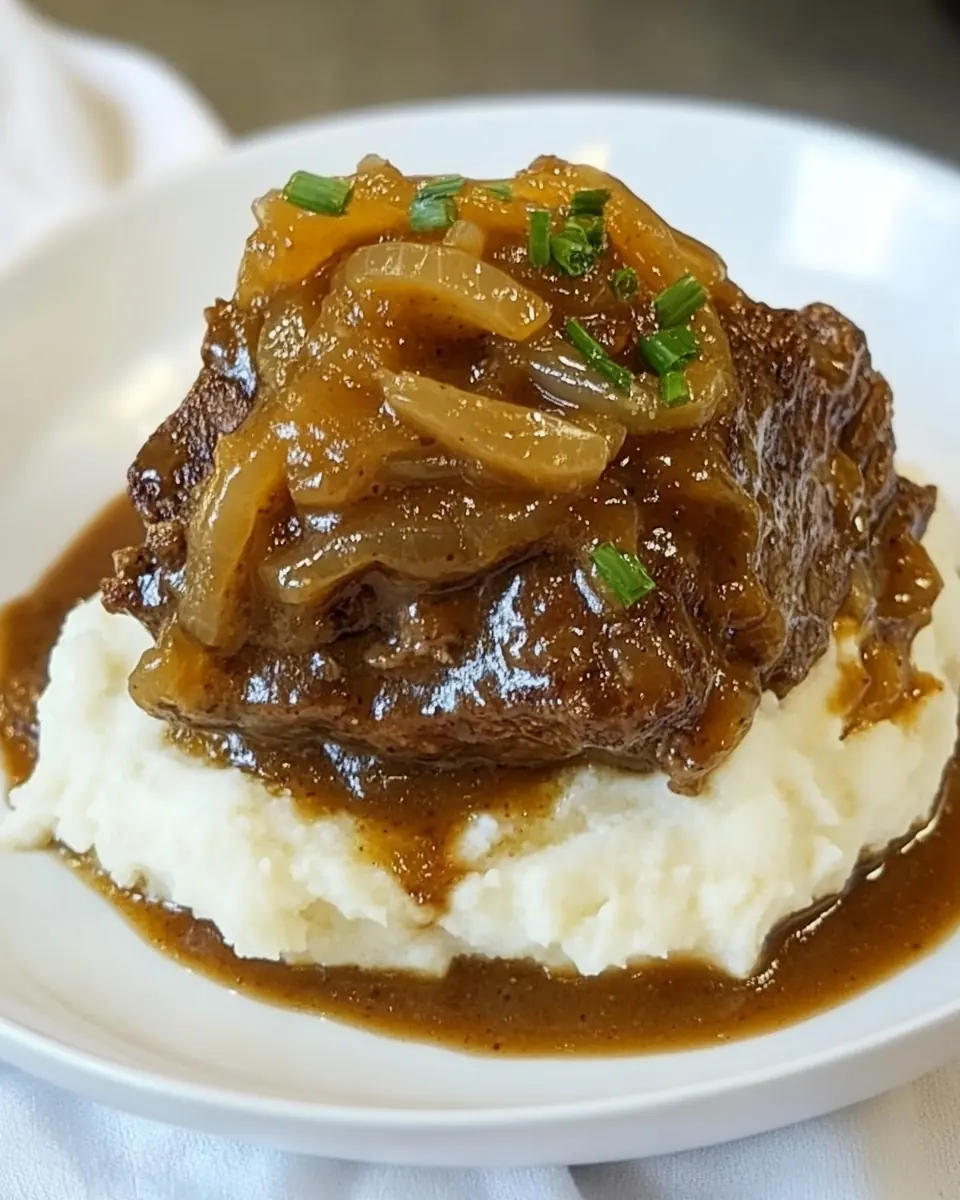
Return steak to pan to warm. Serve with mashed potatoes.: Nestle the seared cubed steak back into the warm gravy, allowing the meat to finish heating and absorb some of the sauce. The sound will be a gentle simmer, and the meat will glisten as it rewarms. This final warming melds flavors and ensures every bite is juicy and sauce kissed. Avoid prolonged simmering, which can toughen the steak ; just warm through until heated. Plate alongside fluffy mashed potatoes so the gravy can be spooned over, creating a comforting, cohesive plate that showcases both texture and rich, savory taste.