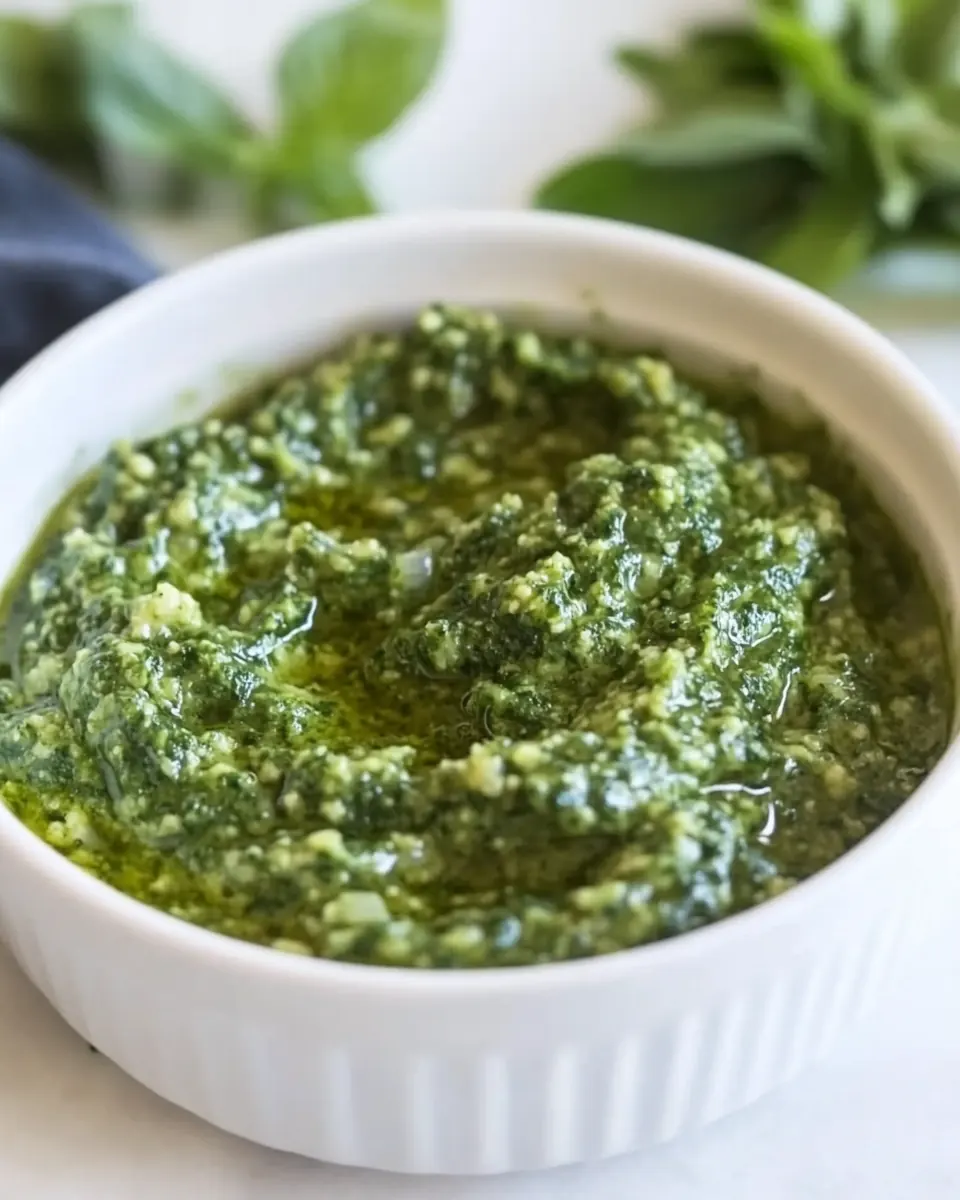
Place basil, pine nuts, nutritional yeast, garlic, lemon juice, thyme (if using), salt, and 1/2 cup olive oil in your high-speed blender (I use and recommend a Vitamix). Blend until a bit of a paste forms, drizzling in more olive oil as necessary until your pesto reaches the consistency you like. Taste and add additional salt if desired.: When you first power the blender, you will hear the quick whirl of blades and smell the raw freshness of basil and garlic , a herbaceous scent that feels instantly alive. This initial blending breaks down the fibers and releases the aromatic oils from the herbs, which are crucial for a vibrant flavor. Expect the mixture to look chunky at first, then gradually smooth out as the nuts break down. If the mixture seems too dry or the blender struggles, add olive oil slowly to reach a smoother texture. One common mistake is overblending to a liquified state, which can warm the pesto and dull the bright green color, so pulse rather than run continuously.
Store in an airtight container in the refrigerator for up to 5 days or freeze for up to several months.: During this stage you will notice the texture transition from coarse to a cohesive paste, and the aroma will shift from raw herb to an integrated, savory perfume. The olive oil helps emulsify the mixture, creating a sheen on the surface that signals it is coming together. Use the sound of the blender as a guide, the pitch changes as the mixture smooths. A common pitfall is adding too much oil at once, which can make the pesto too loose, so drizzle slowly and stop when the pesto clings to the spoon.
Taste and add additional salt if desired: You will immediately notice layers of flavor when you taste, from herbaceousness to the toasty notes from pine nuts and umami from nutritional yeast . Adjusting the salt at the end is important because salt heightens the other flavors and can make the whole mixture pop. Add small increments and taste between additions. Avoid over salting, which is a frequent error, especially if you plan to serve the pesto with salted ingredients later.
Store in an airtight container in the refrigerator for up to 5 days or freeze for up to several months: Freshly made pesto will look glossy and maintain a bright green hue when cold, and the flavors settle as it chills. Refrigeration keeps the oils firm and the aromas contained. If you freeze it, use small portions and thaw gently to preserve texture. A tip to prevent surface browning is to pour a thin layer of olive oil on top before sealing. One common mistake is storing in a warm spot, which can cause the oil to go rancid more quickly, so keep it cold.