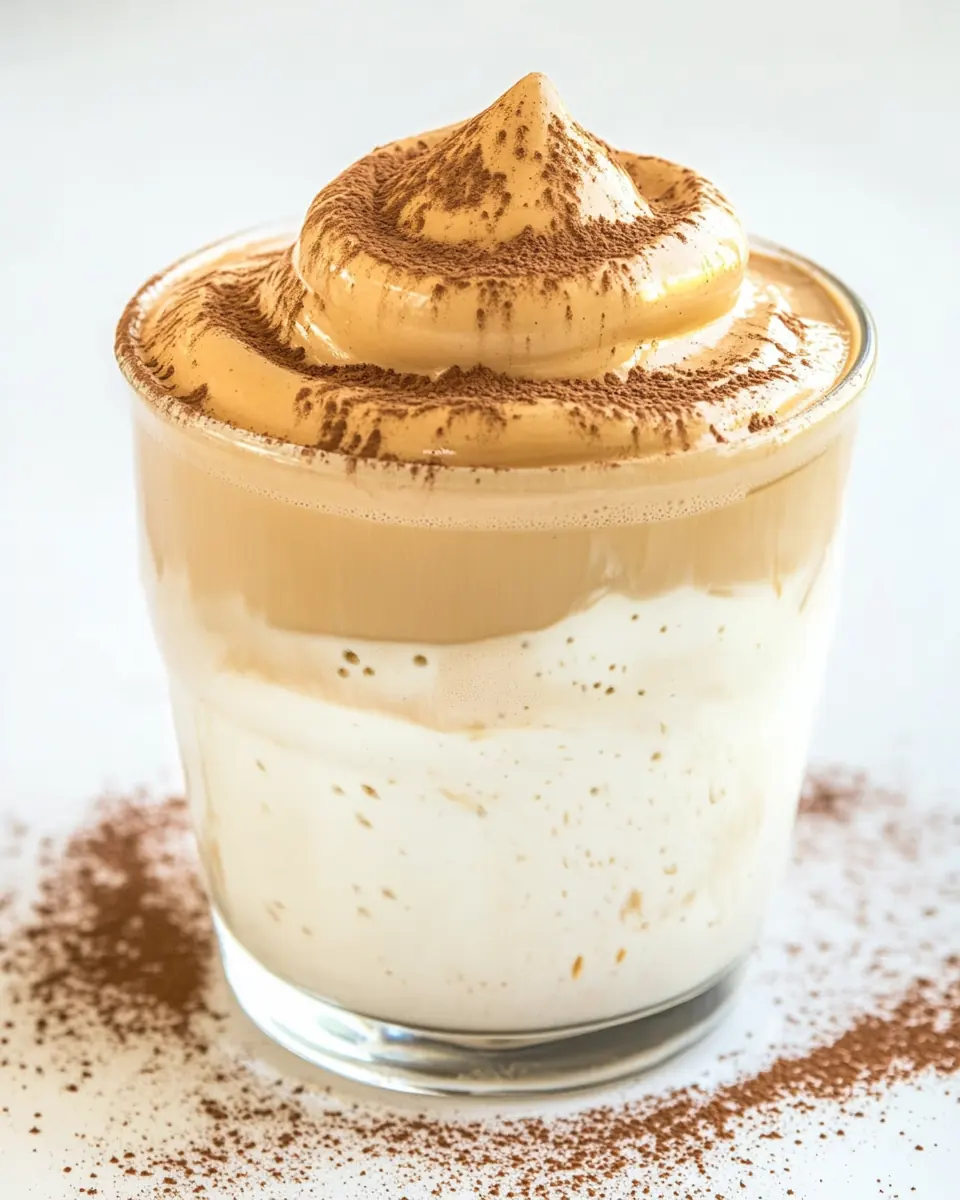
In a medium bowl or stand mixer bowl, combine sugar and instant coffee. Add the hot water to mixture. Immediately whisk on medium-high speed until it is light and airy. It should double in volume and be a shiny and smooth mixture with a mousse-like structure. This will take about 2-4 minutes. You can also use a whisk if you don’t have a mixer but it will take at least 10 minutes and up to 20 minutes to get the same result.: The moment you mix granulated sugar and instant coffee the dry aroma sharpens, releasing a roasted scent that hints at the final intensity. You want the granules evenly distributed so they dissolve uniformly when the hot water is added, preventing graininess in the foam. A common mistake here is uneven measuring, which can cause the foam to be too sweet or too bitter, so level your spoons carefully. As you stir the dry ingredients together, note the uniform color; this indicates you are ready for the liquid stage.
Fill a glass with ice and pour milk over ice. Using a rubber spatula or cookie scoop top the milk with the whipped coffee mixture. Serve immediately with a straw.: When you pour the hot water in, steam rises and the coffee fragrance becomes more pronounced, filling the kitchen with a warm, inviting scent. The heat helps dissolve both the sugar and coffee quickly, which is essential for achieving a glossy foam. If you use water that is not hot enough, the granules may not dissolve fully, leading to a gritty texture. Stir gently to incorporate the liquid until no visible dry bits remain, and you will feel the mixture change from powdery to a syrupy consistency.
Immediately whisk on medium-high speed until it is light and airy: As whipping begins, you will hear a soft whirring and see the mixture swell and lighten dramatically, turning into a pale, satiny mass. This transformation is the visual reward of the technique, and it signals that air is being trapped effectively. If you are using a hand whisk, expect the arm to tire because it requires sustained motion, and if you stop, the foam may deflate. The key mistake to avoid is under whipping, which yields a loose, runny topping that will not hold shape on the milk.
It should double in volume and be a shiny and smooth mixture with a mousse-like structure: The finished foam should reflect light like satin, and when you lift the whisk, soft peaks should form and slowly settle, showing the mousse-like structure. The texture should be dense enough to sit above the milk but airy when touched, and it should not appear lumpy. Over whipping can make it grainy or collapse, so stop once you have a glossy sheen and stable peaks. If the mixture looks matte or watery, continue whipping in short bursts until the desired sheen appears.
This will take about 2 to 4 minutes: During this short interval, listen for the change in sound as the mixture goes from a sloshy rhythm to a lighter, higher pitch, which indicates more air is incorporated. Visually, you will see rapid expansion in the first minute and slower refinement in the final moments. Rushing this timing often produces an under aerated foam, while excessive whipping past peak can create a grainy texture. Keep an eye on the clock and the peaks, stopping when the foam is thick and glossy.
You can also use a whisk if you don’t have a mixer but it will take at least 10 minutes and up to 20 minutes to get the same result: Whisking by hand offers a tactile connection to the process, and you will feel the resistance change as air is incorporated, but expect a longer commitment and warm arms. The pace is steady and rhythmic, and you will notice the mixture brighten gradually, so plan for patience. A common error is losing momentum, which prevents proper aeration, so maintain a brisk, consistent motion to reach the mousse like stage without tiring too much.
Fill a glass with ice and pour milk over ice: When the glass is filled with clinking ice and chilled milk pours in, there is a satisfying sound and a visual layering effect that feels elegant. The cold temperature calms the intensity of the whipped coffee when sipped, and the contrast of hot aromatic foam and cool liquid is part of the appeal. If the milk is not cold enough, the texture balance will feel off, and the drink may be less refreshing. Make sure your glass is tall enough to hold both the milk and the whipped topping without spilling.
Using a rubber spatula or cookie scoop top the milk with the whipped coffee mixture: As you spoon the glossy foam onto the chilled milk , you will notice how the cloud like dollops sit proudly on top, creating a dramatic two layer effect. The tactile act of scooping is forgiving because the foam holds shape; however, pressing the topping into the milk will deflate it, losing that visual lift. For the best look, gently place rounded scoops on the surface so each mound keeps its air and gloss. If the foam seems too loose to mound, it likely needs a few more short whips to stabilize.
Serve immediately with a straw: The final step is sensory, as you watch the glossy foam rest on cold milk , and the aroma of coffee invites the first taste. Serving right away ensures the foam retains its texture and visual appeal; if left too long, the topping may slowly dissipate into the liquid. People often prefer to stir gently, creating a silkier, slightly diluted drink, while others savor the layered sips. A common oversight is letting the assembled drink sit, which softens the foam, so present it promptly for the best experience.