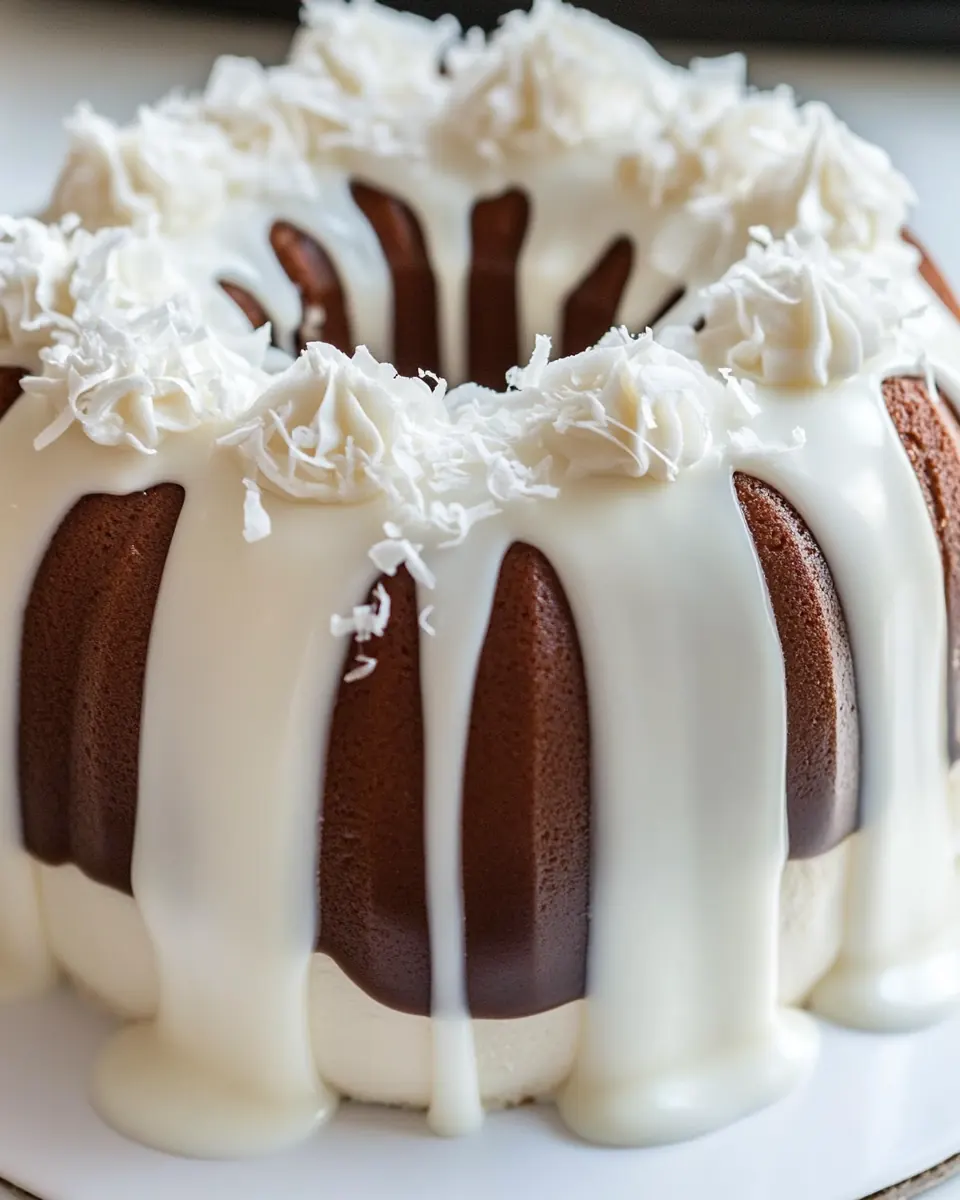
Preheat the oven to 350 degrees. Coat the sides, bottom, and center of a tube pan with a removable bottom with cooking spray. Line the bottom of the pan with a round piece of parchment paper with a hole cut out in the middle. Set the pan on a rimmed baking sheet.: Warm air begins to circulate and the kitchen will smell faintly warm as the oven reaches temperature, which helps the batter expand in a predictable way without collapsing. A reliable oven thermometer is useful because oven dials can be off; if yours runs hot, the outside may set before the interior has risen. Avoid opening the door during the first half of the bake, as a sudden cool draft can make the crumb sink. Place a rimmed baking sheet under the pan to catch any spills, which simplifies cleanup.
In a large bowl, whisk together the flour, cocoa powder, both sugars, baking powder, baking soda, and salt until uniformly combined. Set aside.: As you grease the pan, you'll notice the metal become satin and ready, which prevents the cake from sticking when it cools. Lining the bottom with a round piece of parchment with a hole cut out reduces friction and helps the cake release cleanly. If you skip this step, the delicate crumb can tear or break when you remove it from the pan, so take the extra minute to prepare the pan well.
In a medium bowl, beat together the eggs, buttermilk, coffee, oil, and vanilla. Make a well in the center of the dry ingredients and pour the liquid into the well. Stir with a large spatula until a soft batter forms.: As you whisk, the dry mix takes on an even tone and there are no streaks of cocoa or pockets of leavening left behind, which ensures stable rise and uniform flavor. Sifting or vigorous whisking also incorporates a touch of air which helps with lift. If you leave clumps, you risk uneven baking pockets and bitter specks of unsifted cocoa.
Pour into the prepared baking pan (it should only come about one-third up the side of the pan). Bake until a toothpick inserted in the center comes out clean, 50-55 minutes. Let the cake cool in the pan for at least 3 hours, or up to overnight.: When you whisk these wet ingredients, the mixture becomes glossy and cohesive, which makes it easier to fold into the dry mix without overworking. The lukewarm coffee will smell richer and will intensify the chocolate notes. If the coffee is too hot, it can cook the eggs, causing an odd texture, so ensure it has cooled sufficiently.
In the bowl of an electric mixer, add butter and vanilla extract and beat until creamy. Add the marshmallow creme (or fluff) and beat until incorporated.: The wet meeting the dry in a controlled way helps prevent over mixing, which keeps the crumb tender. As you fold with a spatula, watch for streaks of dry flour to disappear and the batter to become soft and cohesive. Over mixing can develop gluten and make the cake tough, so stop when just combined.
Remove the cake from the cake pan and set it with the rounded side up. To create a tunnel for the filling, using a small paring knife, cut a curved rectangle, 2 inches long and 1 inch wide, into the top of the cake about halfway between the center hole and the outside edge of the cake, following the curve of the cake.: The batter should be pourable yet hold some body, with a rich chocolate sheen and a slightly thick ribbon when the spatula falls back into the bowl. If it appears too stiff, a tablespoon of additional buttermilk can help, but resist adding too much or the cake may not set properly. A common mistake here is vigorous beating, which can create tunnels in the crumb.
Cut into the cake about two-thirds deep, and use the knife to lift the rectangle out from the cake. If the hole isn't deep enough, use the knife to scrape out more cake, but don't cut all the way through to the bottom.: As you pour, the batter will settle with a smooth surface and small air bubbles may rise, promising an even bake. Filling only one third of the tube pan allows room for the cake to rise without overflowing. If you overfill, the batter can spill and bake unevenly, creating a dense top instead of a delicate crown.
Repeat working around the cake, cutting out rectangular pieces to make a continuous tunnel. Set the cake pieces right next to where they were cut so they can be put back when the time comes.: The oven will fill with a warm chocolate aroma and the top should spring back slightly when touched. The toothpick test ensures the interior is set; if it comes out with moist crumbs, give it a few more minutes and check again. Be mindful not to over bake, as that dries the crumb and makes slicing difficult when creating the marshmallow tunnel.
Once the tunnel has been cut around the entire cake, fill it slightly just over halfway with the marshmallow filling. Any extra fluff may be reserved for another use.: Cooling in the pan allows the structure to set fully, which makes the cutting and tunneling neater. The cake will radiate a gentle chocolate scent as it cools and the interior will firm without drying when left covered. Rushing removal while warm risks breaking the cake , so patience preserves its shape and texture.
Cut off half of each rectangular piece of the cake from the rough side. Place the removed cake pieces in the tunnel over the marshmallow filling to plug up the cake. Repeat all the way around the cake.: Softened butter will turn pale and fluffy, with ribbons forming as the paddle moves, signaling it has incorporated air important for a light filling. Creaminess is key to prevent lumps when you add the marshmallow fluff. If the butter is too cold, it will clump and not blend smoothly, resulting in an uneven filling texture.
Turn the cake over so the flat side of the cake is up, and the plugged side is on the bottom, and place on a baking rack set over a rimmed baking sheet.: As you fold in the fluff, the mixture becomes glossy and airy, smelling sweet and slightly toasted from the marshmallow. The texture should be smooth and spreadable, not sticky or runny. Overbeating can thin the filling and cause it to lose body, while under mixing leaves globs of fluff that are hard to pipe.
In a medium saucepan over medium heat, add the powdered sugar, milk, corn syrup, and vanilla and stir to combine. Cook, stirring constantly, until the sugar dissolves and the mixture starts to bubble on the sides of the pan.: The act of unmolding reveals a uniform ring of cake with a rounded dome, which makes the tunneling easier to execute along the curve. Place it on a stable surface so it does not wobble during cutting. If you try to cut while the cake is still warm, the crumb will compress and crumple, so ensure it is fully cooled.
Reduce the heat to low and add the chocolate, stirring until the frosting is smooth. Quickly spoon the warm frosting over the cake. The frosting will begin to harden and crust immediately as it cools (if this becomes a problem, spoon as much as you can where you want it, and wet your fingers and use them to smooth out the frosting).: The knife will make a clean incision and you will see the soft, tender crumb beneath the crust; the curve helps the tunnel follow the cake shape for even filling distribution. Take shallow initial cuts so you can judge depth, and remember you only want to go about two thirds deep overall. Cutting too deep risks breaching the bottom and leaking filling out the base.
In a small bowl, add the powdered sugar, milk, and corn syrup and mix until a thick paste forms. Scrape it into a pastry bag with a small round tip or a zip-top bag and cut off a corner.: As you lift, the removed piece should come away in one neat chunk, revealing a dark, tender interior; save these pieces nearby because they will be used later as plugs. If the knife drags, chill the cake slightly to firm it up; a too soft cake tears instead of cleanly lifting.
Make some test squiggles on a piece of paper to get the feel of it, then squeeze squiggle loops over the top of the iced cake.: Scraping allows you to control depth and shape of the tunnel, leaving a sturdy base so the filling will not leak. The sound is a gentle scrape and you will feel when you approach the bottom because resistance increases. Too aggressive scraping can create gaps that will cause the marshmallow to ooze out, so proceed carefully.
Repeat working around the cake cutting out rectangular pieces to make a continuous tunnel: As you work, the cake will gradually reveal a ring shaped cavity that lines up for even filling. Keep the removed rectangles close by, arranging them in order so replacements match visually. If you skip this sequence or mix pieces, reassembly can look uneven and make the final presentation messy.
Set the cake pieces right next to where they were cut so they can be put back when the time comes: Organizing the removed pieces preserves the cake's exterior pattern when you plug the tunnel later, resulting in a seamless finish. The cake pieces will feel slightly crumbly, so handle gently to avoid pulverizing them. If you stack them haphazardly you may lose track and the top will look patchy when reassembled.
Once the tunnel has been cut around the entire cake fill it slightly just over halfway with the marshmallow filling: As you spoon the filling, it will glisten and settle into the cavity with a pillowy texture that resists immediate flow, which is ideal for stability. The marshmallow adds sweetness and a tactile center that contrasts the crumb. Avoid overfilling, because excess will squeeze out when you replace the cake plugs, making the exterior sticky and harder to glaze.
Cut off half of each rectangular piece of the cake from the rough side: Trimming each plug creates a flush fit when you set them into the tunnel, and the act of cutting reveals the tender interior ready to nest into the marshmallow. The trimmed pieces should sit snugly on the filling, leaving a tidy top. If you remove too much, gaps will show; if you remove too little, the plugs may bulge and create lumps under the glaze.
Place the removed cake pieces in the tunnel over the marshmallow filling to plug up the cake: Seating the plugs restores the cake's silhouette and helps contain the filling. Press gently so the surface is even and the seam is minimal. A common oversight is forcing the plugs too deep, which can compress the marshmallow center and cause a dense bite.
Repeat all the way around the cake: As you work around the circle, the cake will begin to look whole again, with only subtle seams where the plugs were replaced. Check for slight depressions and nudge pieces to even the surface before turning the cake over. If any seam is too visible, trim and adjust that plug before moving on to glazing.
Turn the cake over so the flat side of the cake is up and the plugged side is on the bottom and place on a baking rack set over a rimmed baking sheet: Flipping the cake exposes the smooth, even top that will receive the glaze, and setting it on a rack allows excess glaze to drip cleanly onto the sheet. The rack ensures an even coating and keeps the cake elevated for a uniform crust. If you skip the rack, the glaze pools and creates an uneven finish underneath.
In a medium saucepan over medium heat add the powdered sugar milk corn syrup and vanilla and stir to combine: As the mixture warms, it will thin and the sugar will dissolve, creating a glossy base that will carry the chocolate smoothly. You should see small bubbles form around the pan edges before adding chocolate; this indicates the right temperature. Be careful not to let the sugar boil vigorously, as scorching alters the flavor and can create a grainy texture.
Cook stirring constantly until the sugar dissolves and the mixture starts to bubble on the sides of the pan: Stirring ensures even heat and prevents hot spots that can caramelize the sugar, which would alter the intended flavor. Once you see tiny bubbles along the sides and the mixture is silky, remove from high heat. A common mistake is walking away and allowing the mixture to boil too strongly, which makes the glaze dull instead of glossy.
Reduce the heat to low and add the chocolate stirring until the frosting is smooth: As the chopped chocolate melts, the aroma deepens and the mixture takes on a thick, satiny sheen, signaling it is ready to be spooned. If the chocolate does not melt smoothly, remove from heat and stir patiently; residual heat will finish the job. If the glaze thickens too much before you spoon it, a splash of warm milk will loosen it slightly.
Quickly spoon the warm frosting over the cake: The warm glaze will cascade over the dome and begin to set as it cools, forming a thin crust that looks professional and snaps gently when sliced. Work quickly because the frosting begins to harden; if it cools in the pan, rewarm gently to restore flow. If you wait too long, the glaze will set and will not coat smoothly, causing patchy coverage.
The frosting will begin to harden and crust immediately as it cools if this becomes a problem spoon as much as you can where you want it and wet your fingers and use them to smooth out the frosting: The quick crusting is what gives the cake its signature finish, but it can catch or streak if uneven. Lightly wet fingertips help nudge the glaze into place without tearing the crust. Avoid using too much water as it can thin the glaze and ruin the glossy surface.
In a small bowl add the powdered sugar milk and corn syrup and mix until a thick paste forms: This white paste should be stiff enough to hold shape when piped, with a glossy, slightly elastic feel thanks to the corn syrup . Test the consistency by piping a small line on parchment; it should hold its form. If it is too thin, add a bit more powdered sugar ; if too thick, a drop of milk will rescue it.
Scrape it into a pastry bag with a small round tip or a zip top bag and cut off a corner: As you transfer, the paste will settle into the bag and be ready to pipe, which allows you to make controlled squiggles across the top. Practice on parchment to get a feel for pressure. If your bag leaks at the top, twist and secure it with a clip to maintain steady pressure while piping.
Make some test squiggles on a piece of paper to get the feel of it then squeeze squiggle loops over the top of the iced cake: The act of piping is rhythmic and satisfying, and your squiggles will dry to a creamy white contrast against the dark glaze, giving a signature look. Work steadily and let each loop settle into the glaze; if you rush, the white will sink or smear. Allow the cake to rest so the piped decoration sets before slicing.