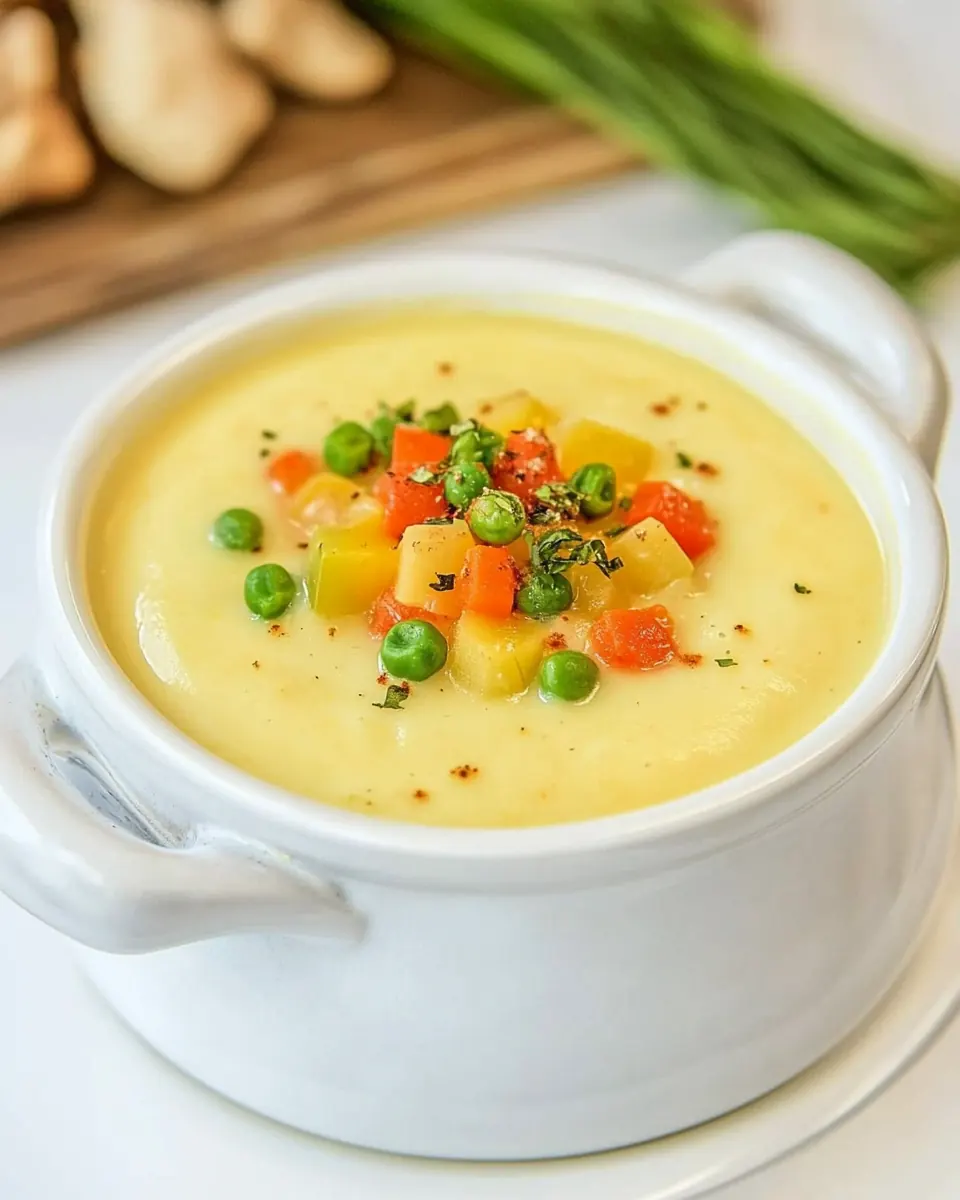
Cook all the vegetables individually. Set a few veggies aside for garnish, and grind or process the rest into small pieces.: The kitchen will fill with distinct scents as each vegetable heats, the carrots releasing a sweet, earthy perfume while the peas and corn add bright, vegetal notes. Cooking them separately ensures each retains its ideal texture, so no single ingredient overwhelms the final puree. One common mistake is overcrowding the pan, which causes steaming rather than proper gentle cooking, leaving the pieces too soft or waterlogged. Aim for brief, controlled cooking to keep color and snap, and set aside a few whole pieces for garnish to preserve textural contrast.
Melt the margarine or butter in a large pot over medium heat. Add the flour and cook for about one minute. Do not let the roux brown.: As the margarine or butter liquefies, it emits a toasty, buttery scent that signals the start of the roux. You will see a glossy pool of fat that coats a wooden spoon, which helps the flour integrate smoothly. If the fat begins to brown, lower the heat right away, because a dark roux will shift the flavor and color away from the light, creamy profile we want. A typical pitfall is overheating, which makes the roux taste nutty instead of neutral; moderate heat is your ally here.
Add the prepared vegetables, broth, garlic powder, and onion powder to the pot. Bring to a boil and then reduce the heat to a simmer. Add the heavy whipping cream, season with salt and pepper, and stir to combine.: The moment you sprinkle in the flour , stir continuously so it absorbs the fat and forms a paste that smells slightly toasted but not browned. This short cook time removes the raw flour flavor while keeping the roux pale. If you stop stirring, lumps form and give a gritty mouthfeel, so keep it moving until the texture is smooth and satiny. The reason this matters is that a properly cooked roux creates a stable emulsion with the broth and cream, giving the soup that classic, clingy thickness.
Do not let the roux brown: A pale roux preserves the soup’s creamy color and subtle taste, and as you stir you should notice a faint biscuit like aroma rather than a roasted note. Maintaining a gentle heat and a vigilant stir prevents scorching at the pot bottom, which can impart bitterness. Many cooks push the heat too high to hurry the process, but that often ruins the delicate balance; patience produces the best mouthfeel.
Add the prepared vegetables, broth, garlic powder, and onion powder to the pot: After you pour in the chicken broth and drop in the cooked vegetables, the pot will start to steam and release a layered fragrance from savory to sweet. The garlic powder and onion powder dissolve quickly, knitting the flavors together. Stirring as you add the liquid prevents lumps and helps the roux distribute evenly. A common hiccup is adding cold liquid too fast, which can shock the roux and create clumps, so add gradually while whisking or stirring briskly.
Bring to a boil and then reduce the heat to a simmer: Watch for small rolling bubbles across the surface as the mix heats, then lower the flame to maintain a gentle simmer where delicate steam escapes. This steady, low heat allows flavors to meld without risking separation of the cream later. If you keep the pot at a strong boil, the dairy can scorch or the soup may reduce too much, ending up thicker than intended. Simmer until the vegetables are fully tender and the flavors taste harmonized.
Add the heavy whipping cream: When you pour in the heavy whipping cream , you will notice the texture immediately shift to velvetiness and the aroma soften into a rich, comforting note. Adding cream at a lower temperature prevents curdling and helps it integrate evenly. A frequent error is adding cold cream to a vigorously boiling pot, which risks separation; temper the soup by briefly removing it from heat or stirring continuously while the cream comes to temperature.
Season with salt and pepper: Seasoning awakens the flavors, so add salt and pepper incrementally and taste as you go. The right amount will highlight the natural sweetness of the vegetables and the savory backbone of the chicken broth . Over salting is the usual misstep here, particularly if the broth was already salty, so check before adding extra.
Stir to combine: A final vigorous stir ensures the cream and roux are fully emulsified with the vegetables and broth, yielding a consistent body and sheen across the surface. Listen for a gentle, even simmer and look for a uniform pale color that indicates everything is blended. If the soup looks separated or grainy, a quick hand whisk or an immersion blender at low speed can rejoin the mixture; avoid high speed which can introduce air and change the texture.
Set a few veggies aside for garnish, and grind or process the rest into small pieces: Reserving a handful of whole or roughly chopped vegetables gives each bowl a contrast point that speaks to texture and presentation. When you process the bulk into smaller pieces, aim for a coarse, slightly chunky consistency rather than a paste, unless you prefer ultra smoothness. Overprocessing removes the identity of the vegetables and makes the soup flat, so pulse gently and stop when you still see flecks and threads of the original ingredients.