Preheat oven to 350°F. Line two baking sheets with parchment paper or use silpat.: Warm air in the oven should feel steady and even when you open it, and preheating ensures the cookies begin setting immediately, which helps them keep a chewy center while developing slightly crisp edges. The oven smell will be neutral at first, then you might notice sugar starting to toast as you bake indicating caramelization. A common mistake is putting cookies into a cold oven, which causes excessive spread and thin cookies; always wait until it reaches a steady 350°F . If your oven runs hot or cool, use an oven thermometer to confirm temperature.
In a medium bowl, whisk flour, cocoa, baking soda, baking powder, and salt.: You will see a uniform, dark tan mixture after whisking, with no streaks of white flour or clumps of cocoa, which signals even distribution of leaveners. Whisking aerates the dry mix slightly, which helps with even incorporation later. If you skip this step or mix poorly, you risk pockets of unmixed leavening that make some cookies rise oddly, so take a minute to whisk thoroughly.
In a large bowl, beat butter and sugar with an electric mixer until fluffy. Beat in eggs, one at a time and then vanilla. Beat in peanut butter until just combined. Slowly add the dry ingredients until just combined. Stir in peanut butter candies and chocolate chips.: When creaming butter and granulated sugar , watch for a pale, light texture that holds a soft ribbon when the beater lifts, this air contributes to the cookie's tender interior while the sugar aids in edge crisping. The sound becomes quieter as air is incorporated, and the bowl will feel lighter when lifted. Avoid over beating until greasy looking, as that can cause excessive spreading during baking.
Scoop 2 tablespoons of cookie dough at a time (you can use a cookie scoop, I use my ice cream scoop!) onto baking sheet. Sprinkle with salt if using.: As you add each egg , the mixture will momentarily look glossy before becoming smooth again; this ensures even emulsification so the dough does not break. Adding vanilla afterward rounds the aroma and lifts the chocolate and peanut butter tones. A common error is rushing and dumping both eggs at once, which can make the mixture curdle, so add each egg and scrape the bowl sides between additions.
Bake cookies for 11 minutes, remove from oven and top with candy eyes (if using). Return to oven for another 2 minutes. If not adding candy eyes, just bake for 12-14 minutes until edges are firm.: Incorporating the peanut butter will darken the batter and introduce a nutty sheen, and you should stop mixing once streaks disappear to avoid an overly dense dough. The peanut butter contributes fat and flavor, which helps produce a chewy bite. Over mixing at this point can develop too much structure, so fold just until blended.
Cool on baking sheet (they will be soft before they cool and may fall apart if you try to transfer them).: As you fold in the flour mixture, watch for a cohesive dough that pulls away from the bowl sides but still looks moist and slightly glossy, this indicates proper hydration. Mixing slowly prevents overworking the gluten which keeps the cookies tender rather than tough. Be careful not to leave pockets of dry mix, but also avoid extended kneading which tightens the dough.
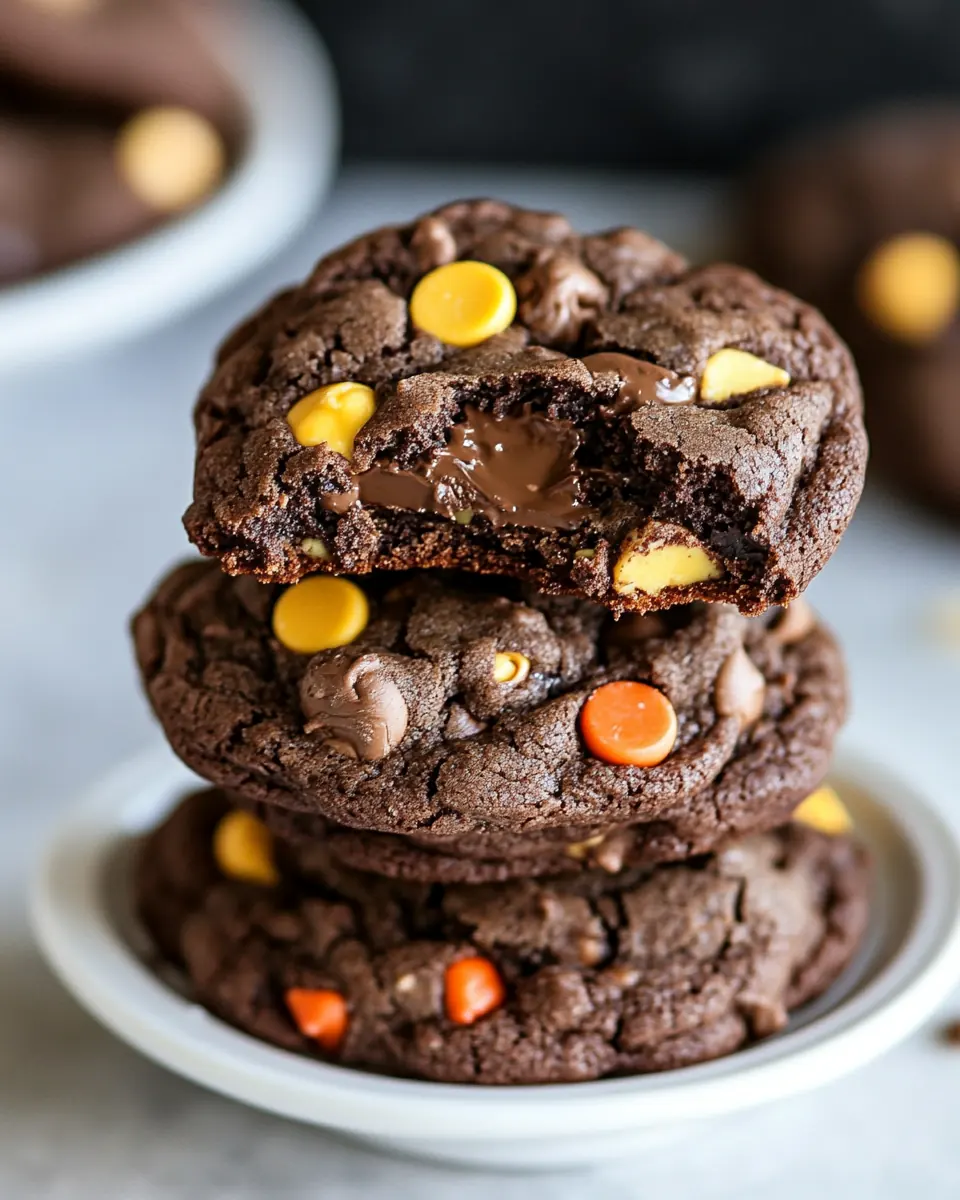
Stir in peanut butter candies and chocolate chips: Observe how the candies and chips distribute, creating contrasting bursts of color and texture throughout the dough. Gently folding preserves the chips' shape while ensuring even scatter, which leads to pockets of melty chocolate and candy crunch in each bite. Avoid smashing the candies while stirring, as that can make the dough overly sweet and change the intended texture.
Scoop 2 tablespoons of cookie dough at a time onto baking sheet: The dough should be slightly tacky and hold a round mound when scooped, which guarantees even baking and similar sized cookies. Place dough with spacing so they have room to spread, and you may use a scoop for uniformity. A common mistake is scooping uneven sizes which bake inconsistently; use the same tool for each scoop and rotate sheets between racks if needed for even browning.
Sprinkle with salt if using: A light dusting of coarse salt on the tops before baking will glint on the surface and deliver briny pops that elevate the chocolate and peanut butter. The salt crystals should adhere and not dissolve immediately, adding a textural contrast after baking. Do not over salt, as a heavy hand will overshadow the cookie's sweetness and chocolate depth.
Bake cookies for 11 minutes, remove from oven and top with candy eyes: After about 11 minutes you will notice the edges are setting and small cracks forming on the surface while the centers remain soft, a cue to momentarily remove the tray to add candy eyes which will lightly melt into place during the next brief bake. The oven emits a warm, toasty aroma when sugars begin to caramelize, and this two stage approach preserves the eyes' shape without melting away. Avoid leaving them in too long here, as the candy eyes can over soften and lose their detail.
Return to oven for another 2 minutes: Returning the tray to the oven seals the decorations in and finishes baking, yielding a cookie with a soft center and slightly firmer edge, observable when the centers no longer glisten but still feel tender to the touch. That small additional time develops final color and texture. A frequent error is overbaking at this stage which produces a dry result, so watch carefully during the last minutes to achieve the ideal chew.
If not adding candy eyes, just bake for 12 to 14 minutes until edges are firm: Without decorations you bake slightly longer in one go, looking for edges that are set and a center that gives under gentle pressure, which indicates chewiness once cooled. The aroma will be richer and you may see tiny areas of caramel on the cookie bottom. Over baking here will yield uniformly crisp cookies rather than the intended tender chew, so pull them when edges are firm but centers remain soft.
Cool on baking sheet: Letting cookies cool on the baking sheet lets residual heat finish the cooking slowly, and the bottoms will firm while the interior settles into a chewy texture, so resist moving them until they have set. You will notice a shift from glossy to matte as they cool, a reliable visual cue. Trying to transfer them too early often causes them to break apart because they are still fragile from the heat.