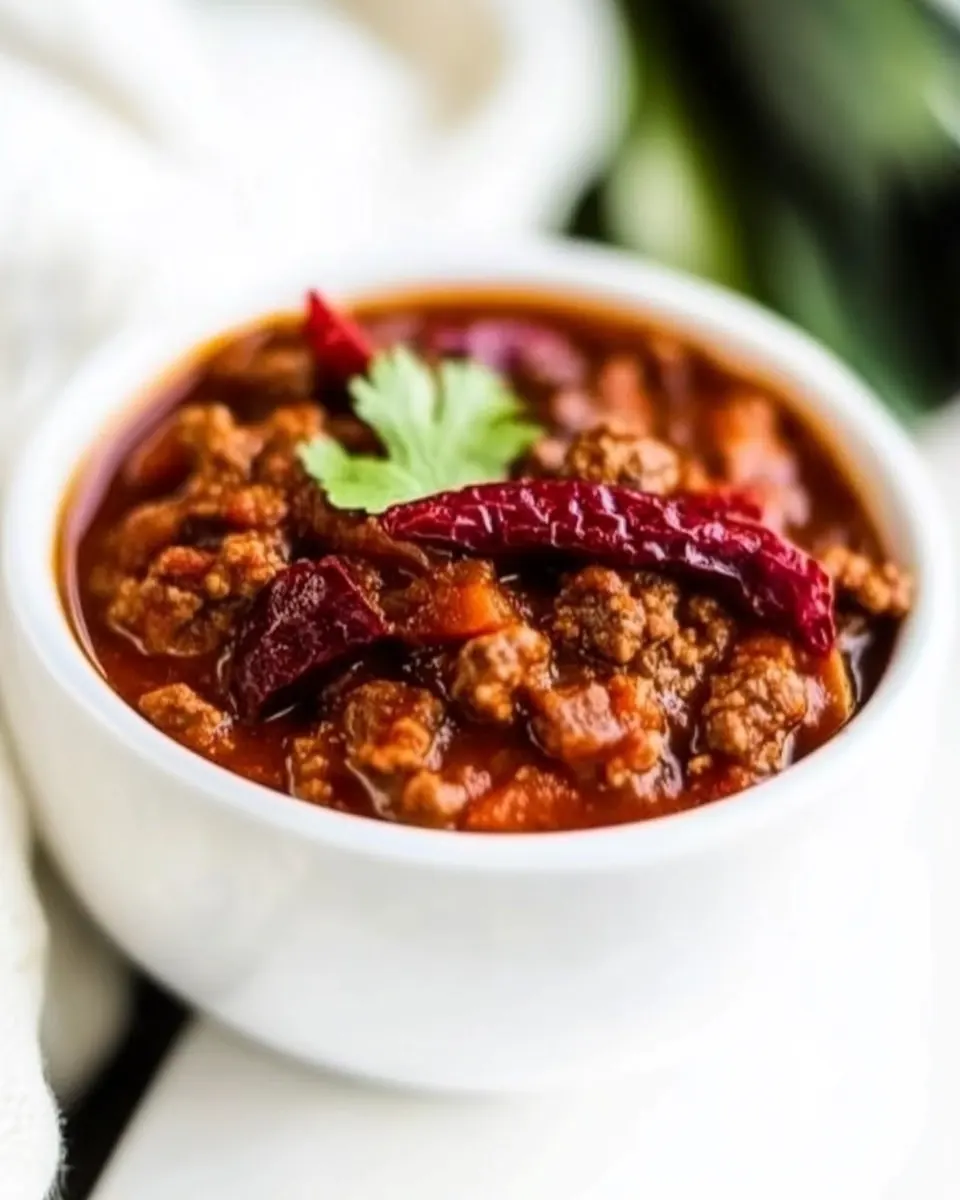
Heat a nonstick skillet or Dutch oven over medium-high heat and add ground beef. Cook, breaking apart with a wooden spoon, until about halfway cooked. Add onion and red bell pepper and continue to cook until vegetables are softened. If there is excess grease, you can remove it with a spoon before proceeding.: The smell of meat hitting a hot pan is the first indicator that flavor is forming, expect a satisfying sizzle and brown bits clinging to the pan. As the ground beef sears, you should see it changing color from pink to brown and hear intermittent popping as moisture evaporates. This browning creates Maillard flavors, which are essential for depth, and those browned bits will later dissolve into the sauce when you deglaze. Avoid stirring constantly, let the meat contact the surface so it browns rather than stews, and a common mistake is cooking at too low a temperature which results in gray, boiled meat instead of rich, savory crusts.
Add chili powder, cumin, salt, oregano, and garlic powder and cook for 30 seconds while stirring.: You will notice the aroma shift as the onion and red bell pepper begin to sweat and sweeten, sending a fragrant, caramel like scent up from the pan. The vegetables should become translucent and tender, their edges softening and the pan releasing more steam. These softened aromatics meld with the meat, providing a rounded base. If there is stubborn sticking, add a splash of broth to loosen browned bits, and avoid letting the vegetables burn as that can make the chili taste bitter.
Add chicken broth, Dr. Pepper, diced tomatoes, tomato paste, chipotle chilis, and Worcestershire sauce. Stir to mix well. Simmer for 20 to 30 minutes or until chili has thickened to your liking. Add kidney beans.: The visual cue here is a sheen of fat on the surface, which dampens sauce clarity and can make the final dish heavy. Spooning off excess grease leaves behind flavorful bits while improving texture, and the scent becomes cleaner, focused on spices rather than oil. Leaving too much fat can obscure seasoning and create a greasy mouthfeel, so removing it is a small step that improves balance.
Serve with sour cream, red onion, and cilantro.: As the spices toast briefly, you will smell a warm, toasty fragrance that signals their oils releasing, deepening aroma and flavor. This short cook helps the spices marry with the meat and vegetables, creating an integrated spice profile. Stir constantly during this time to prevent burning, because charred spices turn bitter quickly. A common misstep is adding spices to a cold pan, which prevents that immediate aromatic lift.
Add chicken broth, Dr. Pepper, diced tomatoes, tomato paste, chipotle chilis, and Worcestershire sauce: When the liquids hit the pan you will hear a soft hiss and see steam rise as flavors begin to mingle. The Dr Pepper brings a caramel sweetness that smooths tomato acidity while the tomato paste deepens color and body. The chipotle peppers in adobo sauce melt into the liquid, releasing smoky heat and a silky, slightly oily texture that coats the back of a spoon. Stir thoroughly so the paste dissolves and the chipotle disperses evenly. If the mixture seems too thin, simmer longer to concentrate flavors, and take care not to boil too hard or you will lose aromatic subtlety.
Stir to mix well: You should notice the sauce becoming homogenous, with a glossy sheen and a scent that combines sweet, smoky, and savory notes. Stirring ensures the flavors distribute and prevents localized scorching on the pot bottom. Use a wooden spoon to scrape up any fond so those browned bits reincorporate into the sauce. Skipping this gentle agitation can result in uneven seasoning.
Simmer for 20 to 30 minutes or until chili has thickened to your liking: During simmering, the aroma will concentrate, and the sauce will reduce, becoming thicker and clinging to the meat and beans. Look for gentle bubbling, not a rolling boil, and stir occasionally to monitor thickness and prevent sticking. The visual cue of a reduced sauce is a more pronounced sheen and slower movement when you stir. A frequent error is simmering too vigorously which can evaporate too much liquid and tighten the flavors excessively.
Add kidney beans: When you fold in the kidney beans , they bring a softer texture and creaminess that contrasts the meaty base. The beans will warm through and absorb some sauce, plumping slightly and mellowing the chili. Add them toward the end to preserve shape and integrity; overcooking can make them disintegrate and cloud the sauce.
Serve with sour cream, red onion, and cilantro: The final presentation includes a cool dollop of sour cream which soothes heat, thin rings of red onion for a crisp bite, and chopped cilantro for herbal brightness. Visually you want contrast, a glossy deep red bowl topped with pale cream and green flecks. Taste before serving and adjust salt or spice if needed. A common serving mistake is skipping the garnishes which diminishes the layered experience of temperature, texture, and freshness.