In a large skillet, cook ground beef over medium-high heat, until no longer pink. Drain fat.: The moment the meat hits the hot pan you should hear a lively sizzle and smell that roasted beef aroma that signals flavor development. As the meat browns, little bits will darken and stick briefly to the pan, those fond bits are flavor gold and will later dissolve into the sauce when deglazed. Use a spatula to break the meat into small crumbles so it cooks evenly, and watch for the color shift from pink to a rich browned hue, that visual cue tells you it is ready. A common misstep here is overcrowding the pan, which causes the meat to steam instead of brown, so if your skillet is crowded, brown in batches or use a larger pan. After the meat is cooked through, tilt the pan and spoon off excess fat until you have a few tablespoons remaining for flavor, this prevents the final chili from tasting greasy.
Return beef to pan, stir in tomato paste, garlic, Worcestershire, chili powder, onion flakes, and cayenne pepper. Cook for 2-3 minutes.: Right after the initial browning, the aromatics and spices will bloom. You will notice the scent shift as the tomato paste toasts slightly and the garlic releases its pungent perfume, creating a layered aroma that foreshadows the sauce. Stir continuously so the paste and spices coat the meat evenly and do not burn, a gentle toasting of the paste brings out sweeter, deeper tomato notes. This step matters because it builds complexity at the base, if you rush it the flavors will remain flat. Avoid leaving the heat too high, because the garlic can scorch in seconds and create a bitter edge.
Stir in Dr. Pepper and water. Cook 6-8 minutes, until bubbly. Remove from heat. Stir in salt and pepper to taste.: When you add the Dr. Pepper and water , the pan will hiss and steam, and the liquid will start to lift the browned bits from the bottom, creating a glossy pan sauce. As the soda reduces, it thickens into a syrupy glaze that coats the meat, and you will smell a sweet, caramelized aroma mingling with the spices. The bubbling should be lively but not violent, keep the heat moderate so the reduction is even and does not stick. The texture will change from soupy to a cohesive saucy chili, that visual cue means it is nearing done. After removing from heat, seasoning with salt and pepper is important because reduction concentrates flavors, so taste and adjust carefully. A frequent mistake is reducing too far and ending with a burnt, sticky pan residue, so stop when the sauce clings to the spoon.
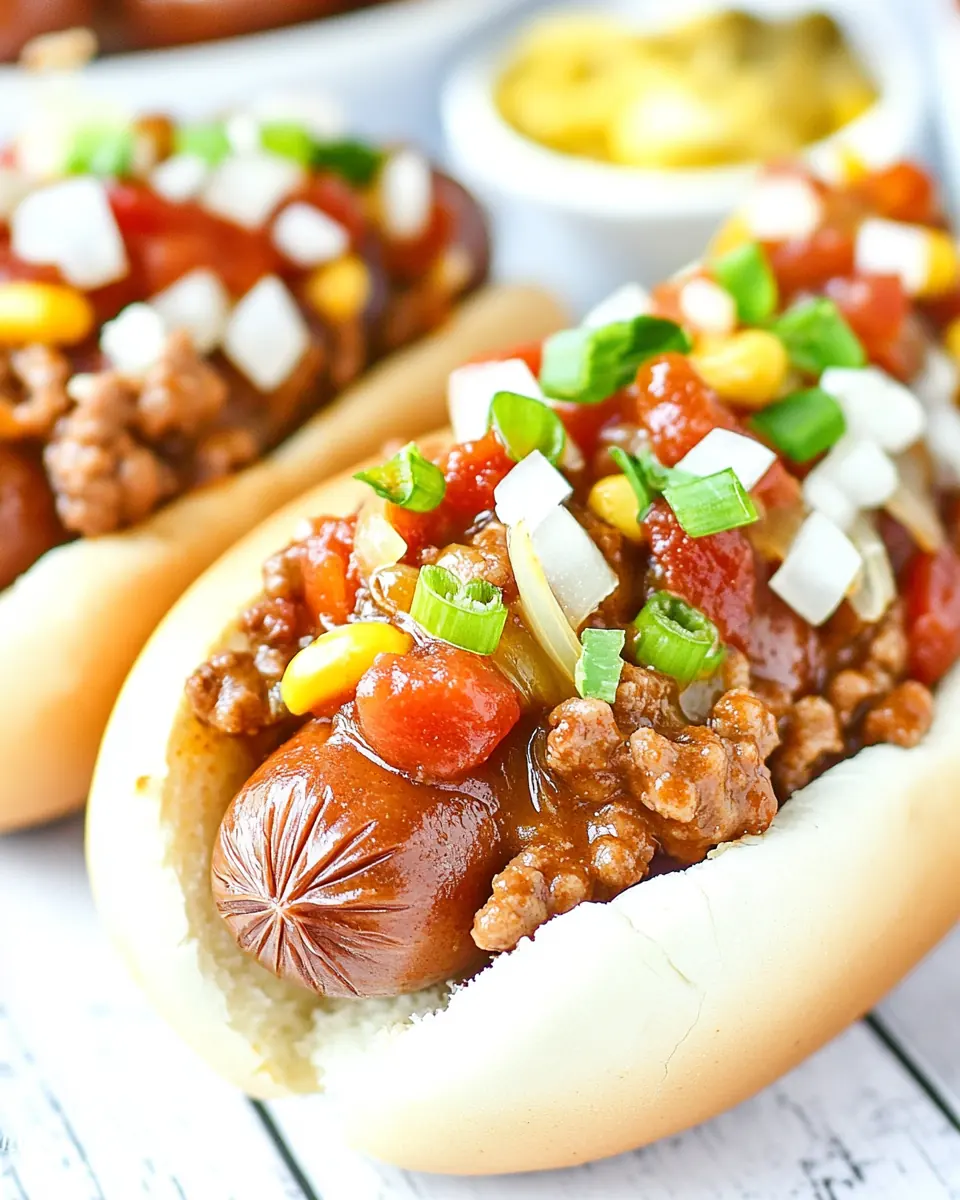
Serve chili on top of hot dogs.: Serving is where textures and contrasts come together, the warm saucy chili spooned over cooked hot dogs should glisten and slightly cascade over the sides of the bun. The contrast between the soft bun, the snap or tenderness of the hot dog, and the rich saucy chili is what makes each bite satisfying. Arrange the buns on a tray, nestle in the warmed hot dogs , and ladle the chili so each one gets an even coating. One mistake to avoid is adding the chili to hot dogs that are too cold, that lowers the overall enjoyment; ensure the dogs and buns are warm so the chili retains its texture and aroma when served.