Prepare espresso.: The air fills with a rich, roasted perfume while brewing and you should notice a fragrant, warm steam rising from the portafilter or espresso maker; that aroma tells you oils and volatile flavors are present. The crema on top will be golden brown and slightly thick, which is a sign of a good extraction. This matters because crema helps the espresso float and form a neat layer over the cold milk . A common mistake is under extracting by rushing the extraction, which yields weak, sour shots, so allow the machine to pull properly and avoid tamping unevenly which can lead to channeling.
Pour milk into a glass.: You will hear a soft clink as the chilled milk settles against the glass and the surface looks silky and smooth. Pour gently so the milk retains a calm surface for the upcoming layered pour. Chilling the glass beforehand helps keep the milk cold and prevents it from warming when the hot espresso arrives. A misstep here is using warm glassware which encourages premature mixing and a less distinct visual contrast.
Add caramel syrup and stir well, about 30 seconds or until the caramel syrup is mixed into the milk.: As you stir the thicker caramel into the cold milk , you will notice the syrup slowly melt into the liquid, turning the color slightly amber and releasing a buttery, sweet aroma. Stirring for about 30 seconds ensures the caramel disperses evenly and the sweetness is consistent in every sip. The reason this step matters is that undissolved caramel can settle and create an overly sweet bottom layer, so thorough incorporation leads to balance. Avoid under stirring, which creates syrup pockets and uneven sweetness.
Add ice.: The ice will make a crisp clatter when it hits the glass and immediately cools the caramel milk, tightening its texture. Use enough ice to fill the glass about three quarters, leaving room for the espresso . This ensures the drink chills quickly while preserving room for the layered espresso pour. A typical mistake is adding too much ice , which can over dilute the drink and reduce aromatic impact as you sip.
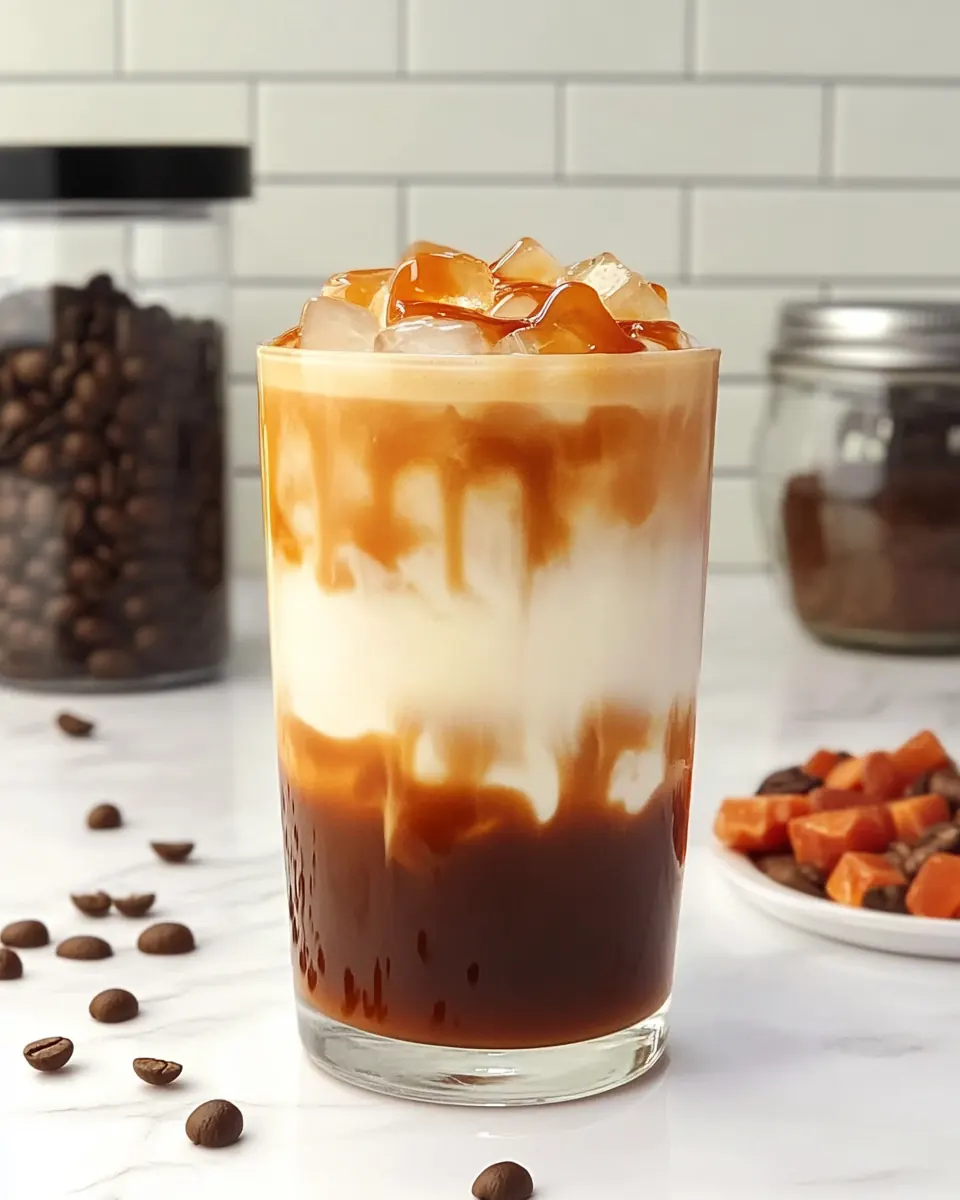
Slowly pour espresso on top.: As the hot espresso meets the chilled surface, you should see a distinct dark crown form and then begin to sink slowly, creating a ribboned effect; that visual is exactly what makes the macchiato appealing. Pour down the side of the glass or over the back of a spoon to slow the flow and maintain the layer separation. The temperature contrast is why the espresso floats momentarily, offering a dynamic tasting progression from warm coffee to chilled cream. Pour too quickly and the layers will mix immediately, losing the characteristic presentation.