Preheat the oven to 425 degrees and lightly grease a 13×9 inch pan.: Warm air begins the transformation, filling the kitchen with a faint dry heat that will help the crust set quickly. You'll notice the oven temperature spike steady and even, which is important because starting at a higher heat gives the crust structure before the filling adds moisture. A common mistake is placing the pan in a cold oven, which yields a soggy base, so always preheat fully. If your oven runs hot, use an oven thermometer to confirm the temperature, and grease the pan liberally so the baked bars release easily.
In a medium-sized mixing bowl, whisk together the flour and salt; using a pastry blender, cut in the butter. Drizzle the beaten egg over the mixture and toss lightly to combine.: The tactile crunch and slight resistance as you cut in the cold butter are signals that you are creating those small pockets that turn flaky when baked. The flour and salt marry to form the dry matrix that will support the filling, and the beaten egg adds richness and cohesion without making the dough tough. Work quickly so the butter stays cold, and if the mixture becomes greasy or the butter softens, pop the bowl into the fridge for 10 minutes. Avoid overmixing because it develops gluten and leads to a dense, chewy crust.
Add the cold water 1 tablespoon at a time, stirring gently until the dough starts to clump together. Roll the dough into a generous rectangle to fit your pan. Place the dough in the pan and prick it all over with a fork; bake it for 10-12 minutes until it is set and barely starting to harden.: As the cold water unites the dough, you will see it hold shape without becoming sticky, indicating the right hydration. Rolling into a rectangle helps you press it evenly into the pan, and pricking the surface releases steam so the base stays crisp. The aroma will shift to a faint buttered bread smell as it sets. Resist the urge to overbake at this stage, because it will continue to cook under the filling. A common error is making the crust too thin, which can lead to breakage when cutting, so aim for an even thickness across the pan.
Whisk the flour, sugar, spices, and salt together. Add in the apples, tossing to coat. Stir in the vanilla, then the cream, and spread the filling over the crust.: Coating the diced apples in the dry mix ensures each piece absorbs spice and sugar, and you will see the fruit take on a glossy sheen when the vanilla and cream are added. The filling should mound slightly over the crust but not overflow; as it bakes the juices will loosen and the surface will bubble. Smell the warm spice aroma settling in the bowl, a signal the flavors are melding. A frequent pitfall is uneven apple pieces, so dice uniformly to encourage consistent softness across the pan.
In a mixing bowl, whisk together the flour, sugar, salt, and cinnamon.: This dry mixture forms the base for the crumb topping, and whisking it aerates the flour slightly, making for a lighter crumb. The cinnamon will perfume the mixture, and you should notice a spiced sweetness in the air. If the sugar clumps, break it up with a fork so the melted butter distributes evenly later. Over-beating can add too much air, which might make the topping less cohesive after baking.
In another bowl, combine the melted butter and extracts; pour over the flour mixture.: Pouring warm, melted butter over the dry ingredients creates a satin texture as the fat coats each grain of flour and sugar, which is what yields those crisp crunchy crumbs. The mixture will smell rich and buttery with notes of vanilla lifting it. Work quickly so the butter is still warm and fluid, allowing for even absorption. If the butter cools and solidifies, the crumb will be uneven and more cakey than crumbly.
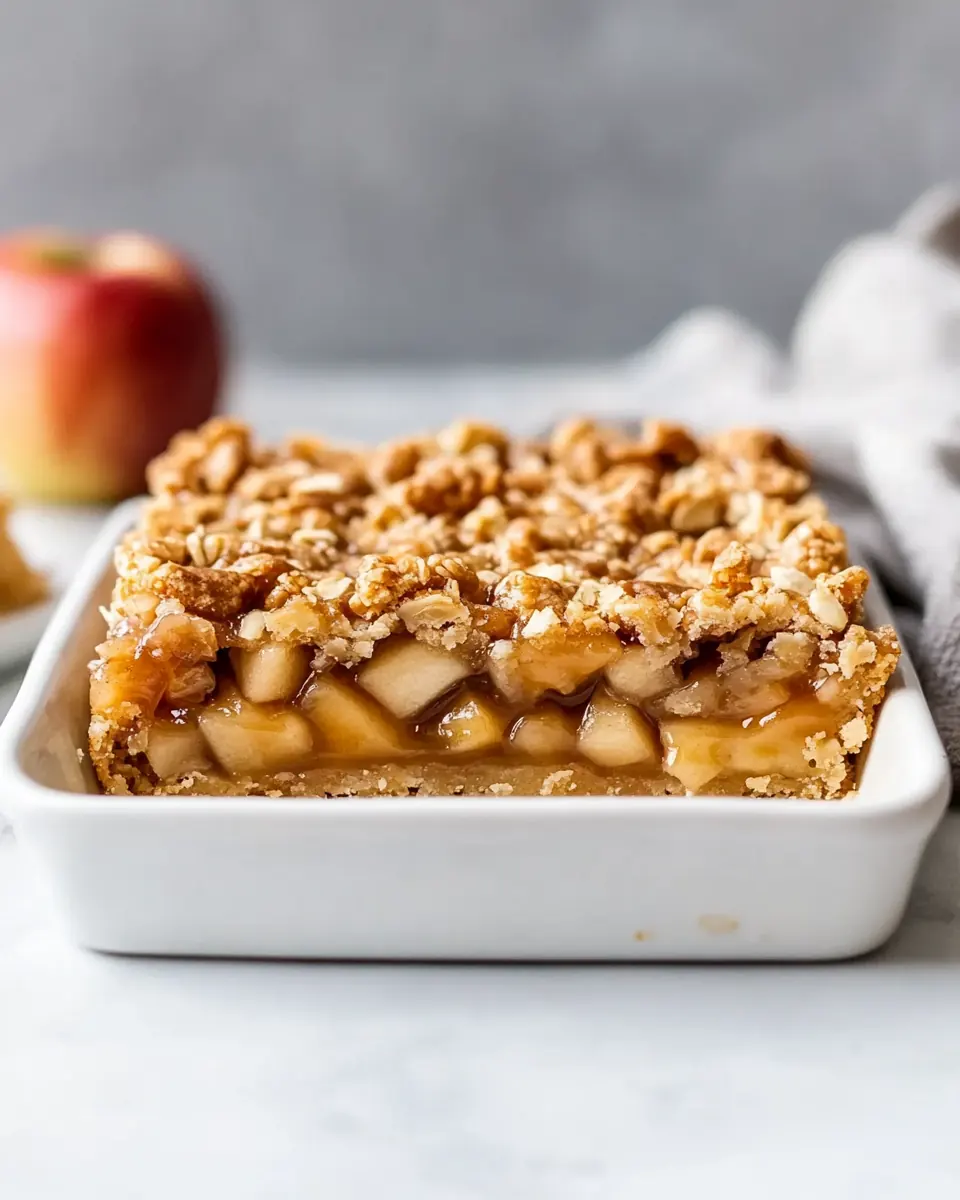
Stir until the butter is absorbed and the mixture forms fairly even crumbs and sprinkle over the filling.: When the crumbs are the right size, they will hold together loosely when pinched between fingers but still fall apart easily, that balance creates a topping that bakes to golden crispness. Sprinkle uniformly to ensure even browning. You will hear a slight scattering sound as the crumbs hit the filling, and the contrast between the soft fruit and raw crumb is satisfying. Avoid pressing the crumbs down, which can compact them and prevent air pockets that bake into crunch.
Bake for 15 minutes; decrease temperature to 350°; bake for 30-35 minutes, or until the topping is brown and the filling is bubbly.: During the first high heat stage the topping will begin to set and the filling will start to bubble, then the lower temperature lets the apples finish cooking through without burning the crumb. Expect a rich aroma of caramelized sugar and spices as the sugars brown. Look for bubbling along the edges and a deep golden top; those are your visual cues. A common mistake is not reducing the temperature, which can brown the topping too quickly while the filling remains undercooked.
Remove from oven and cool on a rack; let them cool to lukewarm before cutting.: Cooling on a rack lets air circulate and prevents steam from making the base soggy. As the bars cool to lukewarm, the filling sets so slices hold their shape and the caramel firms slightly. The top will still be warm, and the aroma stays inviting. Cutting too hot leads to runny slices, so patience pays off. If you slice too soon, use a spatula to help lift the pieces, but expect a looser texture.
Mix all ingredients in a medium saucepan over medium-low to medium heat. Cook while whisking gently for 5 to 7 minutes, until thicker. Turn off the heat. Serve warm or refrigerate until cold. Drizzle on top of dutch caramel apple pie bars.: The caramel will shift from glossy and syrupy to a thicker coat as it cooks, and you will hear a gentle simmer while whisking. The aroma becomes toasty and sweet, and the caramel should lightly coat the back of a spoon when ready. Off the heat, it will continue to thicken as it cools, so temper its temperature before drizzling. A typical error is boiling too hard, which can cause separation or burning, so maintain a gentle simmer and whisk consistently for a smooth finish.