Preheat oven to 350°F.: The warm scent of the oven as it comes to temperature signals the start of the bake process, and a fully preheated oven ensures even rising and proper browning. When the oven is not hot enough, cookies can spread too slowly and become dense. A common mistake is placing the pan in too early, which can cause uneven baking. For accuracy, I recommend checking your oven thermometer so you have reliable heat, because that steady environment produces consistent golden edges and tender centers.
Coat a mini muffin tin with nonstick cooking spray.: The faint oily scent when the spray hits the tin is reassuring, and a well greased tin prevents sticking so the cups release cleanly. If you skip this, the bottoms might cling and break apart during removal. Avoid using too much spray in one spot, which can pool and cause uneven browning; instead, use a light, even coating and wipe excess if needed.
In a large bowl, combine cookie dough and all purpose flour. Knead together until well blended.: You will notice the dough becoming slightly firmer and less sticky as the flour integrates, and the feel under your palms should be pliable but cohesive. This step matters because the added flour stabilizes the dough so the walls of your cups hold shape during baking. Overkneeading is the usual error, which yields a tough texture, so stop once ingredients look uniform and there are no dry streaks.
Shape dough into one inch balls. Press cookie dough in bottom and up the sides of each muffin cup, forming cup shape.: The tactile task of rolling one inch balls gives you control over portion size, and pressing them into cups should feel gentle, creating an even thin shell. Visual cues include smooth walls and an even rim; if the dough tears, press it back gently rather than adding more pressure. Rushing this step can result in holes or uneven thickness, which can cause the cups to bake irregularly, so take a little extra care to smooth seams.
Bake 10 to 12 minutes or until edges are just starting to turn golden brown.: As they bake, your kitchen will fill with a warm, buttery aroma and you may see the edges begin to blush gold, an indicator of doneness. The reason timing is specific is to keep the centers tender while achieving slight crispness on edges. Leaving them in too long will dry them out, while underbaking leaves them too soft to hold fillings. Check visually rather than relying only on time, because oven variance affects results.
Remove from oven and let cool for at least ten minutes before gently twisting to remove from pan. Place on rack and let cool completely.: Cooling slightly lets the structure set so they do not collapse when removed, and twisting gently should release them with a soft tearing sound if done right. If you try to remove them while too hot, they may deform, and if you wait too long you risk cracking during release. Transferring to a rack allows air to circulate and cool them evenly, preserving crisp rims and a tender interior.
Melt candy coating according to package directions.: As the candy coating melts, it will turn glossy and smooth, emitting a faint sweet aroma that tells you it is ready. Proper melting ensures a fluid dip and shiny finish that helps sprinkles adhere. Overheating can make it grainy or allow it to separate, so follow the instructions and stir gently. If it thickens as it cools, a short warm bath or a gentle microwave burst restores consistency without scorching.
Place jimmies in a separate shallow bowl or ramekin.: Lining up your jimmies in a shallow bowl makes the dipping step quick and neat, and the bowl should be wide enough to coat the rim without smudging the sides. This setup saves time and keeps your workspace tidy. If the bowl is too small, you risk crushing sprinkles or getting uneven coverage, so choose a shallow dish that allows a single dip for each cup.
Gently dip cookie cups in melted candy coating and then immediately dip into jimmies. Place cookie cups on a waxed paper lined baking sheet and let set up.: The moment the glossy coating meets the warm cookie , you may notice a slight hiss as air escapes, and the coating will cling smoothly to the surface. Immediate dipping into jimmies ensures they stick while the coating is still tacky. Working too slowly can let the coating set and prevent sprinkles from adhering, while rushing and using too much coating can cause drooping; aim for a thin even layer for the best look.
Cut Twizzlers in half.: Snipping the Twizzlers produces manageable pieces, and you'll hear a clean cut that verifies they are the right size. Cutting first makes shaping consistent across cups. If pieces are uneven, some handles may look disproportionate, so try to cut them uniformly for a polished appearance.
Bend to fit inside cookie cup.: The pliable Twizzler should bend easily, forming a gentle arc that mimics a basket handle; if it resists, warm it briefly in your hands to soften. A smooth curve that tucks into the candy coated base looks most convincing. Forcing a sharp bend can cause it to snap, so ease it into shape slowly.
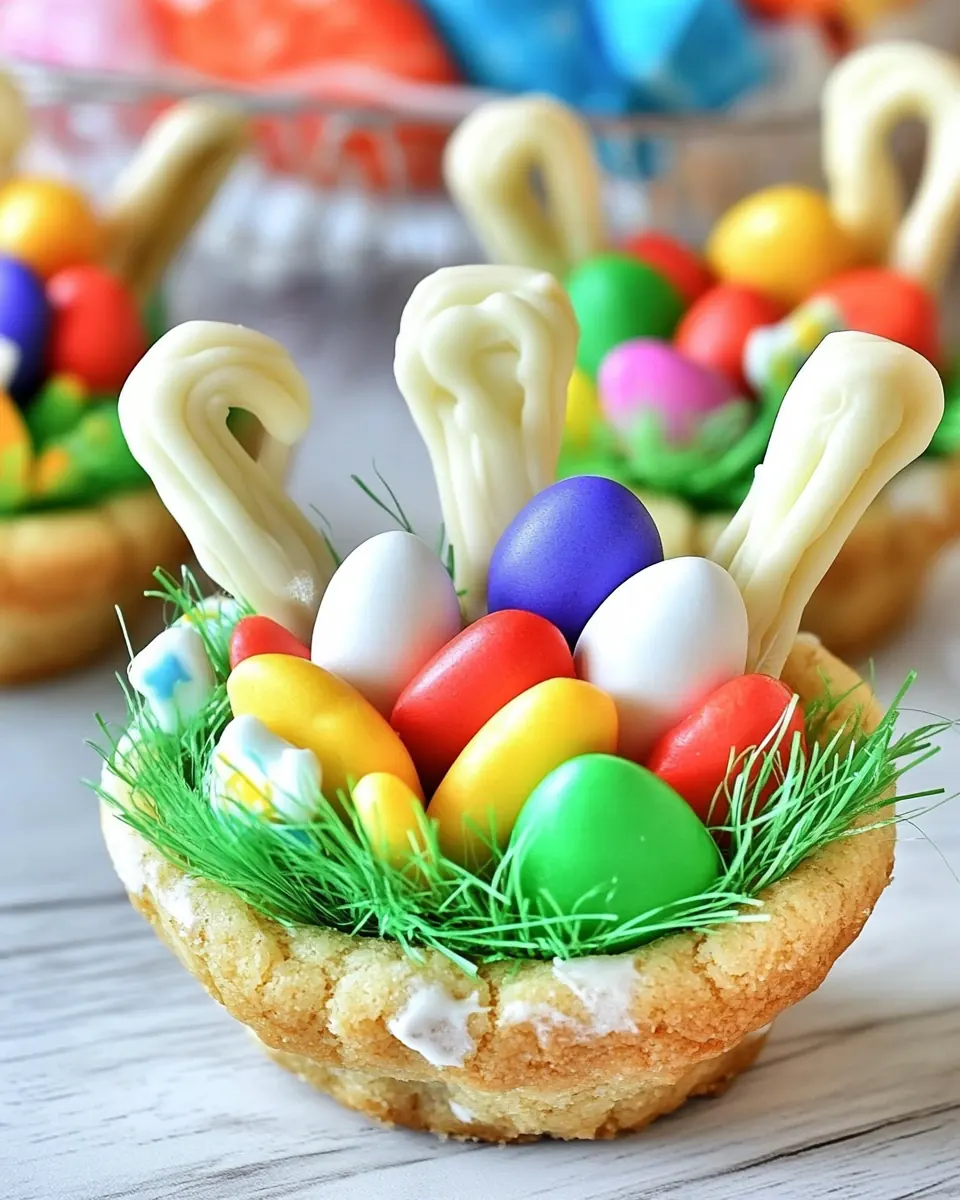
Press a jelly bean into the bottom of the cookie cup securing the Twizzler handle in place.: The initial jelly bean anchors the handle and gives a pop of color at the base. Press firmly but gently so the bean nests in the coating without sliding. If the coating has set too much, the bean will not adhere, so work while the coating is still tacky. Be mindful not to press so hard that you distort the cup walls.
Fill with 3-5 more jelly beans.: Adding additional jelly beans provides a satisfying mound of color and crunchy chew. Distribute them evenly so no cup looks sparse. Overfilling can push against the handle and make the presentation unstable, so aim for a balanced fill per cup for both looks and stability.
Repeat until finished. Go make someone smile!: As you repeat these final steps, the rhythm of dipping, decorating, and filling becomes meditative, and you will notice a consistent shine across each cup. The repeated actions help develop speed, but beware of rushing which can cause sloppy coating. Take your time and enjoy the process, because the small details are what turn simple cookie cups into memorable treats.