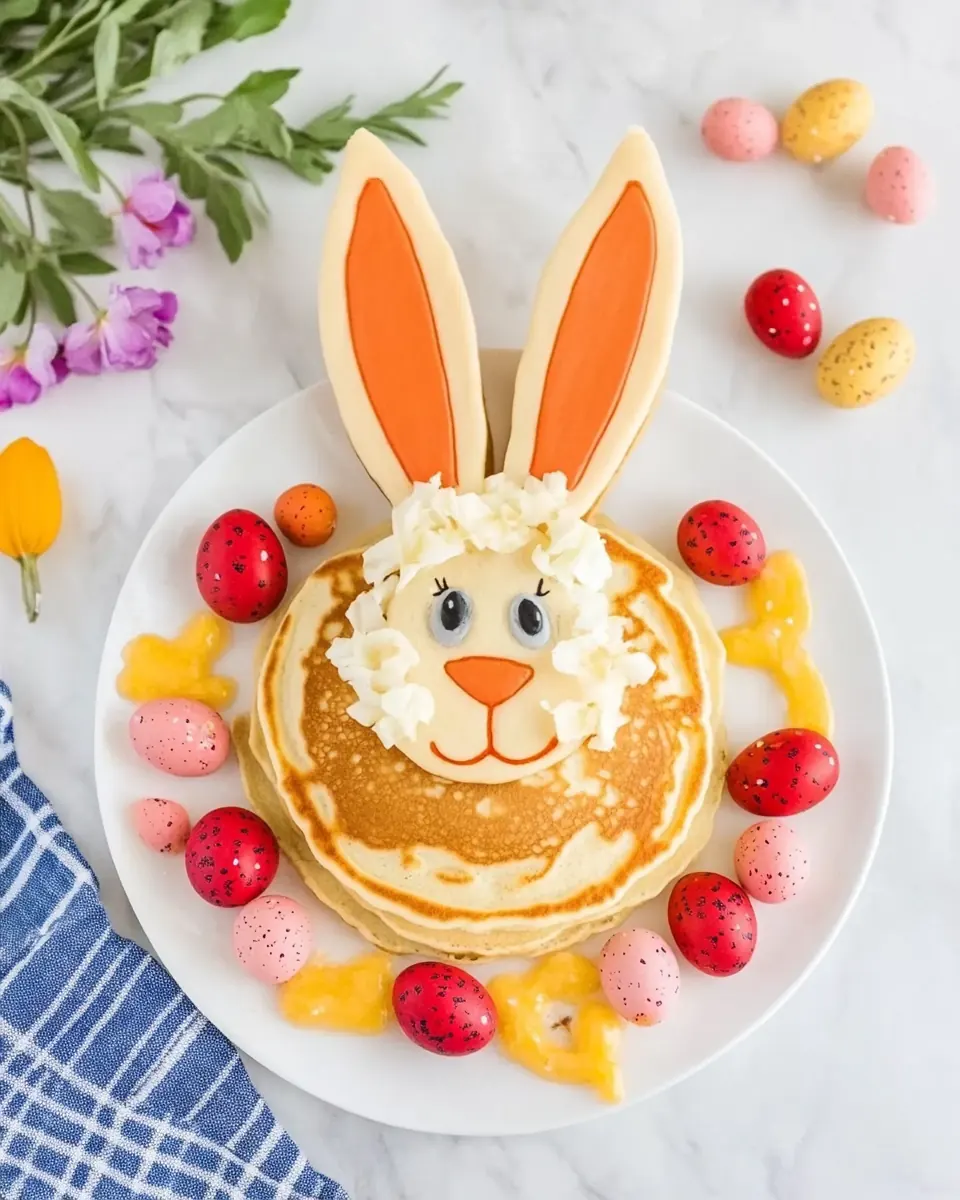
Start with the pancake batter. Place the banana and eggs in a blender and blend until smooth, about 10 seconds. Add the flour, milk and baking powder and blend until just combined, about 5 seconds. If, for some reason, the batter is too loose, add 1 extra tablespoon of flour.: The mixture will smell faintly sweet and fresh, with the warm banana aroma coming forward as the blender whirs. You want a glossy, slightly thick batter that pours slowly, not runny syrup, so pay attention to the sound of the motor and the way the mixture folds back into itself when you stop blending. This quick blending keeps the batter light instead of overworked, which preserves tender texture. One common mistake is overblending, which can develop gluten from the all purpose flour and make the pancakes chewy, so pulse only until combined. If the batter seems too loose, the small addition of an extra tablespoon of all purpose flour will thicken it without changing the flavor dramatically. Because the banana contributes moisture, slight variations in ripeness will affect consistency, hence the advice to adjust sparingly.
Heat a large nonstick pan over medium low heat, and brush it with a little butter. Pour a ladle of pancake batter, and cook each pancake until small bubbles form, then flip it on the other side and cook for one more minute.: You will hear a low sizzle when the batter hits the pan and smell a warm, toasty note as the surface sets. The visual cue is the appearance of small, evenly spaced bubbles across the top, and the edges will look matte rather than wet. That is your cue to flip; use a thin spatula to ease under the edge so the big pancake and the small ones keep their shape. After flipping, the second side cooks quickly into a soft golden brown, and you will notice a faint buttered aroma. A typical error is using too high heat, which browns the outside before the inside cooks, so keep to medium low for even doneness. Brushing with a little butter helps prevent sticking and adds a subtle richness to the crust.
For each bunny face, you’ll make three pancakes – one 5-inch large pancake, and two small 1 1/2 inch pancakes. They don't have to be exactly this size, as long as you make one big pancake and two small ones, you're good to go.: The contrast in sizes creates the head and cheeks, giving a pleasing proportion when you assemble the face. Visually aim for one round larger circle and two much smaller ones placed near the top to approximate ears or cheeks; this makes decoration straightforward. Sizing doesn’t have to be precise, the important thing is scale, so trust your eye if you do not have measuring tools. A usual pitfall is trying to pour too much batter for the small pancakes, which results in uneven cooking, so use a smaller spoon for the tiny rounds to keep them neat and consistent.
Once ready, transfer the pancakes onto a plate and prepare the decorations.: The pancakes will steam slightly when stacked, so let them rest briefly to keep the surfaces dry enough to hold the decorations. The warm pancakes should feel springy to the touch and give off a soft, baked scent. While they cool for a minute, arrange the fruit and vegetable pieces so you can decorate quickly, because warm pancakes are easier to manipulate and the toppings will adhere better. A frequent oversight is overcrowding the plate during transfer, which can smear edges, so move them carefully with a spatula and give each face a little space.
Cut a banana in half horizontally, then again in half vertically, to make two sets of bunny ears. Slice the remaining banana to make 2 sets of bunny eyes. Cut two more slices and cut them into rectangles to make two sets of teeth. Cut the 2 strawberries ends to make two bunny noses. Cut the carrot into 12 thin strips to make the bunny whiskers.: The sensory details here are tactile, you will feel the soft smoothness of the banana and the crisp resistance of the carrot as you slice. The bright red of the strawberries and the deep blue of the blueberries will contrast beautifully with the pale pancakes. Make clean, confident cuts so the pieces hold their shape during placement; a dull knife can squish the fruit and make messy shapes. One common mistake is slicing pieces unevenly, which makes assembly fiddly, so take a steady hand and a sharp blade. Arranging the whiskers from thin carrot strips gives a nice crunchy contrast to the soft pancakes and fruit, balancing texture in each bite.