Heat a large saucepan (it needs to be big enough to hold all the ingredients) over a medium heat. Add the marshmallows, white chocolate and coconut oil.: The moment you hear a gentle hum from the pan and feel warmth radiating up, you know the pan is ready. The marshmallows and white chocolate will melt more uniformly in a roomy saucepan, and the heat should be steady rather than fierce. You will notice the marshmallows start to slump and the white chocolate soften, giving off a sweet, toasty aroma that fills the kitchen. This step matters because too small a pan causes crowding and uneven melting, and too high heat will burn the sugars. Common mistake to avoid is cranking the heat which leads to scorched bits, so keep the flame moderate and patient.
Stir until they are melted and combined. Remove from the heat.: As you drop the marshmallows into the pan and add the white chocolate and coconut oil , the mixture looks lumpy at first, then begins to gleam as the solids soften. You will hear a very faint soft bubbling, and the air fills with a warm sweetness. Stirring encourages the pieces to collapse into a uniform mass, and the oil helps the surface become glossy. The why here is simple, the fat integrates with the sugars to give a pliable texture that will coat the popcorn . A frequent blunder is adding ingredients to an overheated pan, which can make the mixture seize; use medium heat and patience.
Stir through vanilla extract and salt, and then stir through the popcorn so that all the popcorn is completely coated in the marshmallow mixture.: At this stage the texture shifts from separated bits to a smooth, viscous ribbon when you lift the spoon. You will see the mixture become a satiny, cohesive mass, and the sweet scent deepens with a hint of caramelization. Gentle, continuous stirring ensures no chunks remain and that the white chocolate fully dissolves into the marshmallow. This technique prevents graininess and creates a glossy coating that will cling to the popcorn . Avoid the common error of stopping too soon, which leaves unmelted pieces that will not bind the balls properly.
Lay out a sheet of baking paper, parchment paper or a non stick silicone mat on your bench top.: As soon as the mixture is homogenous, take the pan off the heat to avoid overcooking. The warmth will remain sufficient to keep the mass pliable, but leaving it on the burner risks darkening the sugars. You may notice a faint steam and the smell will mellow slightly once removed. This pause is crucial, because residual heat will continue to soften things; removing promptly preserves a soft, chewy finish rather than a hard candy texture. A mistake people make is leaving it on the hot burner, which can quickly change the consistency.
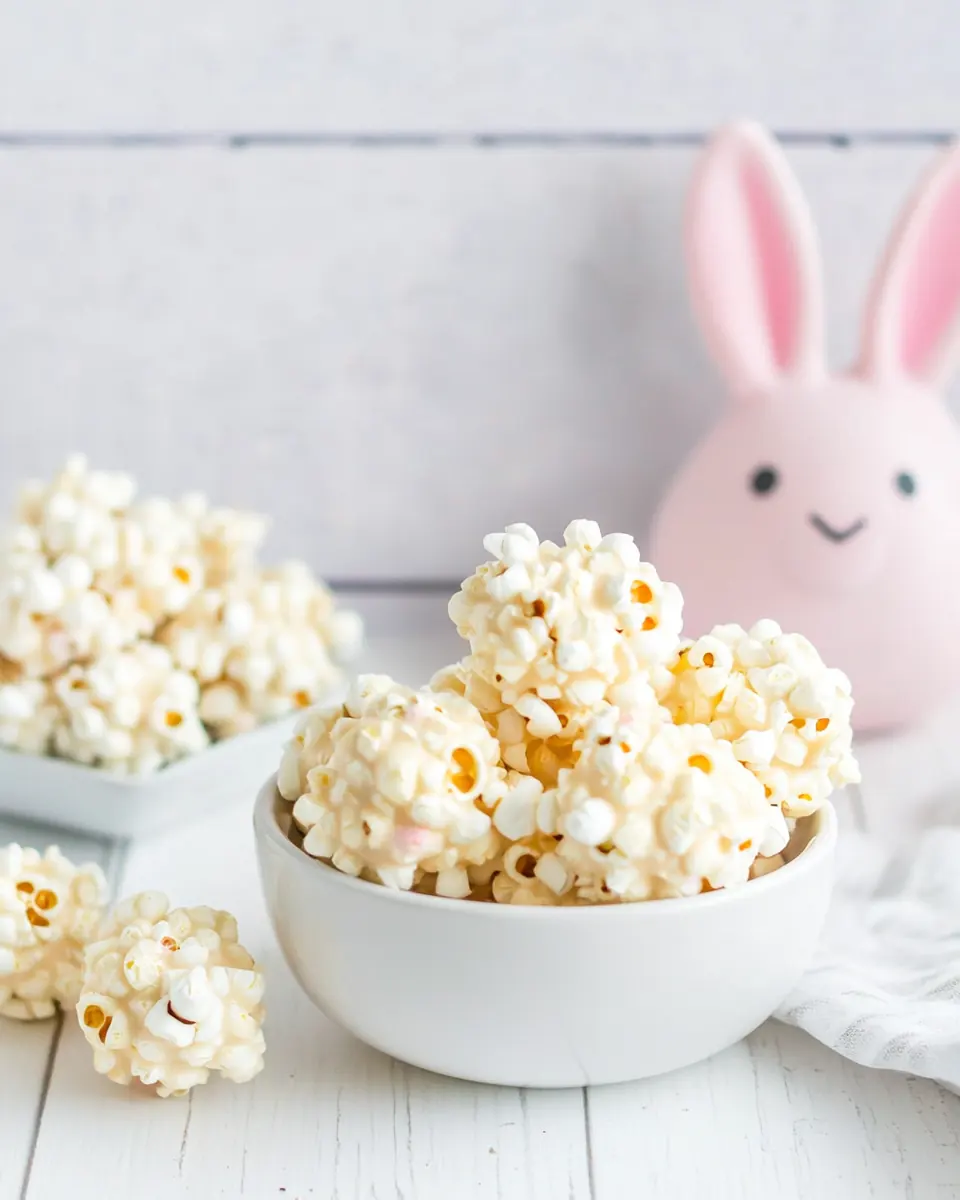
Roll handfuls of the popcorn into balls (bunny tails). Leave to harden, then store in an air tight container.: Once you add the vanilla extract and pinch of salt , the aroma brightens and the flavor profile rounds out. Stirring these in off heat keeps the vanilla fragrant and prevents evaporation. When you fold in the popped popcorn , work with scoops and gentle folding motions so each kernel becomes lightly glazed rather than clumped into one mass. The visual cue is every piece appearing glossy and slightly translucent; the sound becomes quieter as air pockets are bridged by the coating. Important why note, even coverage ensures balanced bites of sweet and airy popcorn. A common slip is overmixing which can compress the popcorn, so fold gently and stop once coated.
Enjoy.: Preparing your workspace makes rolling effortless. The surface will catch any drips and let you set the shaped balls down without sticking. You will feel the slightly warm breeze off the mixture and see the glossy texture holding together. Why this matters is obvious, a nonstick base saves time and frustration when you place the balls to set. People sometimes skip this and then struggle to lift or transfer the balls, so have your paper ready before you start rolling.
Roll handfuls of the popcorn into balls (bunny tails): When you bring handfuls together you will sense the warmth and slight tackiness of the coating. Use lightly oiled hands or a lightly greased scoop to shape each ball, pressing just enough to compact them into a stable sphere while preserving some airiness. The smell is sweet and toasty, and the surface should be smooth and shiny. The reason this shaping matters is texture; too much pressure makes dense, hard balls, while too little causes them to fall apart. A typical mistake is rolling with dry hands, which causes sticking; keep a little coconut oil on your palms to glide through the process.
Leave to harden, then store in an air tight container: As the balls cool, they firm slightly and the sheen dulls to a subtle gloss. The cooling brings a gentle crisp to the outer layer while the interior remains pleasantly chewy. Room temperature sets them best, and once they are no longer sticky to the touch, transfer to an air tight container to preserve texture. This step ensures they stay fresh for days and prevents them from drying out. A common error is sealing them while still warm, which traps steam and makes them soggy, so always wait until they fully cool.
Enjoy: The first bite delivers a mingling of crunchy popcorn and sweet, elastic marshmallow, with the faint background of white chocolate and a whisper of vanilla . Taste for the balance of sweet and salt, and appreciate the contrast of textures. Savoring one fresh from the batch is one of my favorite simple pleasures. Beware of biting too quickly if you cooled them; a warm center can be sticky, so let them set fully for the best experience.