Combine sugar, butter, and milk in a heavy saucepan.: You'll notice the grains of sugar glinting as they meet the softened butter and the pale, dense sheen of evaporated milk . Use a heavy saucepan to ensure even heat distribution, the mixture will begin to dissolve and steam gently, releasing a sweet, faintly caramel aroma. The 'why' is straightforward, even heat prevents scorching and creates a homogeneous base. If the pan is too light, you may get hot spots that burn the sugar, so stir patiently until the sugar looks mostly dissolved and the liquid appears unified.
Bring to a boil stirring constantly. Continue boiling for about 5 minutes over medium heat, stirring until the candy thermometer reaches 234º.: At first the mixture will bubble slowly, then move to a rolling boil where the sound becomes steady and the steam intensifies. The color deepens slightly, and you will smell a toffee like note as the sugars concentrate. Hitting 234º is critical for the final set; it ensures the fudge will firm but stay tender. Stirring constantly prevents crystals from forming and keeps the temperature even. One mistake is letting the boil go unattended, which can rapidly push the temperature past target and make the candy grainy, so stay close and use a reliable candy thermometer.
Remove from heat, stir in chocolate till melted.: Once off the flame, the saucepan will stop bubbling and the surface will calm, releasing a warm, cocoa forward scent. Adding the semi-sweet chocolate chips to the hot base harnesses residual heat to melt them slowly, producing a glossy emulsion. The reason this matters is that melted chocolate binds with the sugar mixture for smoothness and shine. A common error is adding chocolate to a pan that is still too hot, which can break the emulsion and result in grainy or oily texture, so give the pan a brief moment off heat before stirring in the chips.
Add marshmallow crème and vanilla and mix till completely combined.: When you scoop in the marshmallow creme , you'll see a fluffy cloud folding into the darker chocolate, lightening the texture and scent. The mixture becomes silkier and slightly lofted, with vanilla brightening the aroma. This step softens the final bite and ensures the fudge remains tender rather than overly firm. Overworking here can whip in air and change the mouthfeel, so fold gently until the mixture looks uniform and glossy.
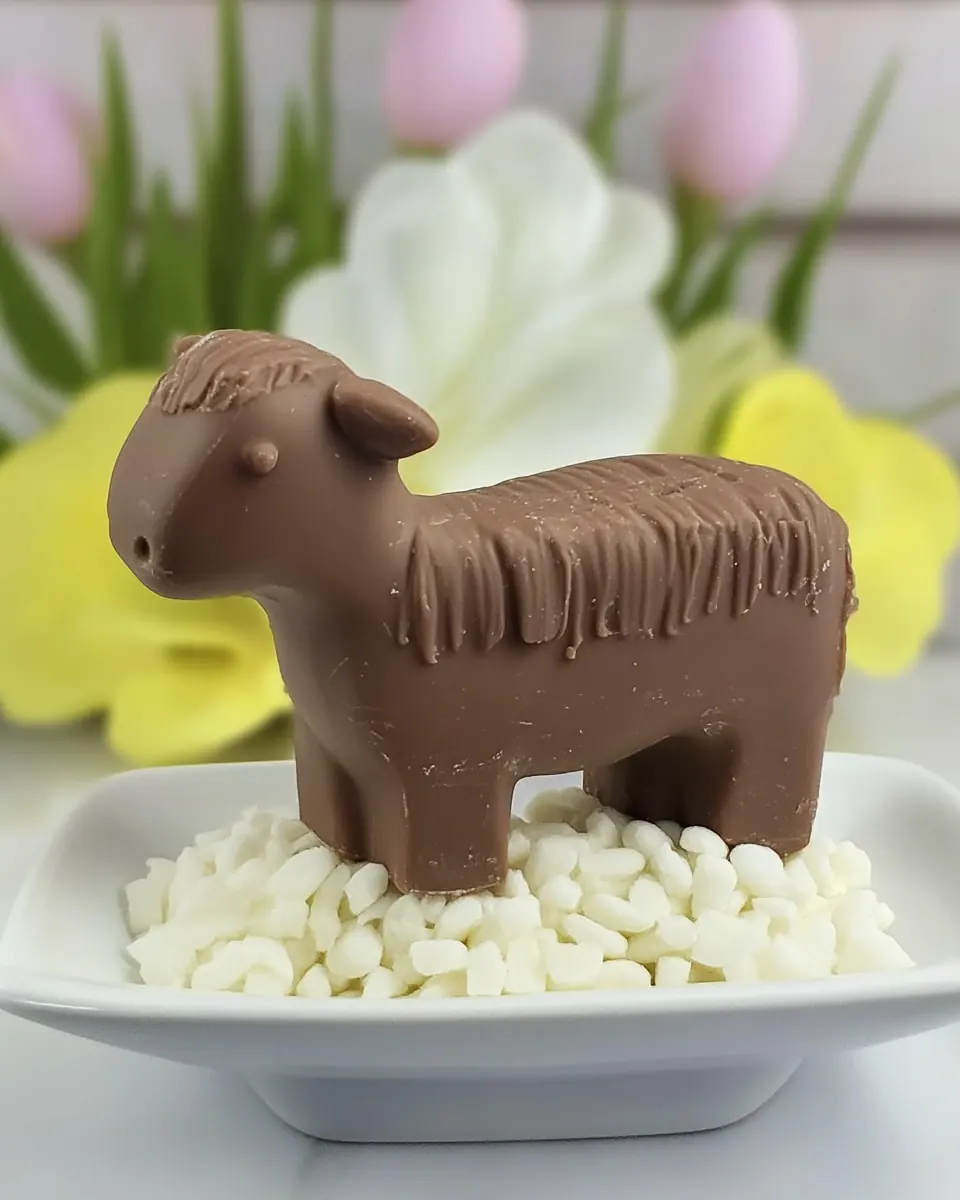
To make a Fudge Lamb, pour into a greased mold. Allow to cool upside down.: Pouring is where the texture and appearance come together, you should notice a thick, glossy ribbon as the mixture leaves the spoon and pools into the mold, settling with a satin sheen. Greasing the mold ensures clean release; a light coating yields edges that look neat and professional. If you pour while the mixture is too hot, it may shrink excessively as it cools or warp delicate molds, so aim for warm but pourable consistency.
Allow to cool upside down: Cooling upside down gives the surface a glossy tension and helps the lamb release cleanly once set, especially in molds with fine details. As it cools you will feel the temperature drop and the candy will firm, forming a pleasant bite but still slightly yielding to the tooth. Cooling too quickly in a cold environment can lead to surface bloom or minor cracking, so bring it to room temperature first before chilling if you want a firmer set. Patience here rewards you with a smooth exterior and perfect slices.