Preheat oven to 350 degrees. Spray an 8-inch springform pan with nonstick spray. See notes.: You will notice a warm, slightly sweet aroma as the oven reaches temperature, which helps set the edges once the dough goes in. Preheating is essential so the cookie cake begins baking immediately, producing that pleasing contrast of a golden rim and tender center. A common mistake is placing the cake in a cool oven, which changes spread and texture, so wait until the thermometer reads steady heat. Spray an 8 inch springform pan with nonstick spray to ensure easy release, and if you prefer, line a regular pan with parchment for safer removal.
In a large mixing bowl cream butter, brown sugar, and white sugar until light and creamy.: At this stage you should see the mixture lighten in color and take on a fluffy, aerated texture, which traps tiny air pockets that contribute to tenderness. The sound of the mixer will change from heavy to a steady hum as the sugars incorporate. Proper creaming ensures even rise and prevents dense spots in the cake. If you skip thorough creaming, the texture may be uneven, so scrape the bowl sides periodically and mix until the mixture looks pale and slightly ribbon like.
Separate one of the eggs. Add one egg, one egg yolk, and vanilla to the butter mixture. Mix until well combined and discard the extra egg white.: The yolk adds extra richness while the single white keeps the batter balanced. You should see the batter become smoother and glossier after adding these, with a fragrant lift from the vanilla . One mistake is adding a cold egg directly from the fridge, which can cause the butter to seize and look curdled; bringing eggs to room temperature helps them blend seamlessly. Discard the extra egg white or save it for another use to keep proportions correct for texture.
In a separate bowl mix together the flour, cornstarch, baking soda and salt until combined. Add these dry ingredients to the wet ingredients and mix until combined.: Whisking these dry ingredients until uniform ensures consistent rise and avoids pockets of cornstarch or soda. You should notice a faint flour dust cloud and an even distribution of the lighter cornstarch. This step matters because it controls structure, ensuring the cake is tender yet stable. A typical error is adding the dry mix without sifting or whisking, which can cause uneven texture or bites with too much leavening in one spot.
With a silicone spatula, add the chocolate chips and mini chocolate eggs to the dough. Gently fold into the dough until combined.: When combined, the batter should be cohesive but not overworked, with no visible streaks of flour. Mix just until you see a uniform dough, because excessive mixing develops gluten, leading to a tougher bite rather than the desired tender crumb. Stop mixing as soon as the last speck of flour disappears to preserve a soft texture; overmixing is the most common misstep here.
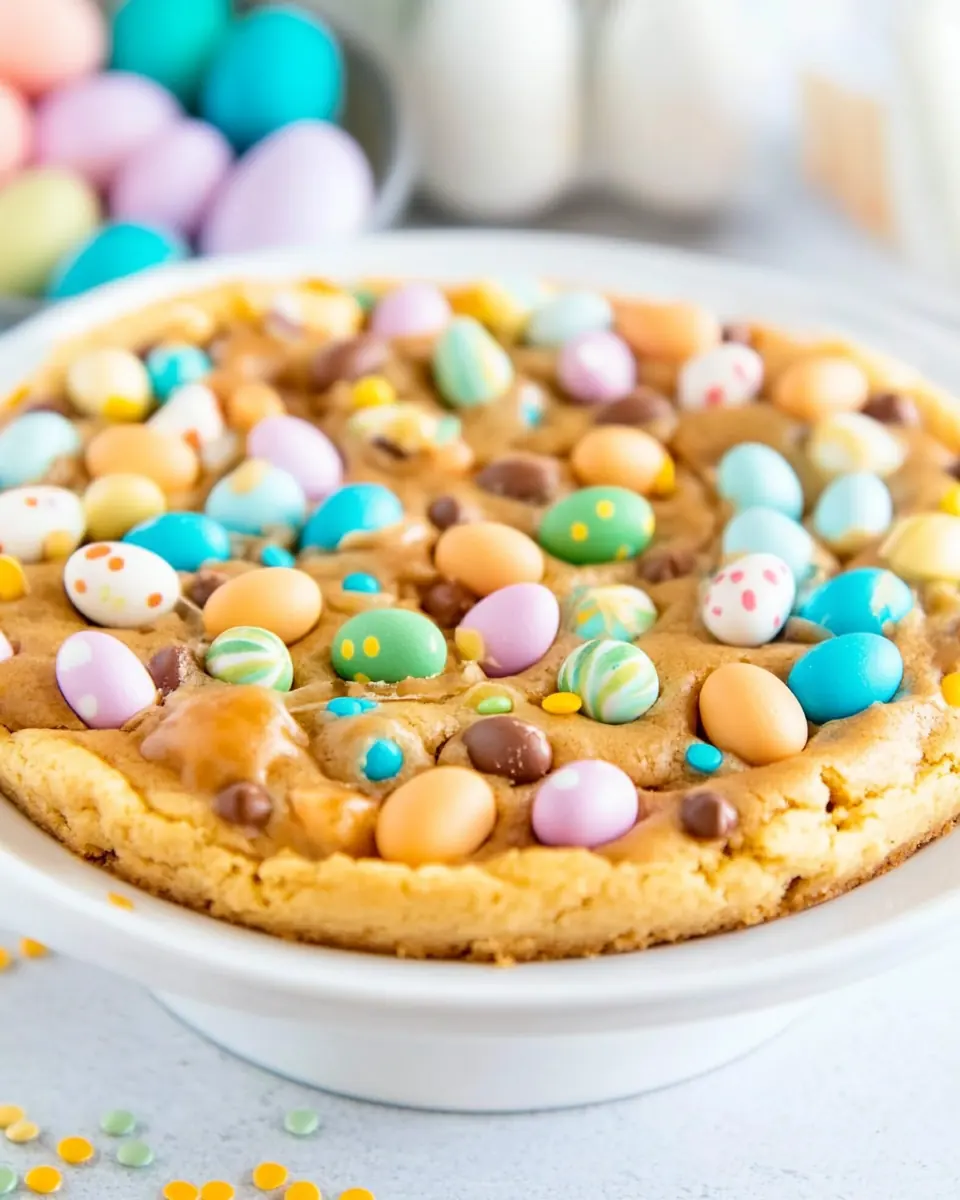
Spread cookie dough into the springform pan. Bake for 20-25 minutes until golden brown.: Folding by hand should show pockets of glossy chocolate chips and colorful mini chocolate eggs in the dough, giving a pleasing marbled effect. The gentle motion prevents crushing the eggs and bleeding their color into the dough. A loud scraping sound means you are overworking the dough, so keep the folds light. If you press too hard, you may break the candy shells and lose some of the visual appeal.
Gently run a short knife around the edge of the pan. Release the springform pan and allow the cake to cool on a cooling rack.: As it bakes you will smell the deepening notes of caramelized sugars and butter, and the top will shift from pale to a warm golden brown. The center will set but remain slightly soft to the touch, while edges become firmer and slightly crisp. Underbaking will leave the middle overly gooey, and overbaking will dry the cake, so check for a gentle wobble at around twenty minutes and aim for even browning. If using a glass pan, reduce time by a few minutes as it conducts heat differently.
In a large bowl combine the butter, vanilla and powdered sugar with an electric mixer until light and fluffy.: After removing from the oven, the aroma will intensify, and steam will rise from the surface. Running a knife around the edge prevents the cake from sticking as it cools and keeps the top intact. Doing this while too hot can cause the structure to sink slightly, so let it rest for a brief minute if the cake is still very fragile. A common oversight is forcing the release, which can tear the cake.
Separate the frosting into four bowls. Add a few drops of food coloring to three of the bowls, mixing to make one pink, one blue and one yellow. You should have one color of frosting for each color of mini chocolate eggs.: Cooling on a rack allows air to circulate under the cake, preventing soggy bottoms and helping the interior set gently. You will notice the cake firm up as it cools and the chocolate pockets settle into place. Allowing it to cool fully before frosting avoids melting the buttercream, which preserves your colored piping. Rushing this step leads to a smeared frosting surface and a less attractive finish.
Place each color of frosting into a piping bag or into a strong zip-top bag. Snip the corner from each bag with scissors.: The frosting should become pale and airy, with a smooth, spreadable consistency and a faint vanilla scent. The sound of the mixer will change as the powdered sugar is beaten in and the texture shifts from gritty to satin smooth. This aeration creates a stable frosting that holds color well. If the frosting seems too thin, add more powdered sugar cautiously; if too stiff, a few drops of milk or cream can help, but avoid thinning too much which will affect piping.
Pipe dots of the frosting in alternating colors around the top of the cake. Top each dot of frosting with the same colored chocolate egg. Slice and enjoy!: Portioning the frosting allows you to create distinct hues that match the mini chocolate eggs . Use gel food coloring for brighter shades without altering texture, stirring until each bowl has an even tone. If you mix too much color at once, you cannot easily lighten it, so add color gradually. Make sure to keep one bowl uncolored to preserve a neutral shade if desired.
Add a few drops of food coloring to three of the bowls, mixing to make one pink, one blue and one yellow: The colored frostings should look vibrant and hold peaks when stirred, which indicates the right consistency for piping. Matching the frosting to the candy colors creates a polished look, and the colors will pop against the warm cookie base. Over coloring can make the frosting taste slightly bitter, so use concentrated gel sparingly for the best balance.
Place each color of frosting into a piping bag or into a strong zip top bag: Filling bags should feel smooth and even, without air pockets that cause sputtering when piping. Snip a small corner for controlled dots, and practice a couple of test dots on parchment to check flow. If the frosting clogs or spits, the tip may be too small or the frosting too thick; adjust accordingly. Using bags prevents messy spreading and ensures neat, consistent dots on the cake.
Pipe dots of the frosting in alternating colors around the top of the cake: The piped dots provide a playful sequin like border and offer visual rhythm across the top. Place dots evenly by eye, aiming for consistent size, and the colors will create an appealing pattern. A shaky hand can lead to uneven dots, so brace your arms on the counter if necessary to steady your placement.
Top each dot of frosting with the same colored chocolate egg: Press each mini chocolate egg gently into its corresponding frosting dot so it sits securely and aligns color harmoniously. The contrast of smooth frosting and crunchy candy creates a delightful texture and a festive presentation. If the egg sinks, the frosting may be too soft; allow the dot to set briefly before placing the candy. Once decorated, slice and enjoy, watching for the satisfying combination of warm cookie, cool frosting and crunchy egg in every bite.