Preheat the oven to 400°F and line two baking sheets with parchment paper or baking mats; set aside.: The oven should be fully heated so the puff pastry leaps up immediately, creating distinct layers that are crisp and airy. You will know the oven is ready when it holds a steady heat and the air feels dry when you open it briefly. Lining the sheets prevents sticking and promotes even browning, and I prefer parchment because it helps the bottoms color without burning. A common error is placing pastries into a cooler oven which yields flat, greasy results, so allow the full preheat time. The sound you want later is a gentle crackle as the edges finish browning.
Roll out each sheet of thawed puff pastry on a lightly floured work surface. Cut into 4 squares then cut each smaller square in half diagonally to form eight triangles from each sheet of pastry. Place the pastry triangles on the lined baking sheets then prick each triangle several times with a fork, leaving a 1/2-inch un-pricked border around the edges.: As you roll, the puff pastry should remain cool and slightly firm, not sticky or droopy. Rolling thin but even encourages consistent puffing in the oven, and the triangular shape makes assembly intuitive. Pricking the center prevents large air pockets from forming directly under the filling, while the unpricked border encourages the edges to puff up and create a rim. Look for a smooth, slightly glossy surface; if it becomes tacky, chill briefly. Watch for over pricking, which risks deflating the pastry and producing dense patches, so keep the fork touches light and evenly spaced.
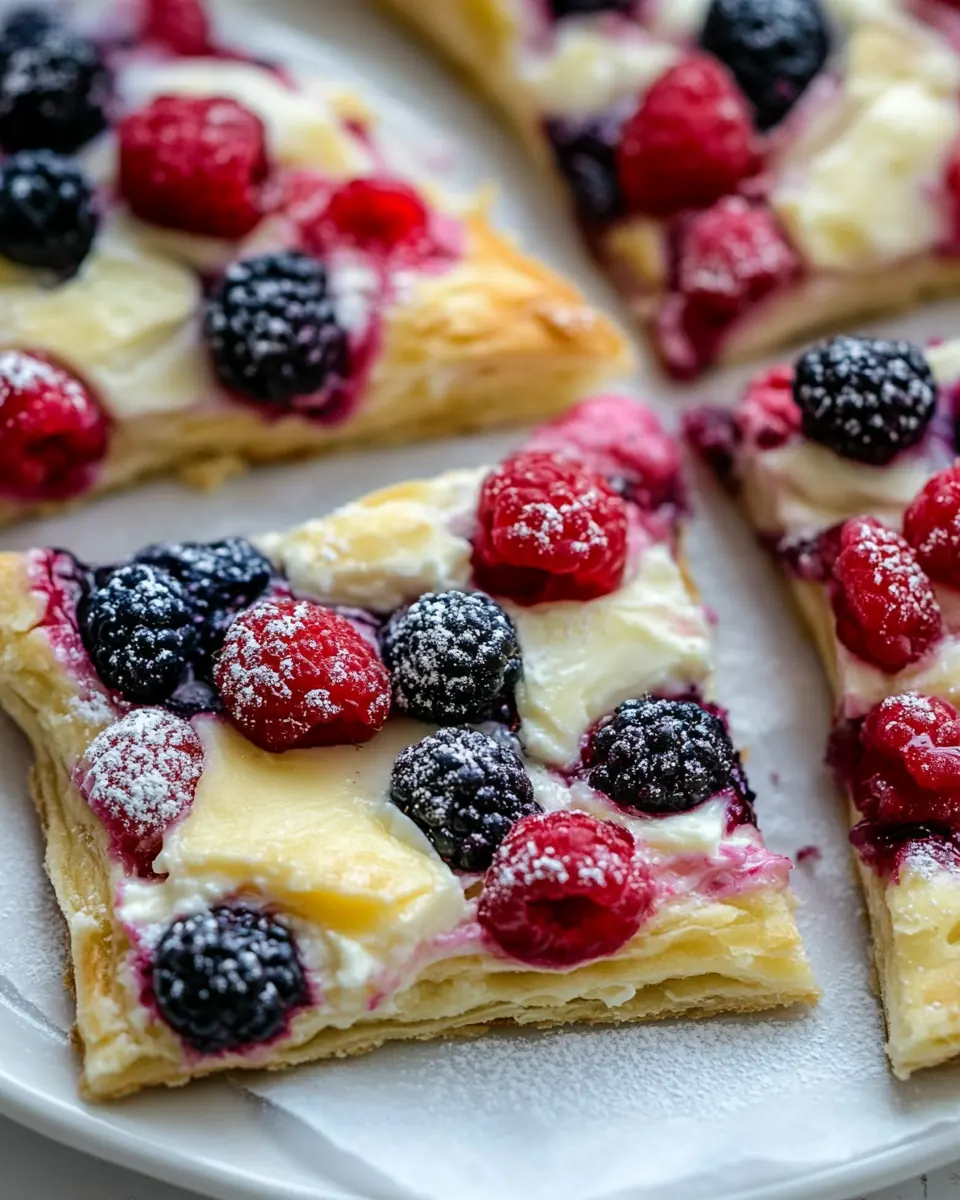
Spread a portion of the cream cheese in the centers of each triangle, leaving a 1/4-inch border around the edges. Top the cream cheese with a portion of desired berries or fruit.: The softened cream cheese should spread like a thick satin, providing a creamy bed for the berries . Leaving that quarter inch border is crucial so the edges can puff and crisp without sealing the filling out. Arrange the berries gently so they stay in place, and vary sizes so each pastry gets a pleasant balance of fruit. You should see a neat pool of cream cheese with a colorful fruit crown, not a messy overflow. If you overfill, juices will leak and the pastry base may become soggy, so err on the side of modest portions for the cleanest results.
Bake the pastries for 15 to 18 minutes, or until golden brown and puffed around the edges. Once cooled, sprinkle with powdered sugar (optional).: During baking, watch as the ruffles along the edges rise and take on a deepening golden tone, releasing a warm, buttery aroma. The centers should set but remain soft, while the crust becomes crisp and shatteringly light. Listen for a soft crackle as the pastry finishes; that tactile crispness is the hallmark of a well baked puff. If the tops are browning too quickly, lower the oven rack or tent loosely with foil to prevent overbrowning while the centers finish. After cooling slightly, a dusting of powdered sugar adds charm, but skip it if you prefer a less sweet finish. Cutting into one will reveal distinct layers and a creamy, fruity interior when done properly.