In a large pot, combine the lentils, water, rosemary, and garlic clove. Bring to a boil over medium-high heat. Reduce to a simmer and cook for 15-20 minutes, or until the lentils are soft and cooked.: The moment the pot heats you ll smell the faint rosemary and garlic mingling, an herbal steam that promises depth. Use a pot with enough room so the lentils can simmer without overcrowding, which helps even cooking. Keep the lid off at first so you can notice when it comes to a lively simmer, and watch for tiny bubbles breaking the surface. A common mistake is adding too much water which can lead to mushy lentils, so follow the water ratio closely. If you see foamy starch rising, skim it off for a cleaner tasting base.
While the lentils cook, make the dressing. Whisk the olive oil, lemon juice, and Dijon mustard in a bowl. Season with salt and pepper and set aside.: As the heat builds, listen for a gentle rolling bubble sound, which signals the water has reached boiling. That audible change means the lentils are about to start absorbing water rapidly, and timing from this point is more reliable. Boiling briefly before reducing keeps the cooking active and consistent. Avoid leaving the pot unattended at this stage because vigorous boiling can foam over, and that s messy to clean.
Once the lentils are done cooking, drain them and discard the garlic clove and rosemary. Rinse gently with cold water and transfer to a bowl.: At a simmer you should see small, gentle bubbles and occasional movement, not an aggressive boil. Test a lentil at 15 minutes; it should be tender but not falling apart. The aroma will shift to a mellow, nutty scent. Overcooking results in a mushy texture, so check early if you prefer firmer bites, and reserve some cooking water in case you need to adjust texture later.
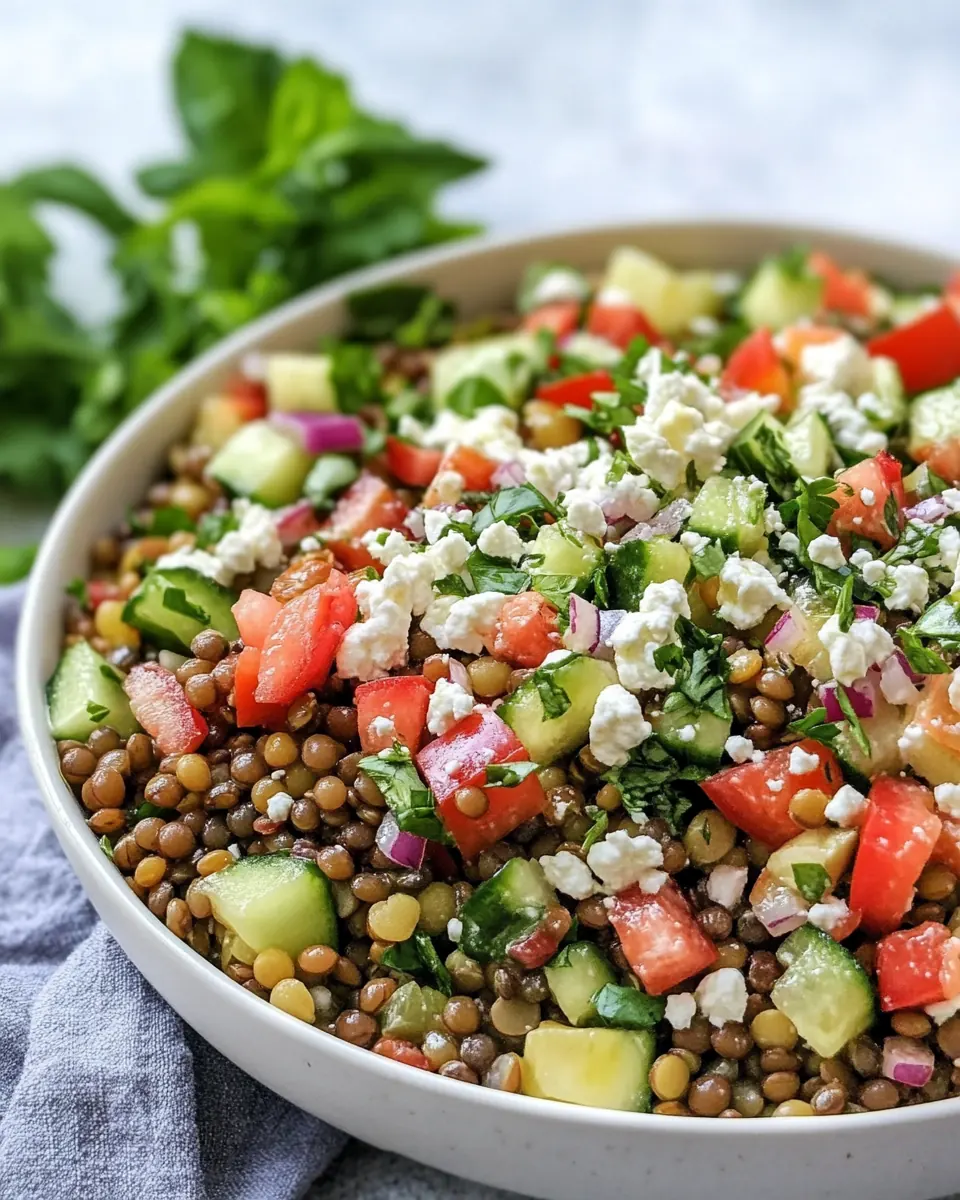
Add the cucumbers, cherry tomatoes, and red onions to the bowl with the lentils and combine well.: Whisking the extra virgin olive oil , lemon juice , and Dijon mustard creates a bright, glossy emulsion that clings to vegetables. Emulsify by whisking briskly until the mixture thickens slightly and becomes uniform in appearance, you will notice small suspended droplets instead of separate layers. Season with salt and black pepper and taste; the right balance is bright but not aggressive. A common mistake is under seasoning, so be bold when you taste the dressing before adding it to the salad.
Drizzle with the dressing, and toss the lentil salad until well combined. Top the salad with the crumbled feta cheese and chopped Italian basil.: Draining stops the cooking and prevents soggy texture, and discarding the aromatics keeps flavors subtle. Rinsing the lentils briefly with cold water shocks them and cools them quickly, preventing residual heat from wilting the vegetables. You should feel the grains separate and slightly springy between your fingers. Avoid rinsing for too long or forcing cold water which can wash away some flavor; a gentle rinse is enough.
Rinse gently with cold water and transfer to a bowl: The sound of cool water on the lentils and the visual change to a matte, separated surface tells you they re ready. Transferring to a bowl that s large enough to toss makes mixing easier and reduces spills. If the lentils seem sticky, a light toss will help them fluff up. One mistake is using a bowl that s too small, which can make dressing distribution uneven, so choose a roomy vessel.
Add the cucumbers, cherry tomatoes, and red onions to the bowl with the lentils and combine well: As you add the diced cucumber , cherry tomatoes , and red onion , notice the color contrast and the fresh scent of vegetables. Toss gently so the vegetables mingle with the lentils without crushing them; a couple of careful turns ensures even distribution. This step is about texture harmony, so resist over mixing which can bruise the produce. A common pitfall is adding wet vegetables straight from cold storage; let them sit briefly if they are excessively icy.
Drizzle with the dressing, and toss the lentil salad until well combined: When the dressing hits the bowl you ll see a subtle shine coat the ingredients, and aromas of lemon and olive oil will rise. Toss in a way that lifts and turns rather than mashing, so each piece gets a light coating. Taste and adjust seasoning; the dressing should brighten but not saturate the salad. Avoid adding too much dressing at once, start with a portion and add more if needed to prevent a soggy outcome.
Top the salad with the crumbled feta cheese and chopped Italian basil: Finish by scattering the creamy feta cheese and fragrant basil , which add visual appeal and bursts of flavor. The saltiness of the feta cheese pairs with the lemon and herbs, creating a layered finish. Break the cheese into small pieces so it blends through the salad, and sprinkle the basil last so it stays fresh and green. A common error is chopping herbs too early which makes them lose vibrancy, so add them at the end.