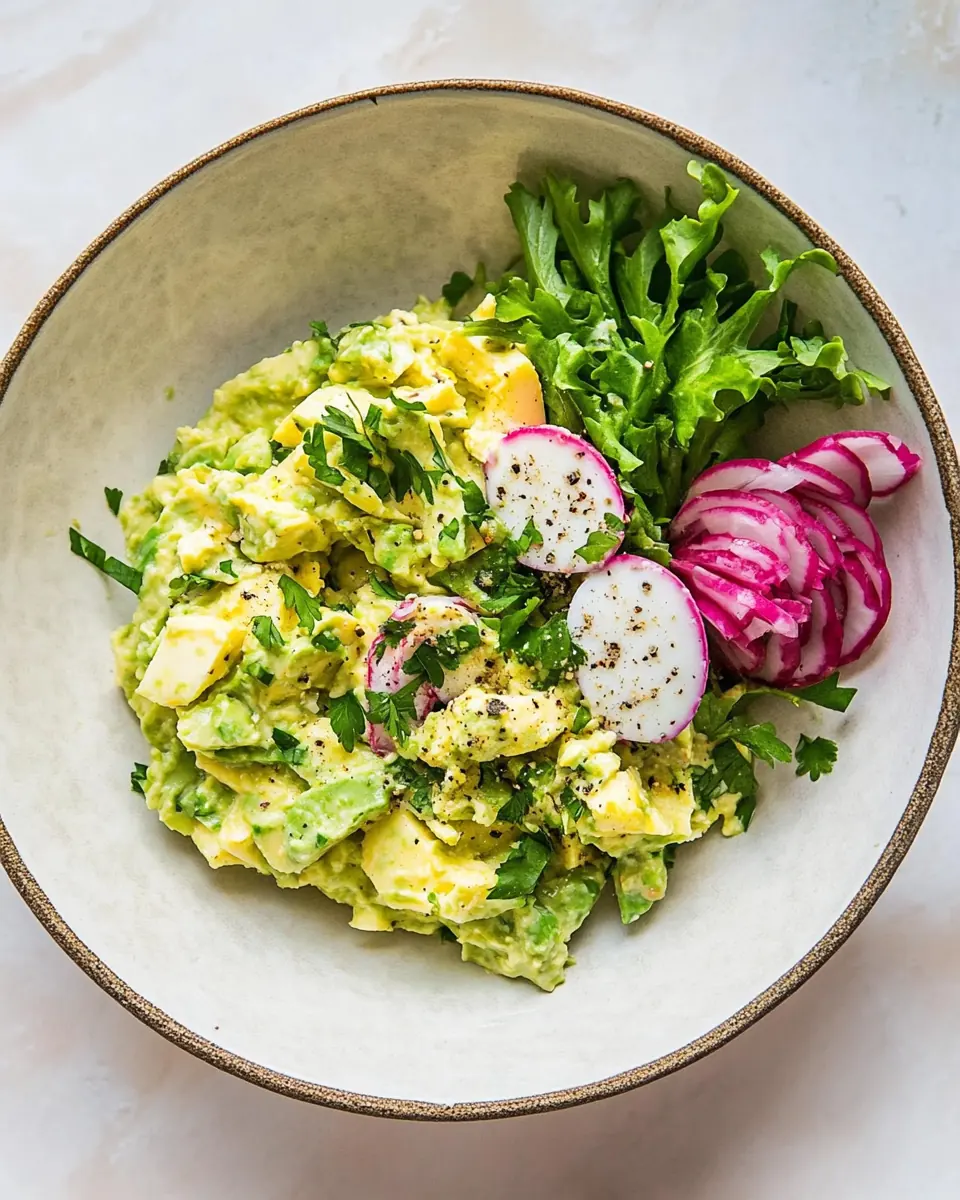
Dice the eggs until they are about a quarter inch in size. Put diced egg in a bowl.: The room will fill with a clean, slightly savory scent from the eggs , and you should see neat, tender cubes that hold their shape. I prefer using a sharp knife to avoid crushing the pieces; a gentle rocking motion works well. Aim for uniformity so the texture is consistent in every forkful. One common mistake is mashing instead of dicing, which leads to a pasty texture rather than pleasant, distinct pieces. If your eggs have a watery edge, pat them dry on a paper towel first to keep the salad from becoming watery.
Cut the avocado in half lengthways and remove the pit. Use a knife to carefully dice the avocado and then scoop it out with a spoon. Place avocado in bowl with diced egg.: You will notice a slight, comforting egg aroma as the pieces come together in the bowl, creating the base of the salad. Use a medium size mixing bowl so you have room to fold later ingredients without spilling. Gently transfer the eggs to avoid breaking the pieces and maintain their clean edges. Overcrowding the bowl can make mixing messy, so pick an appropriate size; too small a bowl encourages mashing. If the bowl is slippery, dampen a towel under it to keep it steady while you work.
Add red onion, lemon juice, olive oil, chives, radish, parsley, and capers to the bowl. Mix all ingredients together until they are well combined. Season with salt and pepper to your taste.: You will hear the satisfying snap as the knife reaches the pit, and the peel will separate from the flesh easily in a ripe avocado. Safety note, use a stable cutting surface and remove the pit carefully to avoid slips. A ripe avocado will yield slightly to pressure and smell faintly nutty. A common error is using an underripe fruit, which will resist cutting and be hard to mash later; if that is the case, let it ripen a day or two.
Use a knife to carefully dice the avocado and then scoop it out with a spoon: As you dice, the avocado will show a pale green interior that quickly darkens on exposure, which is why I work briskly. The cubes should be slightly yielding and glossy. Scoop them gently with a spoon to retain shape and avoid turning them into a puree. If the avocado is overly ripe it will become mushy, so handle it with a light touch. A frequent misstep is overmixing at this stage, which destroys the contrast between soft and chunky textures.
Place avocado in bowl with diced egg: The contrasting colors of pale yellow egg and green avocado are visually appealing and signal a balanced texture to come. When combined, these two ingredients create a luxuriously creamy base. Fold them together gently to avoid shredding the pieces; the goal is a cohesive mix where textures are still distinct. Avoid aggressive stirring which can liquefy the avocado and make the mixture heavy.
Add red onion lemon juice olive oil chives radish parsley and capers to the bowl: Suddenly the aroma brightens with citrus from the lemon juice and herbaceous notes from the chives and parsley . The little flecks of red onion and radish will provide pops of color and crunchy texture, and the capers lend a briny, savory lift. Add the ingredients in an even layer so they distribute easily, then use a wide spoon to fold gently. One mistake is adding too much dressing at once; add and taste as you go to maintain control over texture and seasoning.
Mix all ingredients together until they are well combined: You will hear a soft, gentle rustling as ingredients meet and the salad begins to hold together. The goal is an even distribution of flavors, with each bite offering a balance of creamy, bright, and briny. Mix with a folding motion to preserve chunkiness, scraping the bowl sides to incorporate everything. Overmixing reduces the contrast and can make the salad soggy, which I have seen when people use a blender or food processor incorrectly. If the mixture seems dry, add a touch more olive oil or a squeeze of lemon juice sparingly.
Season with salt and pepper to your taste: The final seasoning will awaken the flavors; the salt amplifies aroma while the pepper adds a gentle warmth. Taste small spoonfuls and adjust gradually, because capers already add saltiness. I recommend seasoning in two stages, tasting between additions, so you avoid over salting. A common problem is adding too much salt at once; remember you can always add more, but you cannot remove it. If you oversalt, a little extra mashed avocado can help mellow the concentration.