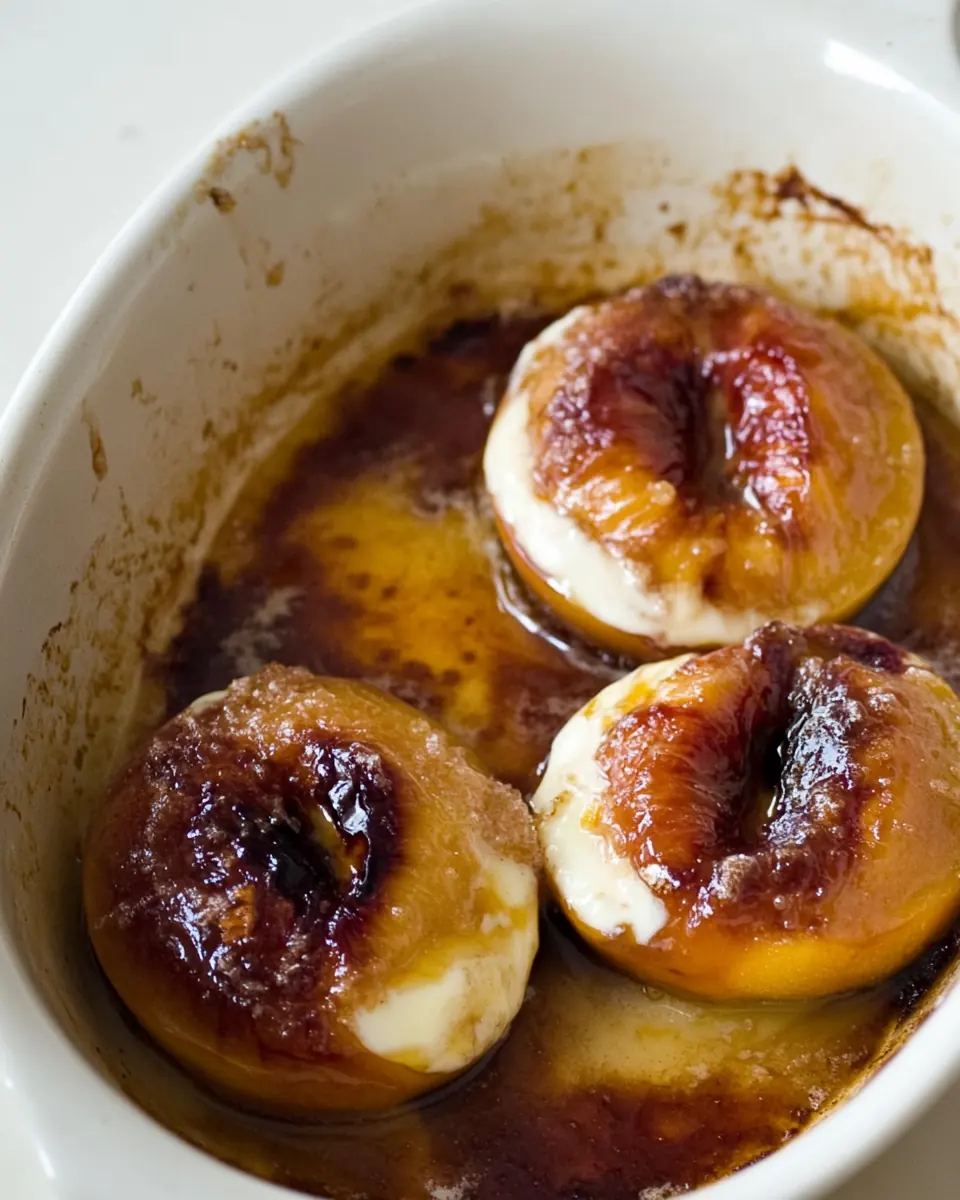
Preheat your oven to 180°C (350°F). Arrange the peach halves, cut side up, in a baking dish. Splash Amaretto over the peaches, letting it pool in the hollows left by the pits. Sprinkle each half lightly with 1/2 the muscovado sugar.: The moment the oven warms, you will notice a steady, dry heat that prepares the metal dish to begin caramelising the fruit surface as soon as it hits the oven. It is important because an evenly hot oven encourages consistent softening of the peaches , rather than one side cooking faster than the other. When you slide the tray in you should hear a faint settling of air as the temperature stabilises. A common mistake is not waiting for the oven to reach heat, which leads to uneven texture and a less syrupy result.
Place the baking dish in the oven and bake for 8–10 minutes, or until the peaches soften but retain their structure.: When you place each peach half cut side up, their hollows become tiny wells that will collect the soaking liquid and melted sugar, forming pockets of concentrated flavour. Visually they should sit snug but not crowded so hot air can circulate. You will see the fruit flesh start to gloss as it releases juices. Avoid overcrowding, because packed fruit steams rather than roasts and you lose that caramel depth.
Spoon a generous dollop of Greek yoghurt onto each peach half. Sprinkle a little more muscovado sugar over the yoghurt.: As the Amaretto or chosen liquid hits the warm fruit it gives off an aromatic hit that blends with the peach perfume, enhancing the overall scent experience. The liquid settles into the hollows and will concentrate as the sugars dissolve, creating a syrup during baking. One pitfall is using too much liquid which prevents the sugar from concentrating, resulting in a thinner sauce instead of a syrup.
Grill Method: Place the peaches under a hot grill for about 5 minutes until the sugar starts to caramelise into a syrup.: When you dust each peach with half the sugar, the crystals sit on the surface and begin to melt in the oven, drawing out juices and turning amber. The sugar helps form a glossy, slightly sticky top, and the molasses notes deepen the fruit flavour. You will notice tiny beads of syrup forming around the edges as a cue that the sugar is doing its job. The error I see most is piling on too much sugar which overwhelms the fruit and masks the delicate peach aroma.
Blow Torch Method: Use a blow torch to caramelise the sugar for a crisp, brûlée-like topping.: As the peaches bake you will smell a warming, lightly caramel scent spreading through your kitchen, and the surface will take on a sheen while the flesh becomes tender. The goal is softened fruit that still holds shape, so aim for a gentle wobble when you touch the flesh. If left too long the halves will collapse and become mushy rather than pleasant slices. To troubleshoot, test one with a spoon after 8 minutes to judge readiness.
Serve warm for a comforting dessert or refrigerate and serve chilled for a refreshing option. For added crunch, sprinkle crushed Amaretti biscuits on top before serving.: The contrast between the warm, sweet peaches and the cool, tangy Greek-style yoghurt creates a layered mouthfeel that lifts the whole dessert. As you spoon it on you will hear a soft plop and see the creamy white nestle into the peach hollow, occasionally melting slightly at the edges which creates a silky marrying of textures. A common misstep is adding the yoghurt too early in the oven, which causes it to thin out and lose its refreshing tang.
Sprinkle a little more muscovado sugar over the yoghurt: This second dusting gives the option of further caramelisation when using the grill or blow torch, and it adds a touch of sweetness to the cool yoghurt surface. The sugar crystals will sit on the creamy surface until heat is applied, offering an opportunity to create contrasting textures. If you skip this or use too little, you lose the crisp, sweet top; if you use too much, the yoghurt can become overly sweet and mask its tart balance.
Grill Method place the peaches under a hot grill for about 5 minutes until the sugar starts to caramelise into a syrup: Under the grill the sugars will blister and bubble, giving you audible tiny pops and a toasted scent as the surface caramelises. This method delivers charred, flavourful highs and a deeper colour on the fruit edges. Watch closely because the process happens quickly, and a common problem is letting them sit too long which results in burnt sugar rather than caramel.
Blow Torch Method use a blow torch to caramelise the sugar for a crisp brûlée like topping: Using a torch creates immediate, localized caramelisation, producing a crisp shell that cracks beneath your spoon, revealing warm fruit and cool yoghurt beneath. The visual is dramatic, and the torch gives precise control over where the crisping happens. One must be careful with the flame speed and angle to avoid charring the fruit or overheating the yoghurt which would make it runny.
Serve warm for a comforting dessert or refrigerate and serve chilled for a refreshing option: Warm peaches offer melted syrup and a comforting aroma, while chilled peaches have a firmer texture and a refreshing quality, especially with the cool Greek-style yoghurt . If chilling, allow them to come fully to temperature so flavours set and the yoghurt firms up slightly. Avoid storing them with the yoghurt already added if you want textural contrast, because refrigeration can make the topping thin and watery.
For added crunch sprinkle crushed Amaretti biscuits on top before serving: The crunchy biscuit garnish adds nutty, almond notes and a contrasting texture to the soft fruit and creamy yoghurt. Sprinkle right before serving to keep the crunch, and you will get a satisfying contrast in every forkful. A typical mistake is pre topping, which makes the biscuits soggy and dulls the intended effect.