Prep your ingredients. Start by gathering and preparing all your ingredients. Dice your onion, garlic, and chop your bell peppers. If you're using a rotisserie chicken, shred it now and set aside. If using raw chicken breasts, you'll add them whole to the slow cooker.: The kitchen will smell fresh and faintly sweet once you have diced the onion and bell peppers , and minced the garlic . Having everything ready prevents overcooking later; when garlic hits hot oil it browns in seconds, so mise en place keeps timing smooth. A frequent error is starting without shredded chicken on hand, which causes scrambling at the end, so shred that rotisserie chicken ahead of time. Visually, your prep pile should show uniform dice for even cooking, and you should be able to smell the sharpness of fresh garlic and the bright note of raw onion .
Begin by adding the olive oil to the bottom of your slow cooker—layer in the diced onion, bell peppers, and garlic. If using raw chicken breasts, place them on top of the vegetables. Add the fire-roasted tomatoes, black beans, corn, and green chilies.: When the olive oil warms it should shimmer, releasing a faint peppery aroma; this is when the onion and bell peppers will begin to loosen their sugars. Add the diced aromatics so they can soften and sweeten, coaxing out a mellow base. If you are using raw chicken breasts, placing them on top allows juices to infuse the vegetables. The common misstep is overcrowding, which prevents even softening, so give the ingredients space for gentle heat. You'll notice a soft sizzle and the vegetables turning glossy as they release moisture.
Sprinkle in the cumin, chili powder, smoked paprika, and oregano. Pour in the chicken broth and add the tomato paste. Give everything a gentle stir to combine the ingredients without disturbing the chicken (if using raw).: The spices should smell fragrant and rounded as they warm in the oil; this blooming step releases oils that deepen the broth. Adding them now layers flavor so the long cook time mellows and integrates the spices. Avoid adding too much salt at this stage, because reduction concentrates seasoning. If the spices smell flat, they may be stale and will not contribute the expected warmth, so fresh spices are worth it.
Cover your slow cooker and set it to LOW for 6-8 hours or HIGH for 3-4 hours. The soup is ready when the chicken is fully cooked and tender enough to shred easily (if using raw chicken).: When the chicken broth hits the pot it should hiss and steam, and the tomato paste will dissolve and thicken the liquid, giving it body. Stir gently to combine the paste into the broth so there are no gluey pockets. This step sets the soup's mouthfeel, so don't skip it; a thin, watery base will result if you underuse tomato paste. The ideal visual cue is a slightly glossy, cohesive broth.
If you used raw chicken, remove it from the slow cooker and shred it using two forks. Return the shredded chicken to the pot. If you're using rotisserie chicken, add it now. Adjust the seasonings to taste.: The slow simmer will let flavors knit together slowly, producing tender chicken and a rounded broth. You should smell a developing smokiness and sweetness as hours pass. A mistake is lifting the lid frequently, which prolongs cooking and lowers temperature, so resist peeking. The soup is done when the chicken yields easily to a fork and the vegetables are soft but not disintegrated.
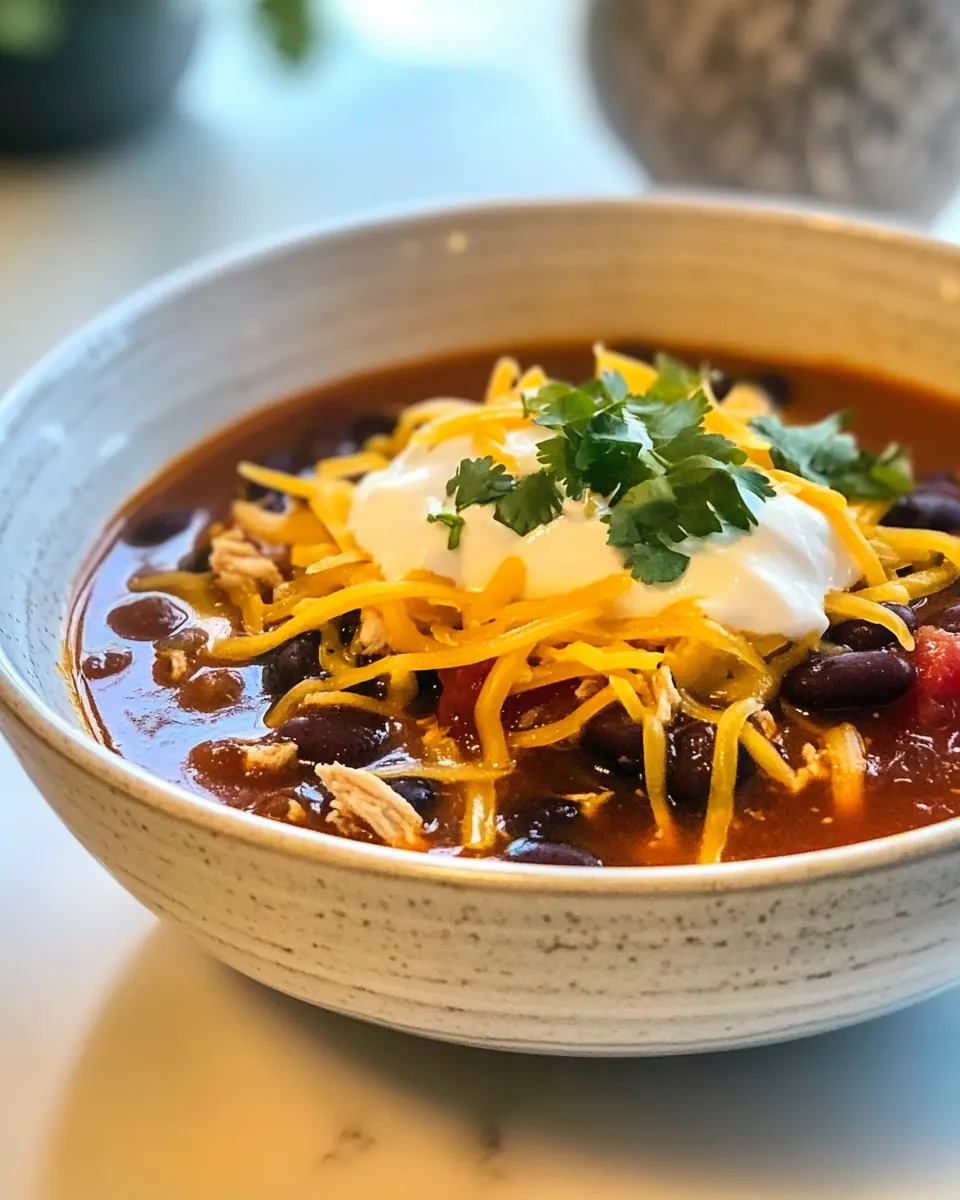
Pour a serving of soup into a bowl, garnish with jalapeño slices, sour cream, lime juice, tortilla strips, and cheese if you would like!: The meat should be steaming and fall apart with little effort, revealing moist strands. Returning the shredded chicken to the pot helps distribute its juices and meld it with the broth. Avoid shredding when the meat is too hot to handle; let it cool slightly for safer handling. Texturally, shredded pieces should vary a bit in size to give the soup interest and substance.
Adjust the seasonings to taste: After the long simmer, taste for salt, pepper, and heat, and make small incremental adjustments. The flavors at this point have rounded and will respond quickly to an extra pinch or squeeze of lime if you choose. A common oversight is over-salting; if that happens, add unsalted broth or a splash of acid to rebalance. The final aroma should be layered with tomato, smoke, and a gentle warmth from the spices.
Pour a serving of soup into a bowl: When ladled, the broth should look glossy and slightly thickened, dotted with corn and beans. Finish each bowl with the toppings you prefer, like jalapeño slices or tortilla strips, which add texture and brightness. If toppings become soggy, store them separately until serving. The contrast of hot liquid and cool toppings makes every spoonful lively and satisfying.