To make a Cool Whip substitute, beat cream cheese with sugar and vanilla, then fold in whipped cream.: You will notice the cream cheese soften and lighten in color as air is incorporated, creating a pillowy base that will lend body to the pie. The aroma is subtly tangy and slightly sweet, and the texture should become smooth with no visible lumps; any cold bits mean the cheese needs more beating. Folding in whipped cream introduces cloud like lightness that tempers the dense chocolate ganache, and does not deflate if done gently. A common mistake is over mixing here, which knocks out the air and yields a flat filling, so fold with patience and stop once streaks disappear.
If needed, prebake the pie shell according to the package directions.: You want the crust to be crisp and set, which gives textural contrast to the creamy center. As it bakes, the scent of toasted graham will become more pronounced and the edges will turn a warm golden tone, signaling readiness. Let the shell cool completely before adding filling, because a hot crust can melt the ganache on contact and cause weeping. Avoid skipping cooling, as warm crust plus warm filling leads to a runny pie that will not set properly.
Melt chocolate and cream in the microwave gently and stir until smooth.: When you heat the dark chocolate and heavy cream , do it in short bursts and stir between intervals so residual heat finishes the melt, resulting in a glossy ganache. The aroma becomes intensely chocolatey and the texture should be silky and pourable, free of graininess. If the chocolate seems lumpy, continue stirring off heat until smooth. A typical error is overheating, which can scorch the chocolate and make it grainy, so remove from microwave early and rely on stirring to finish.
In a mixer, beat cream cheese and powdered sugar. Add chocolate ganache and beat gently until combined.: As you beat, the mixture will shift from dense to creamy, and the powdered sugar will disappear into the matrix, leaving a smooth, light paste. This step ensures the filling is evenly sweet and stable, helping the final pie maintain a clean slice. Scrape the bowl once to incorporate any unmixed pockets, because missed bits create lumps in the filling. Overbeating can warm the cheese too much and loosen the texture, so stop once combined and silky.
On low, beat in the cream cheese mixture (or Cool Whip if preferred).: After adding the warm but not hot ganache to the beaten cheese base, you will see the two turn into a uniform, glossy mixture with a deep chocolate color and a satiny mouthfeel. The scent is rich and the mixture should be homogeneous with no streaks of chocolate or cheese. Gentle beating preserves the air you incorporated earlier, creating a lightness in the final set. If you beat too vigorously the filling can become thin and will take longer to set, so mix just until blended.
Pour filling into the crust.: Blending on low keeps the filling emulsified while preserving volume and texture; you should hear a quiet hum from the mixer rather than loud thumps. The mixture will thicken slightly and coat a spoon, showing it is ready to be transferred. Using a higher speed can introduce too much air and create large bubbles that mar the texture, so maintain a calm speed. One pitfall is adding cold whipped product which can cool the ganache too quickly and cause small curdled bits, so ensure components are near the same temperature.
Chill for 4 hours. Top with whipped cream and chocolate curls and serve!: As you pour, the filling should flow smoothly and level itself, leaving a glossy surface that catches light. Use an offset spatula if needed to nudge it toward the crust edges, and tap the pan gently on the counter to release any trapped air bubbles that rose during mixing. The pie now smells richly of chocolate and will start to firm as it cools. Filling a warm crust can cause the ganache to run, so always confirm the shell is fully cooled before pouring.
Chill for 4 hours: Refrigeration is where the filling transforms from pourable ganache to sliceable cream pie, firming without losing silkiness. During this time, the flavors meld and the texture becomes set but still yielding, and the pie loses any residual warmth from the melted chocolate. Plan ahead as skipping the chill leads to sloppy slices and a compromised presentation. A fridge that cycles too cold can overfirm the pie, so aim for steady refrigeration and check at the four hour mark for ideal texture.
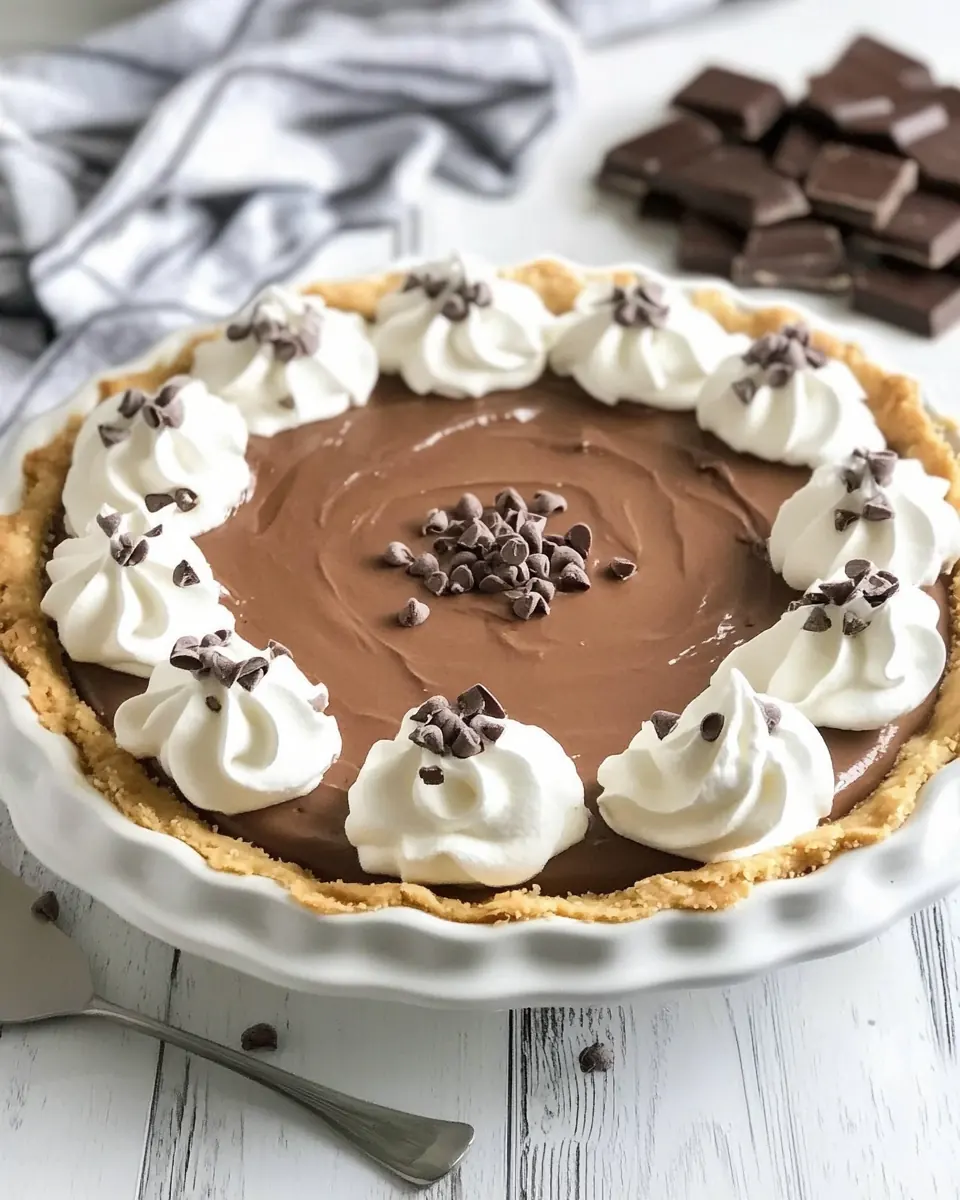
Top with whipped cream and chocolate curls and serve: Adding whipped cream brings a bright, aerated contrast and the chocolate curls add crunchy, chocolaty bite. The visual appeal is immediate, with pale swirls against the deep filling, and the first forkful offers a harmony of textures. Garnish just before serving to keep the whipped cream stable and fresh looking. A common oversight is preparing garnishes too early, which can cause weeping or wilting, so do the final touches at the last moment.