Thaw the Beyond Burger patties if necessary. Lay the thawed patties between two sheets of waxed paper, roll out the patties with a rolling pin to 1/4-inch thickness. Do not press too hard. Season the patties with 1/2 teaspoon of salt and black pepper.: As you work, you will notice the patties become more flexible and take on a uniform, thin profile that promotes quick, even browning. The rolling motion should be gentle so the patty keeps its texture, and the waxed paper prevents sticking while allowing you to feel how even the thickness is. Smell the raw patty as it warms slightly, you should pick up a mild, toasty note once it meets the heat later. This thin profile is critical because it creates more surface area to brown, which delivers that signature seared flavor. A common mistake is pressing too hard while rolling, which can compact the patty and make it dense and dry when cooked. If the patty tears, patch it gently rather than reworking it aggressively.
Butter the hamburger buns and toast them in a skillet over medium heat until lightly browned. Set aside.: When the butter hits the warm skillet, it will sizzle and release a nutty aroma that signals readiness. Lay the cut sides down and watch for a light golden color, small bubbles of butter around the edges, and a faint toasty scent. Toasting creates a slightly crisp barrier that keeps juices from soaking into the bread and adds a layer of buttery flavor. Flip only if necessary to prevent burning, and avoid letting the butter brown too dark, which can introduce bitterness. If the buns brown unevenly, reduce the heat slightly and press gently with a spatula for even contact.
Heat a grill to medium-high heat. Cook the burger patties for 2 to 3 minutes per side. While cooking, add a dash of salt to each burger.: On the grill, you will hear a steady sizzle as the patties make contact, and soon after you should see edges darken and little droplets of moisture appear. That sizzle is the Maillard reaction in action, which builds deep, savory flavor. Timing matters because thin patties cook quickly, so 2 to 3 minutes per side produces a good sear while keeping juiciness. Adding a dash of salt while cooking layers seasoning into the crust. A frequent error is leaving the patty too long on one side, causing dryness, so watch for even browning and resist flipping multiple times. If flare ups occur, move patties to a cooler spot until flames subside.
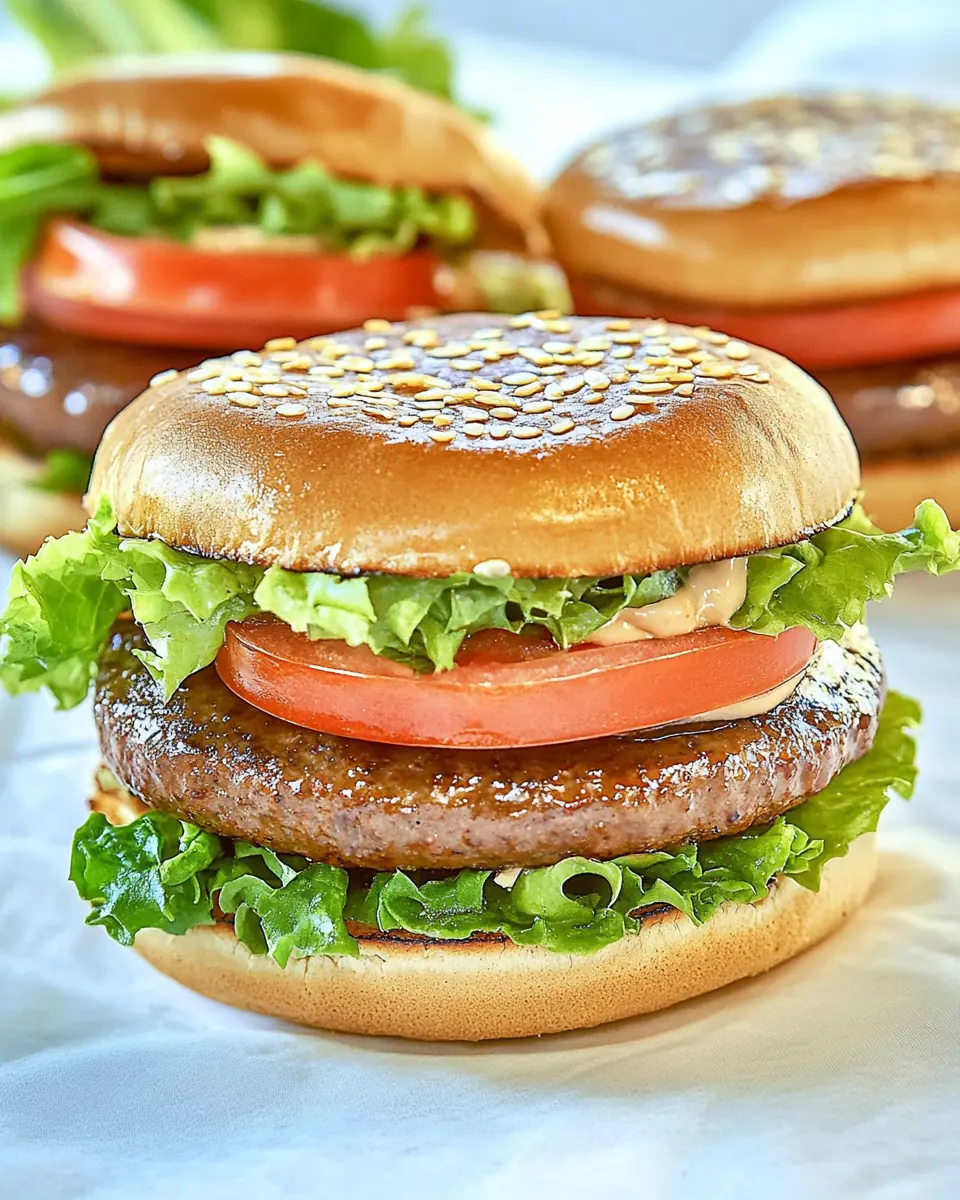
To build the burger, place the meat on the bottom bun. Then add 3 or 4 dill pickle slices, 3 or 4 onion ring slices, and 2 or 3 tomato slices. Squirt a small amount of ketchup onto the burger, add lettuce, and then spread mayonnaise onto the top bun. Place the top bun onto the burger and serve.: Assembling is where textures meet and balance matters. Start by resting the hot patty on the toasted bottom bun so its juices distribute without soaking the bread. Layer the pickle slices and onion next for bright acidity and crunch, then add the thin tomato slices which contribute moisture. A modest squeeze of ketchup brings sweet tang, and a loose layer of torn iceberg lettuce provides cooling crunch. Finish by spreading mayonnaise on the top bun so the creaminess sits between bun and air rather than directly on the hot patty. Press down lightly to compact the stack just enough to hold together. One misstep is overloading with tomato juice which can make the bun soggy, so pat tomato slices dry if they seem wet. Serve immediately so the contrast between warm patty and cool toppings is at its best.