Add cranberries and pistachios to your food processor and chop into small pieces (but don’t over-process). Remove 1/2 cup and add it to a medium bowl. Add all remaining Goat Cheese Log ingredients to the bowl and stir to combine.: The sound as the blades pulse will be a rapid, soft chopping noise, and you should see a mix of tiny red flecks and nut fragments, not a smooth puree. The goal is to preserve little bursts of cranberry and the crunch of chopped pistachios so each bite contrasts with the creamy cheeses. Why this matters, I think, is texture balance other wise the log can be too uniform and boring. A common mistake is running the processor too long which turns the fruit into a jam like texture, making the coating and interior too wet. If that happens, scoop out the mixture and let it sit briefly to lose excess moisture, or add more chopped nuts to restore body. When you remove the half cup, note its color and texture so you can match the coating appearance to the photos or your mental goal.
Add this cheese mixture to a large piece of plastic wrap, and form into the shape of a log. Wrap in plastic wrap. Freezer for 20-30 minutes. We want the cheese log slightly firm so it holds its shape but is still soft enough for the Coating to be pressed into it.: As you press the mixture into a log, your hands will feel a cool, slightly tacky texture from the goat cheese and cream cheese . The log should be smooth on the outside without cracks, indicating proper hydration and cohesion. Chilling firms the structure, making it easier to roll in the coating and preventing greasy fingerprints. The freezer timing firms the log but does not freeze it solid, which is key since too cold will resist adhesion and too warm will be floppy. A frequent error is over chilling, which yields a log that is difficult to press into the coating; if that happens, let it sit at room temperature for about 10 to 15 minutes before rolling. Pay attention to feel and give the log a light press to gauge readiness.
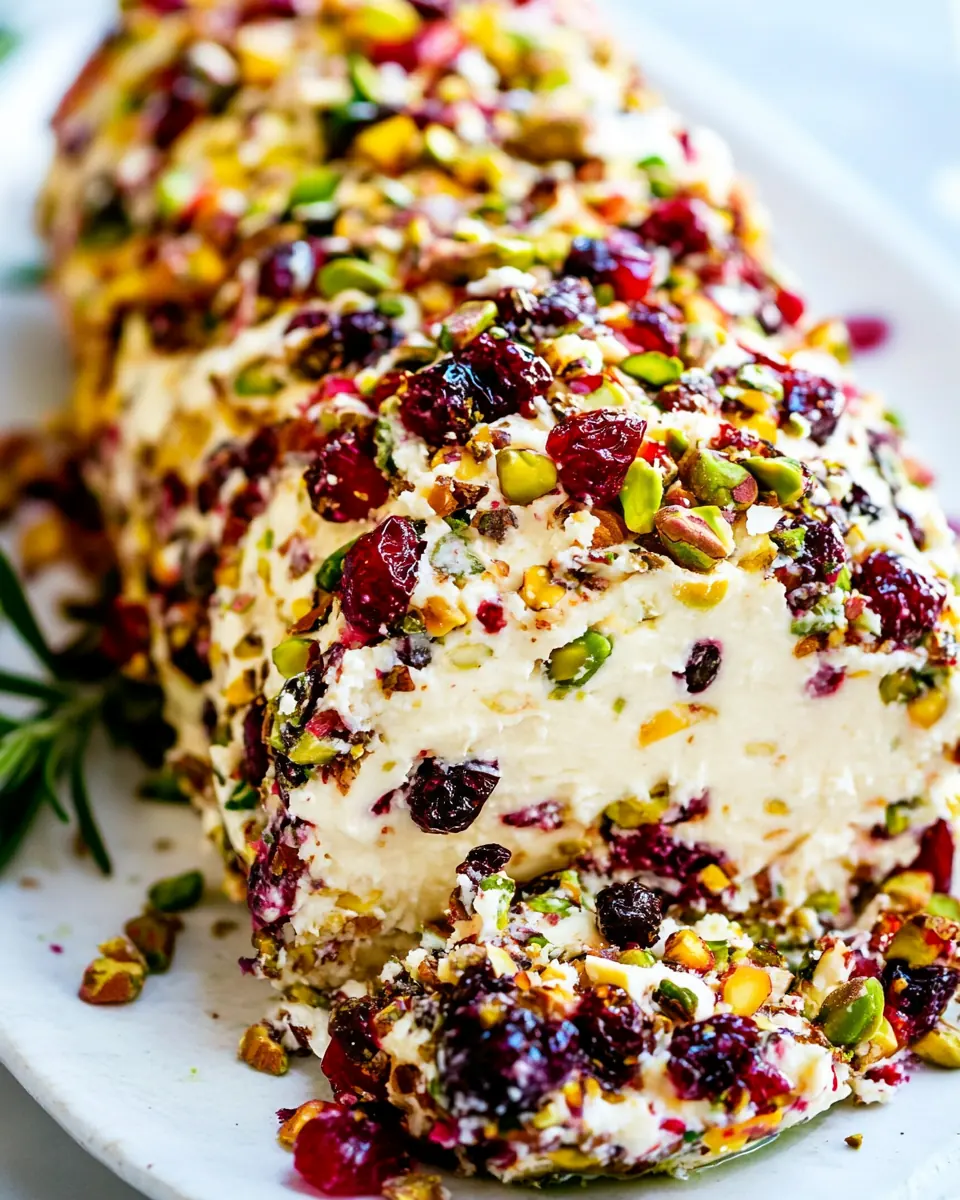
Line counter with about a large piece parchment paper. Add Coating ingredients to parchment and spread into a single layer square a little larger than the length of the cheese log. Add cheese log to the edge of the Coating and roll in Coating (see photos) until evenly coated, pressing coating into the cheese so it sticks. The cheese log can be refrigerated at this point until ready to serve or serve immediately.: Spread the reserved half cup of chopped cranberries and pistachios on parchment, creating a bed with visible pieces rather than a tight mound. When you roll the log along the coating, you will hear soft rubbing and feel the surface gaining texture. Press gently but firmly so the coating embeds into the slightly tacky cheese surface, ensuring even coverage. This pressing step prevents the coating from falling off as guests slice the log. One common mistake is to roll too quickly or without enough pressure, which leaves patchy coating. If the coating seems not to stick, unwrap the log and press sections by hand, then re roll. Visually, the log should look jewel like with scattered red and green bits, signaling a successful adhesion.
When ready to serve, remove from refrigerator 15 minutes beforehand so it can soften. Drizzle generously with honey just before serving. Serve with crackers.: Allowing the log to rest briefly at room temperature softens the interior so the cheeses regain creaminess and spreadability. As it softens, you may notice a faint aroma of spices and nuts, and the honey you drizzle should shimmer on the surface. The sound of crackers breaking and the visual of soft slices holding together are the final cues that the dish is ready. Avoid serving straight from the fridge, because a hard log will be difficult to slice and the flavors will be muted. An easy slip up is leaving it out too long in a warm room, which makes the log too soft to slice cleanly; monitor the texture and slice when it yields to a gentle knife but still keeps shape. Present with a small spoon of extra honey so people can add sweetness to taste.