Preheat oven to 350 degrees F.: When the oven warms to 350 degrees F you will notice a steady, even heat that helps the top crisp without drying the inside. The preheated oven ensures a predictable bake time and an even golden surface. If you skip preheating you risk uneven browning, and the center may take longer to reach the correct temperature. A common mistake is placing the dish in a still cold oven, which results in a soggy top and underbaked center.
In a large stockpot or Dutch oven, melt butter over medium heat.: As the butter melts it should foam slightly and spread a warm sheen across the pan, releasing a nutty aroma. This stage builds the flavor base and coats the pot so the aromatics cook without sticking. If the butter browns too quickly you will smell toasty notes and risk a bitter edge, so keep the heat at medium. One mistake people make is turning the heat too high, which causes the butter to brown unevenly and scorch.
Add onion and celery and cook and stirring for 4-5 minutes or until tender.: You will hear a gentle sizzle and see the chopped onion soften and become translucent while the celery turns glossy and slightly tender. The juices released carry savory compounds that anchor the dish. This step mellows the raw edge of the vegetables and creates a savory bed for the other ingredients to rest on. Avoid undercooking, which leaves a harsh raw flavor, and overcooking, which will make them limp and colorless. Stir regularly to encourage even cooking and to prevent any pieces from sticking or burning.
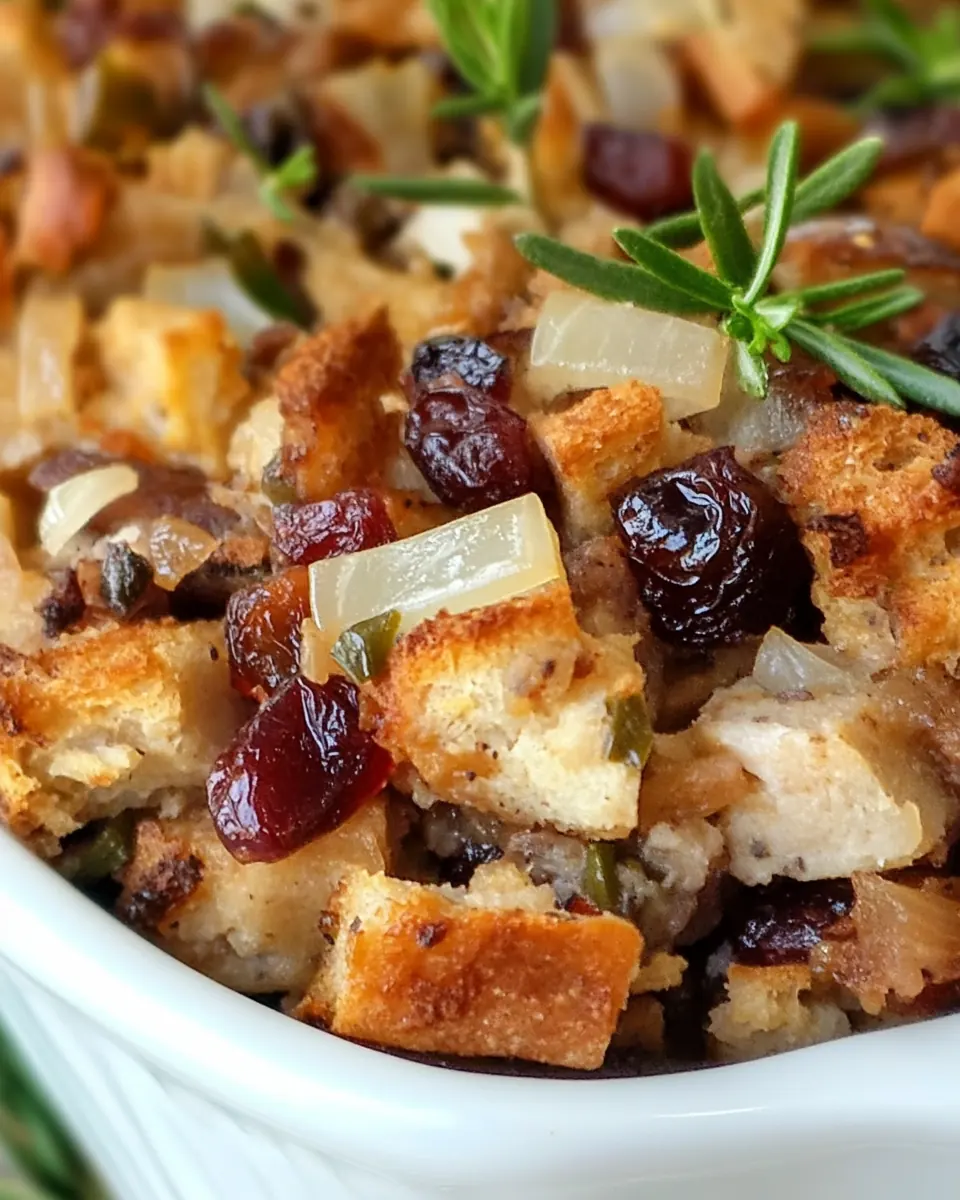
Add stuffing cubes, green and red apple, dry rice, cranberries, raisins, pecans and seasonings, toss to combine. Stir in enough broth to reach desired moistness.: At this point the bowl should fill with color and texture, the stuffing cubes soaking small amounts of hot fat and juices, while the chopped green apple and red apple begin to mingle with the dried cranberries and raisins . Tossing ensures the herbs and seasonings are distributed evenly, and folding in the broth hydrates the cubes in a controlled way so the mix holds together without collapsing. The aroma will shift to warm, fruity, and savory notes. A typical error is adding too much broth at once, which can make the mix soupy, so add gradually to hit the texture you prefer.
Transfer to a greased 9 x 13 inch baking dish, cover with aluminum foil. Bake for 30 minutes. Uncover and bake for 10-15 minutes longer or until lightly browned.: When transferred, press the mixture gently into the greased dish so it bakes uniformly. Covering with foil traps steam, which heats the interior thoroughly while preventing the top from browning too fast. During this covered bake you should hear nothing loud, only a gentle steam whisper as pockets of moisture warm and redistribute. Removing the foil too early can dry out the center, and leaving it covered for the final browning step will prevent that desirable crust.
Garnish with slivered almonds and serve.: Uncovering allows the top to dry and form a golden, toasty finish, with the edges bubbling slightly. Watch for visual cues, like a light bronze color and a slightly crisp top, to know when it is ready. The exposed surface should smell toasted and nutty, and you may hear faint crackles as pockets of moisture evaporate. A common slip up is leaving it too long, which leads to an overly crisp, dry top, so check it early and often.
Garnish with slivered almonds and serve.: Adding the slivered almonds at the end preserves their crunch and gives a pretty finish. The almonds should glint and provide a fresh toasted scent that contrasts the soft interior. Serve while warm so the textural contrasts are at their best. If you garnish too early and return it to heat for long, the almonds will lose their crunch and the visual appeal will fade.