Add the oil, butter, and onion to a soup pot over medium-high heat. Sauté the onion for 5 minutes or until it's starting to lightly brown.: You will notice the sound change from a bright sizzle to a gentler whisper as the moisture releases and the onion softens. The aroma will shift from sharp to sweet, with a nutty edge once it begins to color. This gentle browning builds the soup's backbone, creating savory complexity that a quick steam cannot provide. Avoid cooking too high, which can burn the edges and introduce a bitter note, and stir occasionally to prevent sticking. If your pan gets too hot, lower to medium to keep the butter from browning too quickly.
Stir in the garlic and cook for 30 seconds.: The moment you add the minced garlic , the kitchen fills with a bright, fragrant pop. Garlic releases its oils quickly, so 30 seconds is enough to soften the raw edge and release aroma without letting it go bitter. Listen for a gentle hiss and watch for the garlic to become glossy, not browned. Overcooking here is a common mistake leading to bitterness, so have your next ingredient handy so you can move forward swiftly.
Add in the broth, cauliflower, Italian seasoning, smoked paprika, cayenne pepper, bay leaf, and fresh thyme sprigs. Increase the heat to high and bring the soup to a boil. Cover the pot with the lid slightly ajar and reduce the heat so it's simmering for about 20 minutes (or until the cauliflower is very soft).: As you add the broth the pot will steam and the aromas will bloom, carrying the spices through the liquid. Bringing to a boil concentrates flavors briefly then reducing to a simmer allows gentle extraction from the cauliflower and herbs. You'll see small, steady bubbles and the florets soften and fall apart when pierced with a fork. Simmering too vigorously will evaporate the liquid and can toughen the cauliflower, so keep the lid ajar to maintain a gentle simmer. One common mistake is undercooking the florets, which leaves a grainy texture after blending, so ensure they are fork tender.
Remove the bay leaf and thyme sprigs. You may want to let the soup cool a bit prior to blending it. I used my immersion blender, but feel free to use a regular blender and carefully blend it in batches.: After removing the herbs you'll smell the cleaner, herbaceous top notes. Letting the soup rest slightly reduces splatter and steam pressure when blending. Using an immersion blender offers control, letting you stop when you reach the desired silkiness, while a countertop blender yields a very smooth texture when done in small batches. Be cautious with hot liquids in a blender, vent the lid slightly and cover with a towel to avoid burns. A frequent error is overfilling the blender which can cause hot soup to forcefully escape, so work in batches with space for steam to expand.
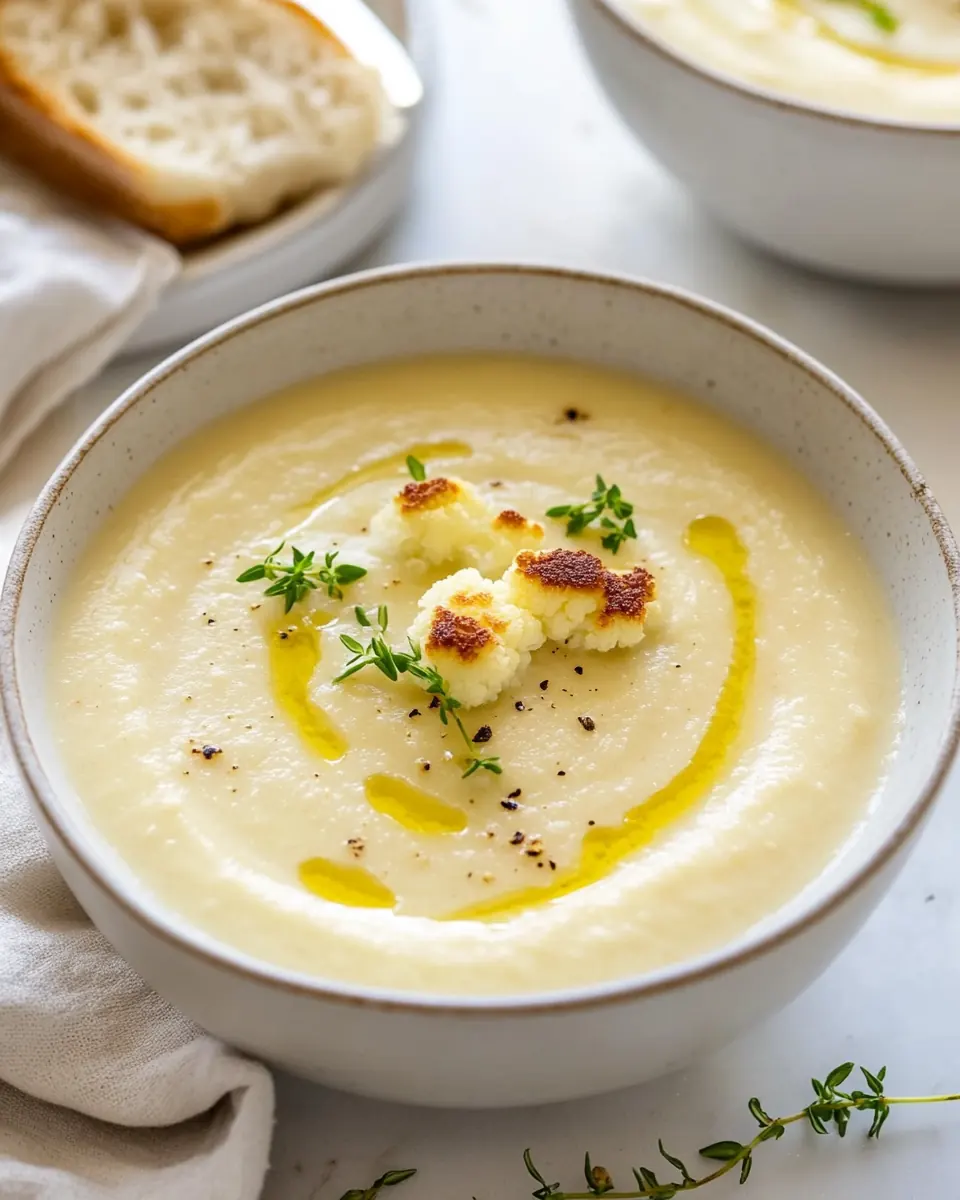
Stir in the cream and season with salt & pepper as needed (it definitely requires additional salt as cauliflower isn't super flavorful on its own).: Once your soup is velvety, the addition of heavy/whipping cream will round out the mouthfeel and mellow the spices. The aroma will soften and the surface becomes glossy. Seasoning at this stage lets you taste the concentrated flavors and add salt accordingly, because cauliflower can mask salt needs during cooking. Add salt in small increments, tasting after each pinch, and finish with freshly ground pepper for a bright note. A common oversight is underseasoning, leaving the soup flat, so always taste before serving.