Preheat the oven to 400°F (200°C) or 180°C for a fan oven. Grease a 9-inch (23 cm) pie dish.: The kitchen fills with warmth as the oven comes up to temperature, and greasing the dish prevents sticking while promoting even browning along the edges. This step matters because an oven that is fully preheated gives a reliable bake time, and a greased dish ensures clean slices later. A common mistake is putting the quiche into an oven that is not fully heated, which can lengthen the baking time and affect texture; check the oven thermometer if you suspect the temperature is off.
Prepare the egg mixture: In a large bowl, whisk together the eggs and heavy cream. Season with 1/2 teaspoon of salt, pepper, and smoked paprika.: In a large bowl, whisk together the eggs and heavy cream. Season with 1/2 teaspoon of salt, pepper, and smoked paprika. : You will notice the pale yellow custard come together as the eggs and heavy cream combine into a glossy mixture. Whisking introduces a silky consistency and blends the spices evenly, which ensures every bite tastes balanced. If you beat too vigorously you might incorporate excess air, making the quiche puff then collapse, so mix briskly but not furiously. A frequent error is under-seasoning the custard, which yields bland results, so taste the seasoning balance by considering the saltiness of the feta cheese .
Cook the vegetables: In a 12-inch skillet over medium heat, melt the butter. Add the diced onion and sauté until soft and translucent, about 3-4 minutes. Add the broccoli and cook for 3 minutes, season with 1/4 teaspoon salt then stir in the minced garlic and cook for 30 seconds until fragrant. Remove from heat.: In a 12-inch skillet over medium heat, melt the butter. Add the diced onion and sauté until soft and translucent, about 3-4 minutes. Add the broccoli and cook for 3 minutes, season with 1/4 teaspoon salt then stir in the minced garlic and cook for 30 seconds until fragrant. Remove from heat. : The skillet releases a comforting sizzle as the butter warms, the onion softens and becomes sweet, and the broccoli brightens. These aromas tell you the vegetables are developing flavor, and finishing with the garlic for just half a minute preserves its bright fragrance. This browning and softening deepen the overall flavor and prevent raw vegetal notes in the finished quiche. Avoid overcooking the broccoli to the point of mush; aim for tender crispness so it holds texture after baking.
Assemble the quiche: Transfer the cooked broccoli mixture to the prepared pie dish. Evenly sprinkle the crumbled feta cheese over the top. Pour the egg mixture over everything.: Transfer the cooked broccoli mixture to the prepared pie dish. Evenly sprinkle the crumbled feta cheese over the top. Pour the egg mixture over everything. : When you transfer the mixture, the dish will look layered and fragrant, and spreading the feta cheese evenly ensures each slice has pockets of tang. Pouring the custard slowly lets it settle and fill spaces around the vegetables, which helps even setting. This technique matters because air pockets can form if you pour hastily, which leads to uneven texture. A common slip is piling ingredients too high in the dish, which may cause spillover while baking; distribute ingredients evenly and leave a small gap near the rim.
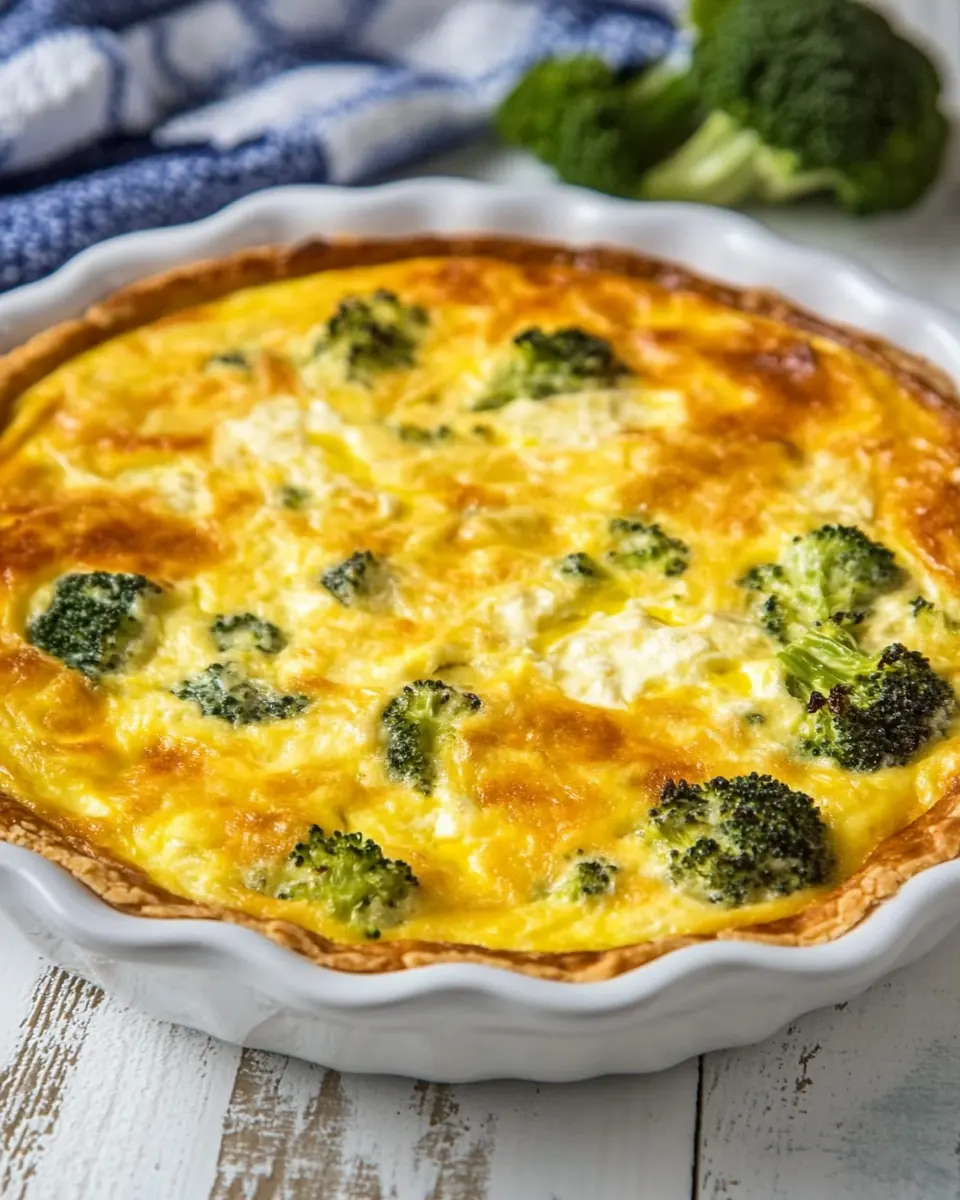
Bake: Place the pie dish on a large rimmed baking sheet to catch any spills. Bake for 30-35 minutes, or until the quiche is set and the internal temperature reaches 165-185°F (74-85°C).: Place the pie dish on a large rimmed baking sheet to catch any spills. Bake for 30-35 minutes, or until the quiche is set and the internal temperature reaches 165-185°F (74-85°C). : You will hear a faint bubbling and see the surface turn gently golden; the centers should no longer wobble when nudged. Using a rimmed sheet helps if the custard bubbles over, keeping your oven clean. The internal temperature range ensures the eggs are fully cooked but still tender; overshooting the temperature will produce a dry, rubbery result. A frequent mistake is relying only on time, rather than checking for that slight jiggle and color change; use both visual cues and an instant-read thermometer for accuracy.
Cool and serve: Let the quiche rest for a few minutes before slicing. Serve warm.: Let the quiche rest for a few minutes before slicing. Serve warm. : As the quiche cools, the custard firms and the slices hold together more cleanly, releasing a warm, savory aroma. Serving slightly warm preserves the creamy texture while still allowing the flavors to settle. If you cut it immediately you risk messy slices that do not hold shape, so patience yields prettier portions. One error I see is slicing too soon, which leaves a loose center; wait at least a few minutes for the best results.