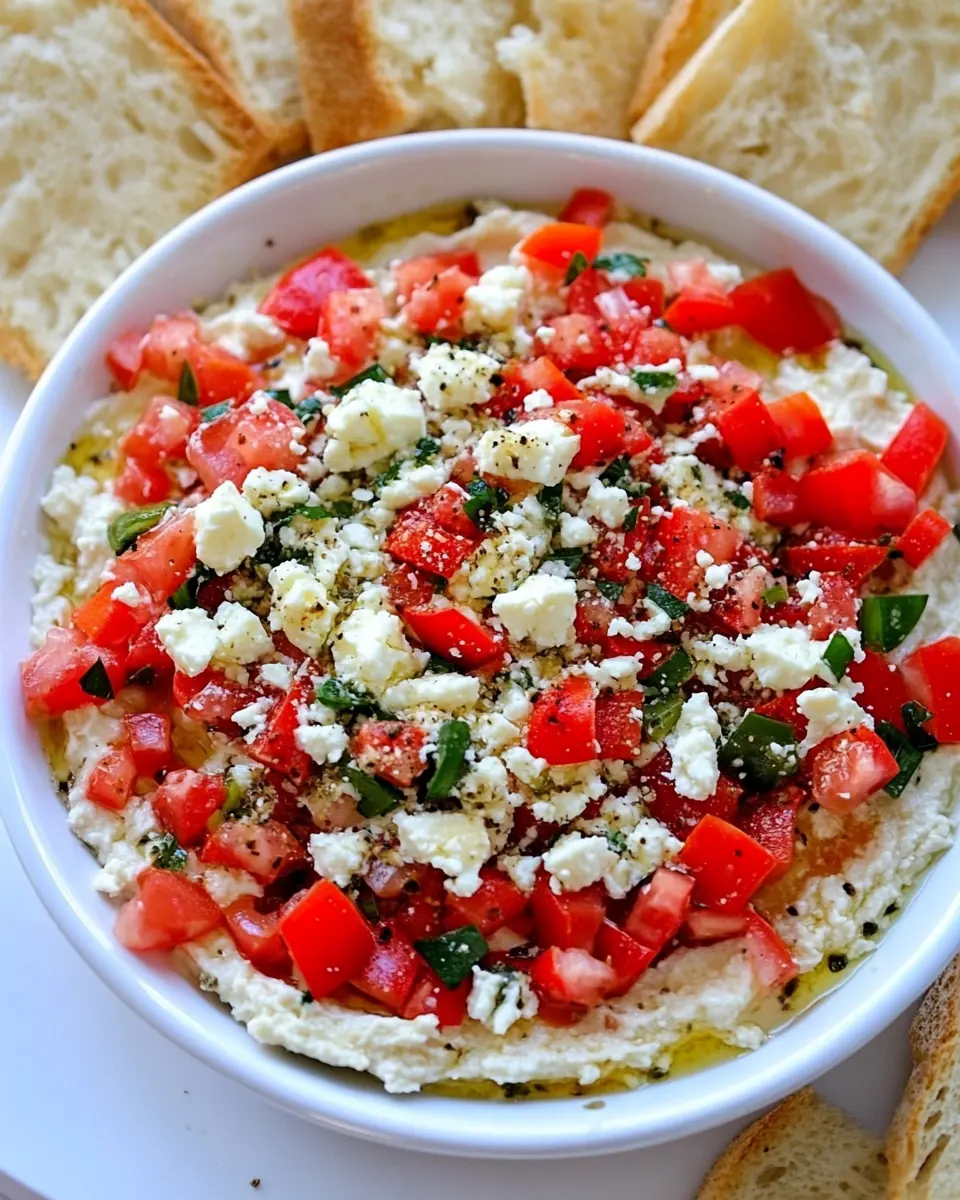
On a large platter drizzle olive oil until you have a thin layer on the entire platter. You may use more or less here depending on your preference.: The moment you drizzle the olive oil you will sense its fragrant, fruity aroma filling the air, and visually the platter will gleam invitingly. This thin oil layer acts like a flavor cushion, helping the feta cheese soften and the tomatoes to settle in place rather than roll away. When pouring, watch for even coverage so each spoonful will pick up oil, that satin sheen contributes to mouthfeel. A common error is pouring too much oil, which can make the dip excessively slick and heavy; use just enough for a thin, even layer. If your oil is overly robust, it can mask the brightness of the tomatoes, so choose a balanced extra virgin. As you smooth it with the back of a spoon, notice the light sparkle and the faint green scent, that tells you you are ready for the next ingredients.
Add the tomatoes, green onions, and feta on top of the olive oil. Sprinkle with the Greek seasoning, starting with 2 teaspoons and add more to taste.: When you place the diced Roma tomatoes , sliced green onions , and crumbled feta cheese onto the plated oil, the color contrast is immediate and pleasing, with reds, greens, and white crumbles creating visual appeal. The tomatoes release a little of their juice which blends with the oil and softens the feta cheese slightly, creating a harmonious texture. Arrange them in a slightly rustic mound instead of a tight ball to encourage easy scooping. One pitfall is overcrowding the platter which can result in clumps; leave some space so the ingredients breathe. Smell the mix now, you should detect salty tang from the feta cheese and a vegetal lift from the green onions .
With a spoon carefully combine the ingredients. If using a cucumber, stir it in. If desired, drizzle a little balsamic on top.: As you dust the Cavender's over the top, the dried herbs and garlic notes will introduce a warm, savory complexity that ties the elements together. Start with the recommended amount, then pause and taste a small spoonful to decide if it needs more. The seasoning accentuates the Mediterranean character without overwhelming the freshness, but too much can make the dip seem overly spiced, so add incrementally. If you find the mixture a touch flat, a little extra seasoning usually fixes it. Run a fingertip over a bit of the mix to check salt balance; the feta cheese often provides plenty, so you may not need more.
Serve with warm sliced baguettes for scooping up the dip or pita chips. Best served the same day.: As you gently fold the components, pay attention to texture changes, the feta cheese will start to mingle with the oil creating a creamy coating that clings to the tomato pieces. Listen for the soft scrape of the spoon across the platter and notice the gentle, moist clumps forming, that is the sign of right consistency. Stirring slowly preserves chunks of tomato and the green onion's crunch, which keep the dip lively. Avoid over mixing which can break down the tomatoes into a watery mash. If using a English cucumber , fold it in here so it retains crispness. Troubleshoot: if the mixture looks too loose, add a touch more crumbled feta cheese rather than more oil.
If using a cucumber, stir it in: When you incorporate the diced English cucumber , you will immediately feel the temperature drop and appreciate the crunchy contrast it provides against the creamy base. Make sure the cucumber is well drained; excess water will dilute the dip and make the texture less satisfying. Fold it lightly to keep the pieces intact, and taste for seasoning afterwards because the cucumber may mute the saltiness slightly. A common misstep is adding wet cucumber, which can water down the entire platter; blot the pieces if needed before adding.
If desired, drizzle a little balsamic on top: The final glossy ribbon of balsamic vinegar introduces a sweet acidity that can cut through richness and add a pleasant finish, and you will notice its deeper aroma lifting the whole dish. Apply a modest amount in a thin line or a few dots so it enhances rather than dominates. If you use too much, it will overshadow the delicate tomato notes and change the dip's character. Taste a dab with bread to judge balance, and remember that a little goes a long way.
Serve with warm sliced baguettes for scooping up the dip or pita chips: The serving moment is sensory rich, warm fresh baguette meeting cool, creamy feta cheese mixture, steam from the bread meeting the oil's sheen. Present the platter alongside sliced bread so guests can scoop and hear that satisfying scrape as they gather a bite, that sound alone signals success. Keep extra bread nearby because this dip disappears quickly. Avoid serving with bread that is cold and chewy, warm slices maximize flavor and texture.
Best served the same day: Freshness is key, the tomatoes and feta cheese are at their peak on day of assembly, and the textures remain lively without becoming soggy. If you must prepare ahead, assemble components separately and combine close to serving, that preserves the ideal mouthfeel. A common mistake is preparing too far in advance, which leads to a wetter, less vibrant dip. When served promptly, the dish sings.