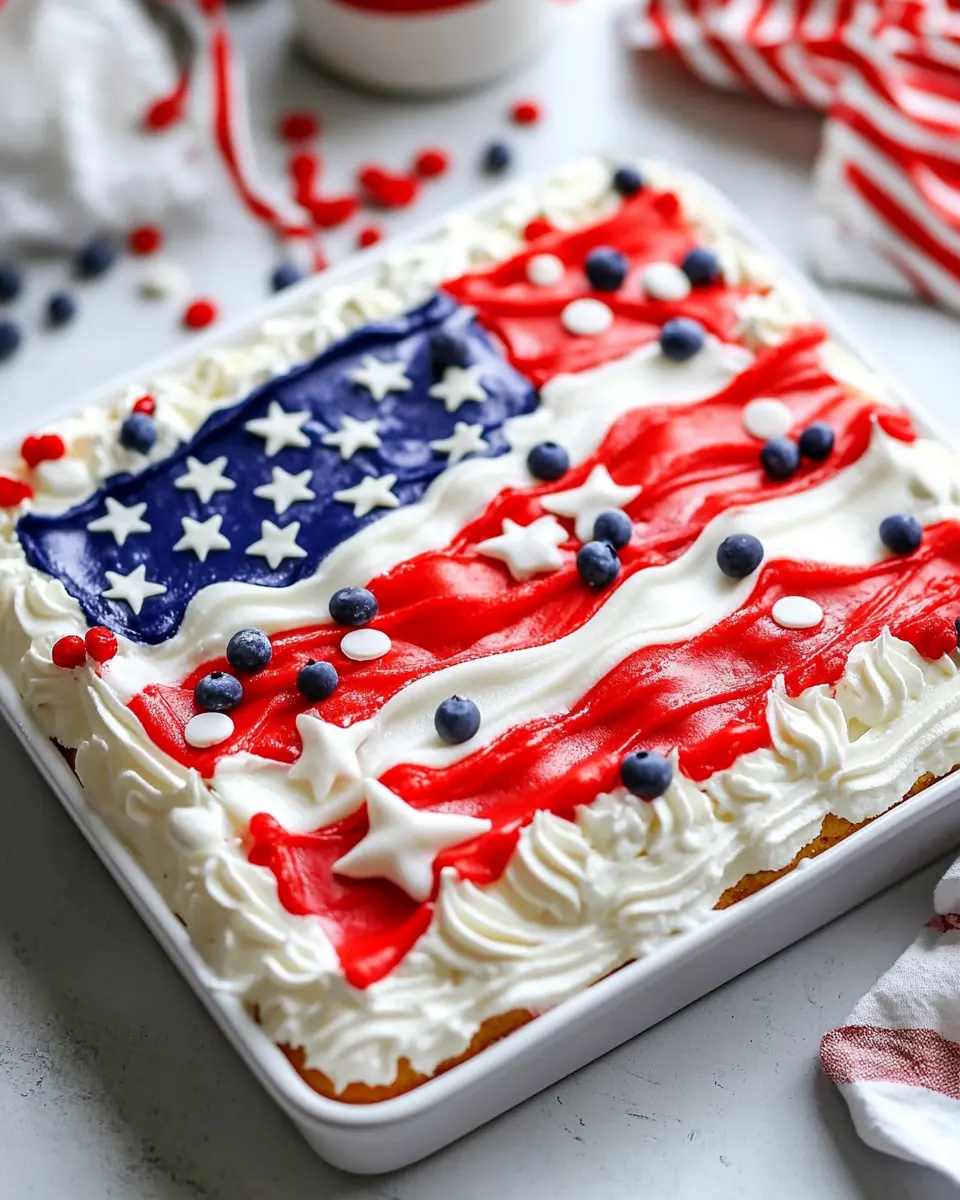
Bake the white cake according to the instructions on the box using a 9×13 pan. Let cool completely.: The oven scent of a baking white cake mix fills the kitchen with warm, sweet notes that tell you the crumb is coming together, and when the cake shrinks slightly from the pan edges that is a visual cue the structure is set. Cooling until completely at room temperature is important because warm cake will melt the whipped topping and lose its clean shape, making the assembly sloppy. To check doneness, press lightly near the center it should spring back gently, and a toothpick should come out with a few moist crumbs. A frequent mistake is rushing this step by cutting into a warm cake, which creates steam and soggy layers, so give it ample time to cool on a rack.
Top with half of the container of thawed whipped topping.: When you spread the chilled whipped topping , you will notice a cool, creamy texture that glides across the crumb and smooths imperfections. Use an angled spatula to sweep from the center to the edges in smooth motions, building an even, pillowy layer. The cold topping seals the surface and creates a stable base for the fruit. If the topping is too warm it will slump and refuse to hold the fruit, so keep it refrigerated until the last moment; one mistake to avoid is overworking the topping which can cause it to weep and lose volume.
In the upper left-hand corner use the blueberries to create the star section of the flag.: Placing the blueberries is a tactile step, you will feel their round form as you nestle them into the topping, and their deep hue contrasts sharply with the white cream. Arrange them in neat rows or a compact cluster, aiming for a roughly rectangular area in the corner. The visual cue is a dense block of uniform color. Watch for berries that are overly soft they can break and release juice, so choose firmer ones and pat them dry first; a common pitfall is overcrowding the area which makes the field look squashed rather than well proportioned.
Use the strawberries to create 5 red stripes across the remainder of the cake, starting along the top and finishing along the bottom.: Lying sliced strawberries in parallel lines creates a striking visual rhythm, and the bright red arcs catch the eye. Place the slices so they slightly overlap for continuous stripes, following the cake width for consistent lines. You will notice a pleasant, fruity aroma as you work which confirms fresh fruit. Avoid irregular widths by planning the spacing first, because inconsistent stripes are a common assembly hiccup that makes the pattern look uneven.
Use the remaining whipped topping to pipe four white stripes in the spaces between the strawberry stripes.: Piping the residual whipped topping creates crisp white separators that mimic flag stripes and provide contrast. Use a pastry bag or a zip bag with a cut corner to apply even lines, feeling the slight resistance as you pipe which helps you regulate pressure. The cool topping will hold form against the strawberries, creating neat channels of white. One thing to watch for is applying too much pressure which makes the lines bulbous instead of sleek, so steady, gentle squeezes work best.
Serve immediately.: Serving right away preserves the topping's airy texture and the fruit's fresh appearance, and the first forkful will offer the ideal contrast between cake and chilled cream. If you need to wait, refrigerate briefly to firm the layers and protect the design, though long chilling can make the cake firmer in texture. A frequent mistake is leaving the assembled cake at room temperature too long which softens the topping and causes fruit juices to seep into it, blurring the neat stripes.