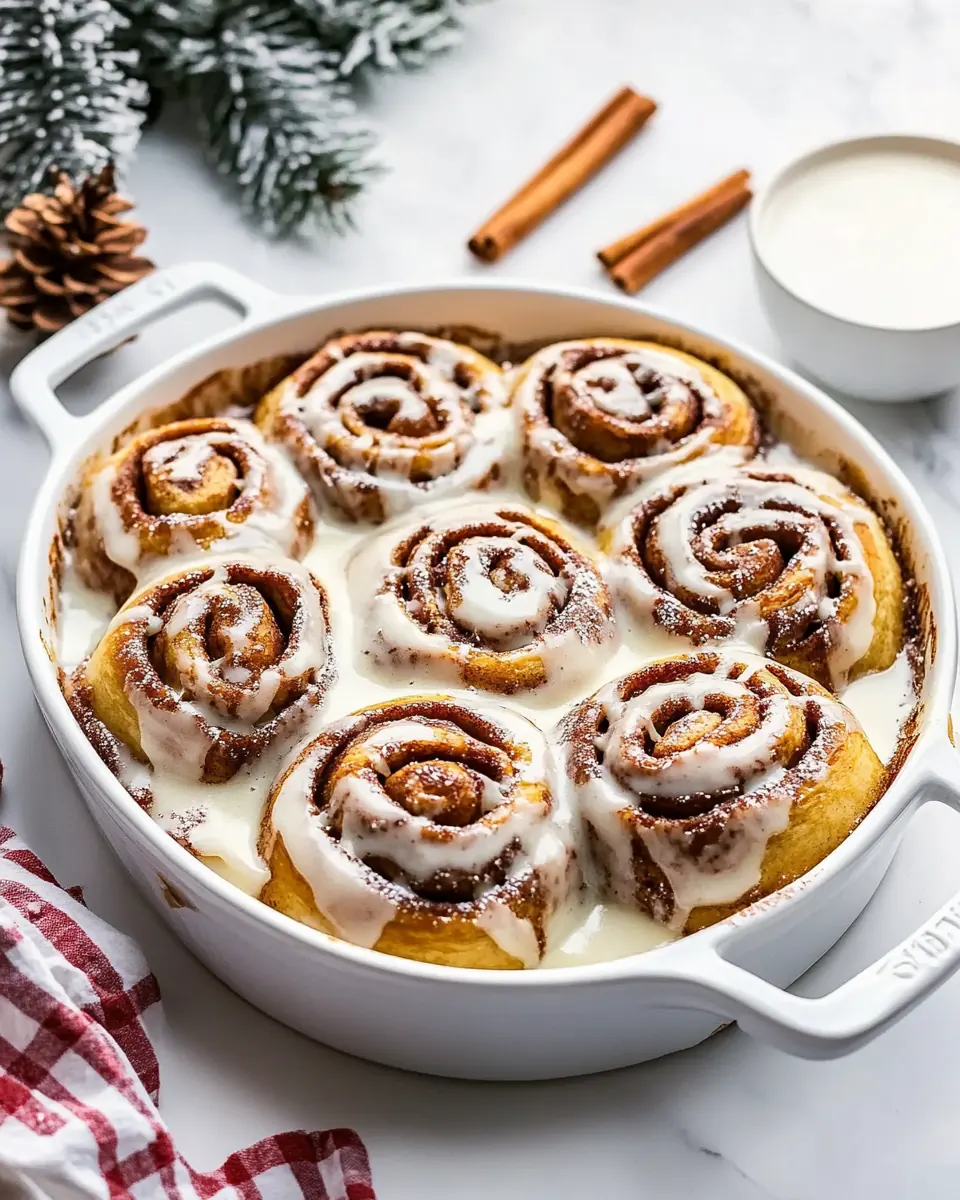
To make the dough. In the bowl of a stand mixer, combine 3 1/2 cups flour, the yeast, brown sugar, and salt. Add the eggnog, eggs, vanilla, and butter. Using the dough hook, mix until the flour is completely incorporated, about 4-5 minutes. If the dough seems sticky, add the remaining 1/2 cup of flour a little at a time. It's better to have a stickier dough rather than a dry dough, so add flour 1 tablespoon at a time. Cover the bowl with plastic wrap and let sit at room temperature for 1 hour or until the dough has doubled in size. Meanwhile, make the filling. In a small bowl, combine the brown sugar, and cinnamon. Line a 9×13 inch baking dish with parchment. Lightly dust your work surface with flour. Turn out the dough, punch it down, and roll it into a rectangle about 10 x 16 inches. Spread the softened butter evenly over the dough. Sprinkle the cinnamon sugar, and then the white chocolate chips, evenly over the butter and lightly push into the butter. Starting with the long edge closest to you, carefully roll the dough into a log, keeping it fairly tight as you go. When you reach the edge, pinch along the edge to seal. Using a sharp knife, cut into 12-15 rolls. Place the rolls into the prepared baking dish. Cover with plastic wrap and let rise 20-30 minutes. Preheat the oven to 350 degrees F. Bake the rolls for 25 to 30 minutes, or until golden brown. Meanwhile, make the frosting. In a medium bowl, whisk together the eggnog, melted white chocolate, and vanilla until combined. Add the powdered sugar and mix well. Spread the frosting onto the warm rolls. Serve and enjoy!: The first sensory cue you notice is the soft, warm aroma of the eggnog as it mixes with the yeast and brown sugar . You should hear a gentle whir from the mixer and see the ingredients coalesce into a shaggy mass before forming a smoother ball. This stage matters because proper incorporation ensures even fermentation and lift. If the dough feels too sticky, resist the temptation to dump a lot of extra flour at once, instead add small splashes so you keep the dough tender. A common mistake here is overworking the dough which can make it tight and chewy, so stop once the flour disappears and the texture is slightly tacky but pulls away from the bowl.
In the bowl of a stand mixer, combine 3 1/2 cups flour, the yeast, brown sugar, and salt: At this point you'll notice the dry ingredients look uniform and the salt sparkles against the flour. Mixing them first helps distribute the yeast and salt so the dough develops evenly. Use your fingertips to lightly fluff the mixture before adding liquids, so nothing clumps and your dough proof will be consistent. A trap to avoid is adding the liquids before the dry mix is uniform; that can create pockets of over hydrated dough that proof unevenly.
Add the eggnog, eggs, vanilla, and butter: Pouring warmed eggnog in releases a comforting sweet perfume that signals the dough is coming to life. The butter should be at room temperature so it blends smoothly without leaving lumps. Eggs add sheen and elasticity, while vanilla deepens the aroma. If any chunks of cold butter remain, the dough will be uneven, so ensure it is softened. If your eggnog is too hot, it can shock the yeast , so test it on your wrist until it feels comfortably warm.
Using the dough hook, mix until the flour is completely incorporated, about 4 to 5 minutes: You will see the dough transform from shaggy to a slightly glossy ball that climbs the hook and pulls away from the bowl. This visual cue means gluten has developed enough for good structure. Texture here should be springy and soft, not dry. Avoid running the mixer excessively long because over development can make the dough resilient and tough rather than tender.
If the dough seems sticky, add the remaining 1/2 cup of flour a little at a time: When you touch the dough it should be tacky but not sticky enough to cling to your fingers heavily. Adding flour slowly preserves moisture while giving you control over final texture. Do this in tablespoon increments; too much flour leads to dry rolls that lack that irresistible pull. A common error is adding a large additional portion all at once, which results in dense, heavy rolls.
It's better to have a stickier dough rather than a dry dough, so add flour 1 tablespoon at a time: The gentle tackiness is what yields soft, tender crumb after baking. As the dough rests, it relaxes and becomes easier to handle, so a slightly sticky dough will finish beautifully. Resist the urge to aggressively flour the work surface as that can grind extra flour into the dough and change texture. If you must dust your board, do it lightly and use a bench scraper to lift the dough cleanly.
Cover the bowl with plastic wrap and let sit at room temperature for 1 hour or until the dough has doubled in size: During this rise you will notice the dough swell and develop a domed surface with tiny bubbles beneath the skin, producing a yeasty, mildly sweet scent. This fermentation creates air pockets that give the rolls lift. It matters to wait for the full rise because that timing dictates the final tenderness. Don't rush by using overly warm spots because uneven heat can cause the dough to overproof and then collapse.
Meanwhile, make the filling: Mixing brown sugar and cinnamon releases a heady spice aroma, and you should aim for a cohesive sandy texture that will press into softened butter . This mixture melts slightly when spread over the dough, creating lush pockets of flavor. If the filling is too wet it will leak; too dry and it will not caramelize properly. Keep the filling balanced and use room temperature butter for easy spreading.
Line a 9×13 inch baking dish with parchment: The parchment prevents sticking and helps lift the finished rolls out for serving. The clean edges also make cleanup simple and protect the pan from sugary drips. Make sure the paper lies flat to avoid uneven positioning of the rolls. A mistake is skipping the parchment, which can cause the bottoms to stick and tear when you try to serve.
Lightly dust your work surface with flour: When you turn out the dough you want enough traction to roll smoothly without pulling or tearing. The dusting should be minimal so you do not incorporate excess flour into the dough. A bench scraper helps manage excess flour and keeps the workspace tidy. Overflouring leads to dry edges in the rolls, so apply sparingly.
Turn out the dough, punch it down, and roll it into a rectangle about 10 x 16 inches: As you press the dough, you will hear a soft sigh as trapped air releases and the dough flattens. Rolling to the correct thickness is key for even spirals and consistent bake. The rectangle should feel supple and stretch slightly without springing back. If the dough resists, let it rest for a few minutes to relax the gluten before continuing; trying to force it will create irregular spirals.
Spread the softened butter evenly over the dough: The act of spreading melts the butter just enough to create a glossy layer, which helps the sugar adhere and form distinct layers when rolled. Be generous but even so each bite has buttery richness. Cold spots here can tear the dough, so ensure the butter is pliable and spreadable.
Sprinkle the cinnamon sugar, and then the white chocolate chips, evenly over the butter and lightly push into the butter: You should see an even dusting of sugar and cinnamon forming stripes across the dough, with little nuggets of white chocolate peeking through. Pressing the chips lightly ensures they stay put when rolling. Avoid piling the filling thickly at the edges or it will ooze during baking.
Starting with the long edge closest to you, carefully roll the dough into a log, keeping it fairly tight as you go: Rolling gives the classic spiral look; you will feel resistance as you keep it snug, and that tension helps form defined swirls. A tight roll prevents large air gaps but avoid compressing the log too firmly, which could squeeze out the filling. If the roll bulges, adjust pressure so it remains even along the length.
When you reach the edge, pinch along the edge to seal: The seal keeps the log from unrolling and helps each piece hold its shape while baking. Use the heel of your hand to press firmly along the seam until it adheres. You should not see the filling escaping; if it leaks, press more securely and trim imperfect ends before slicing.
Using a sharp knife, cut into 12 to 15 rolls: A sharp knife yields clean cuts and neat spirals that hold together in the pan. You may see some filling smear at the cut surfaces, which is fine, it becomes molten and luscious while baking. If your knife drags, chill the log briefly to firm the butter, then slice to preserve shape.
Place the rolls into the prepared baking dish: Arrange them snugly so they support one another and rise upward rather than spread flat. The close placement encourages taller, soft-sided rolls with tender interiors. If you space them too far apart you lose that cozy pull apart effect, so nestle them so they touch lightly.
Cover with plastic wrap and let rise 20 to 30 minutes: During this short proof you will notice gentle puffing and a pillowlike texture returning to the dough, signaling readiness for the oven. This final rise adds loft and ensures the centers stay soft. Overproofing at this point can cause the rolls to collapse, so watch for that gentle puff and not dramatic enlargement.
Preheat the oven to 350 degrees F: As the oven warms you will smell a faint toasty note in the air; the correct temperature produces a golden exterior while keeping the interior tender. Make sure the oven reaches temperature before baking so the rolls set properly. A common mistake is putting them into a cold oven which leads to a denser bake.
Bake the rolls for 25 to 30 minutes, or until golden brown: You should hear a faint crackle as sugary edges caramelize and see a warm amber color forming on the tops. The internal centers will feel springy to the touch and a thin skewer inserted into the middle comes out clean. Avoid overbaking, which dries the rolls; remove them when they are a deep golden but still soft to the touch.
Meanwhile, make the frosting: Whisking eggnog , melted white chocolate, and vanilla produces a glossy, fragrant base for the icing. As you add powdered sugar the mixture thickens and the glossy sheen becomes velvety. The smell will be sweet and slightly nutmeg tinged, and the texture should flow slowly off a spoon so it drips into the spirals without pooling excessively.
In a medium bowl, whisk together the eggnog, melted white chocolate, and vanilla until combined: The melted white chocolate gives the glaze body while the eggnog lends warmth and spice. Whisk until perfectly smooth so there are no streaks of chocolate. If the chocolate begins to seize, warm gently and whisk to smooth it out, as a grainy glaze will not coat evenly.
Add the powdered sugar and mix well: Powdered sugar thickens and sweetens the glaze, turning it into a spreadable frosting that clings to the warm rolls. Mix until no lumps remain and the consistency coats the back of a spoon. If it becomes too thick add a splash of eggnog , if too thin add a bit more powdered sugar.
Spread the frosting onto the warm rolls: The warm rolls will pull the glaze into their spirals, creating glossy ribbons that settle into crevices and soak the interiors. Use a spatula to coax the glaze across the tops so each roll receives a generous coating. If the glaze slides right off, it may be too thin, so let it rest briefly until it thickens to a clingy texture.
Serve and enjoy: Serve slightly warm so the frosting is still soft and pockets of white chocolate are melty. You will notice an inviting steam rising and a mingling of cinnamon and sweet cream on each bite. Let the rolls cool a touch if you prefer firmer slices, but they are at their most irresistible when warm.