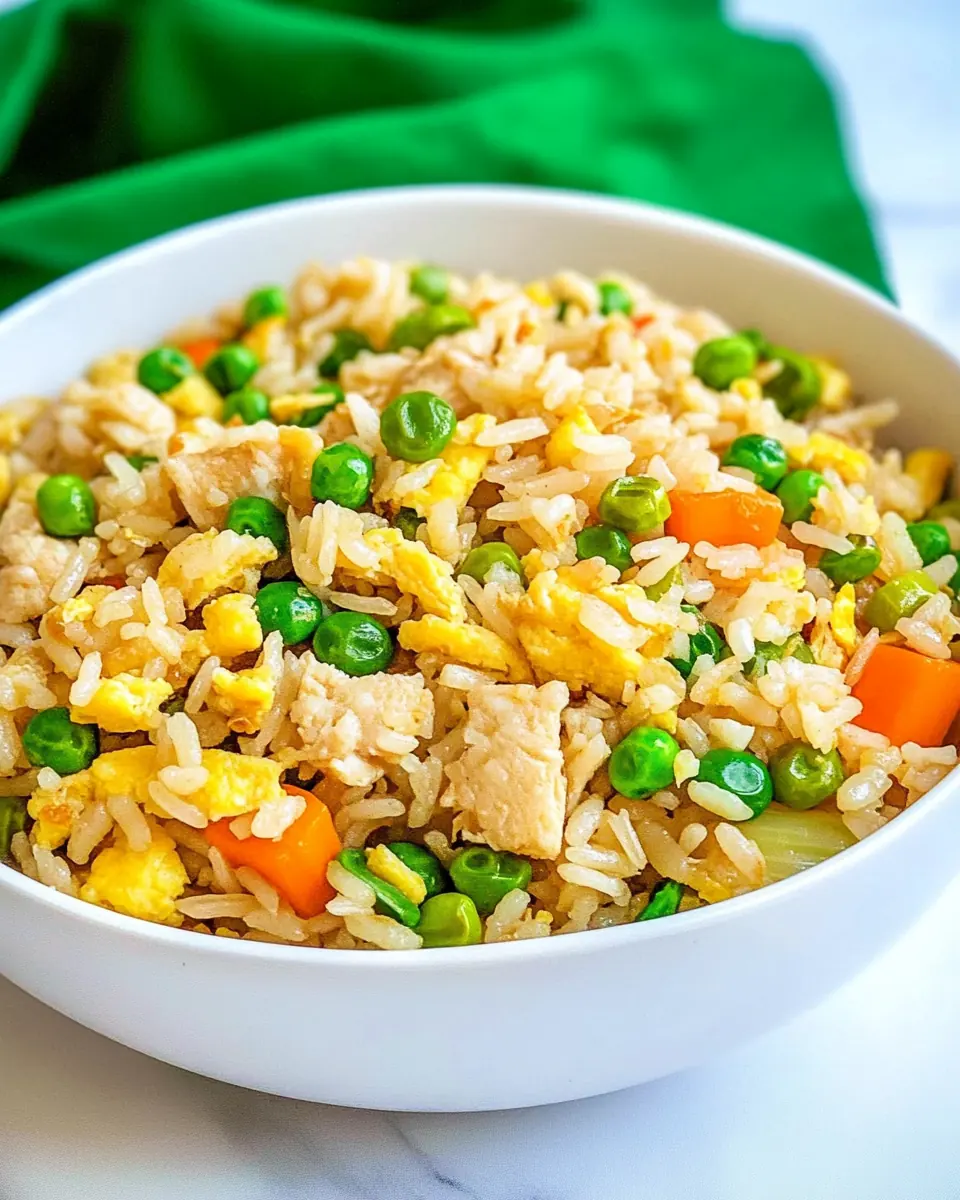
In a large skillet, heat oil on medium heat. Add rice, peas and carrots, chicken and garlic to pan, stir and cook for 2-3 minutes until thoroughly combined and warm.: The moment the oil shimmers and gives a faint ripple, you know the pan is ready. The sizzling sound when you add an ingredient should be immediate but not violent, signaling a medium heat that will brown without burning. This preheat matters because it creates a quick sear on the rice and ingredients, adding texture and depth. A common mistake is using low heat, which steams the rice instead of frying it, so be patient and wait for the oil to get hot enough.
Add soy sauce, sesame oil, salt and pepper to rice, stir well and cook for another 2-3 minutes.: You should hear a steady, lively sizzle as the chilled rice hits the hot oil, with small bits occasionally crisping against the pan. The vegetables will steam gently and the garlic will release aromatic, toasty notes. Stir frequently to distribute heat evenly and avoid scorching. If the skillet feels overcrowded, work in batches; crowding lowers the temperature and prevents proper frying.
Depending on the size of your skillet, rice mixture can be pushed to the side of the pan or removed from the pan, then scramble eggs in pan. Once eggs are cooked combine with rice and mix. Cook an additional 3-4 minutes. Serve and enjoy.: As the sauce hits the pan, the rice will take on a glossy sheen and a deeper color, and a warm savory fragrance will fill the air. Stir thoroughly so the soy sauce coats each grain, and drizzle the sesame oil in thin ribbons to preserve its aroma. Taste carefully because soy sauce adds saltiness; under-seasoning is easier to fix than over-seasoning. One slip to avoid is pouring all the soy sauce in one spot, which can oversalt localized areas.
Depending on the size of your skillet, rice mixture can be pushed to the side of the pan or removed from the pan, then scramble eggs in pan: When you move the rice aside, listen for the change in sound as the empty spot of the pan hits direct heat, then pour in the beaten eggs and watch them set into soft curds. The eggs should puff and form tender, slightly glossy curds; this provides a creamy contrast to the seared rice. If the skillet is too small, transfer the rice to a bowl to give the eggs room. The error I see most often is overcooking the eggs into dryness, which loses the silky texture you want.
Once eggs are cooked combine with rice and mix: When you fold the eggs back into the rice, notice the steam lifting and the mingled aromas of soy, sesame, and garlic. Use a gentle tossing motion so the eggs break into soft ribbons and distribute evenly. This melding step unites flavors and textures, and if the mixture seems dry you can add a splash of warm water or a touch more soy sauce to bring it together. Avoid aggressive stirring that crushes the rice into mash.
Cook an additional 3-4 minutes: During this final cook time, the rice will finish warming through, and edges of grains may take on a light golden sear. Listen for a steady, gentle sizzle and watch for tiny wisps of steam. This resting fry helps the flavors integrate and gives the dish its finished texture. Don’t skip it, because rushing to serve right away can leave the rice tasting flat. A common pitfall here is turning the heat too high, which can scorch the bottom before the center is warm.
Serve and enjoy: As you plate the fried rice, notice the glossy finish from the soy sauce and sesame oil and the colorful contrast of peas and carrots. Serve hot so the textures remain lively and the aromas are at their peak. If you plan to store leftovers, cool the rice quickly and refrigerate in an airtight container to preserve texture and safety. Reheating gently in a hot skillet with a splash of water or oil revives the grains without drying them out.