Preheat the oven to 350 degrees F.: The warm air from the oven should feel steady and even as it circulates, and preheating ensures the cookie base begins baking immediately for an even rise and tender crumb. If the oven is not up to temperature, the crust may spread and bake unevenly, leading to a dense center. A simple troubleshooting tip is to use an oven thermometer to confirm true heat, because many ovens run cooler or hotter than their dial indicates.
Roll the cookie dough out into a 1/2-inch thick circle on a piece of parchment paper. Transfer to a baking sheet and bake for 12-16 minutes, or until firm to the touch and lightly golden brown around the edges.: You will notice the dough become smoother and slightly glossy as you roll it, and the parchment lets you transfer the round without stretching. As it bakes the kitchen will fill with a warm, buttery aroma and the edges will begin to blush golden, signaling the sugars are caramelizing. Pressing too thin will make the crust crack when sliced, while pressing too thick can leave a doughy center; aim for that half inch thickness for balance. If you see too much bubbling, gently prick the surface a few times before baking to avoid large air pockets.
Remove the crust from the oven and allow to cool fully.: The crust will continue to set as it cools, and you should feel it firm up beneath your fingertips. Cooling prevents melted frosting and fruit juices from soaking into the base, preserving texture. A common mistake is frosting a warm crust which causes slipping and sogginess, so be patient and let it reach room temperature. If you are in a hurry, place the crust on a wire rack to speed cooling evenly.
Meanwhile make the cream cheese frosting by adding the cream cheese, butter, honey, and vanilla to a bowl. Beat until smooth with an electric mixer.: As you mix, you will see the mixture transform from lumpy to glossy and smooth; the smell will be mildly sweet with a hint of tang. Whipping at moderate speed allows air in for a lighter mouthfeel, but overbeating can lead to a runnier texture, so stop once it is silky and homogeneous. If lumps persist, scrap down the sides and continue briefly; if the mixture looks separated, chilling for a few minutes can help it firm up.
Spread the frosting over the cookie base.: The first contact should be cool and forgiving, and the frosting should glide across the surface creating a smooth, even layer that acts as a stabilizing cushion for fruit. Use a small offset spatula for an even finish and leave a small border so the crust edges remain visible. If you spread while the frosting is too soft it may slip off the crust, and if it is too firm it will tear the base; aim for a creamy, pipeable consistency.
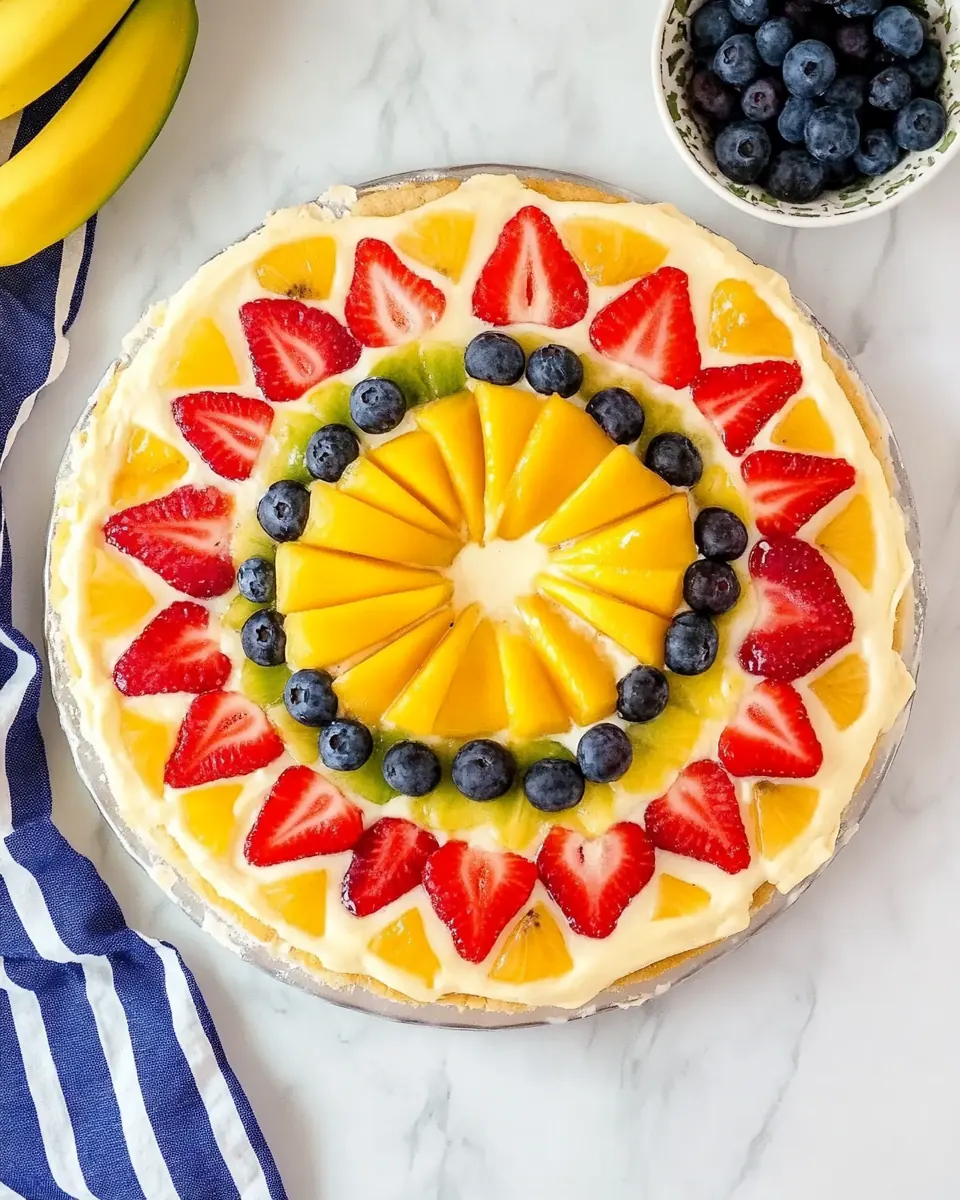
Arrange sliced fruit on top of the frosting as desired.: The sound of fruit settling on the frosting is quiet, but the visual impact is loud; arrange by color and size for a picture perfect top. Press fruit lightly into the frosting so it adheres, and consider concentric rings or a scattered mosaic depending on the occasion. Watch for juices, because overly ripe pieces can bleed and soften the surface; blot very juicy fruit slightly with paper towel before placing.
Slice and serve.: Use a sharp knife to cut through the layers cleanly, and you should see crisp crust, creamy frosting, and vibrant fruit strata. Serve immediately for the best texture contrast, otherwise juices from the fruit will slowly soften the frosting and crust. If you must wait, refrigerate until ready and slice cold, but expect a firmer frosting and slightly less tender crust when chilled.