Preheat oven to 375 degrees F.: Warmth in the kitchen is immediately comforting, and as the oven rises to 375 degrees F you will notice the air shifting to a gentle, dry heat that will help the crust bake evenly. The reason for this exact temperature is to allow the crescent dough to puff and develop a golden surface without burning the edges. A common mistake is placing the pan too low, which can brown the bottom too quickly, so position the rack in the center. If your oven runs hot, consider using an oven thermometer for accuracy. Expect a faint yeasty aroma as the oven stabilizes, and it is normal to hear a low hum from the heating element.
Unroll the crescent rolls and press into a 10 x 15-inch pan (or place on a parchment paper-lined cookie sheet), making sure to seal any seams. Bake until puffed and golden brown, 11 to 13 minutes. Place the pan on a wire rack to cool completely.: As you unroll the dough, you will feel its soft, slightly tacky texture under your fingers. Pressing it into a 10 x 15 inch pan or onto a parchment lined sheet gives you an even canvas, and sealing seams prevents gaps that could puff unevenly. The tactile feedback of smoothing the dough helps you spot thin or thick spots to adjust. One why this matters is because an even crust bakes uniformly, producing a consistent crunch and color. A frequent slip up is leaving seams unsealed, which causes awkward holes where filling can seep through, so take a moment to press seams firmly. The dough will relax and slightly spring back after pressing, which is normal, and you should notice a gentle sheen on its surface.
Using an electric mixer, beat the cream cheese at medium speed until soft and smooth, about 2 minutes. Gradually add the sugar and beat until completely combined, then mix in the vanilla extract. Using an offset spatula, spread the cream cheese mixture over the cooled crust.: During baking you will watch the dough transform, puffing gently and shifting from pale to a warm golden brown. The aroma becomes buttery and faintly sweet, filling the kitchen with welcoming notes. The timing of 11 to 13 minutes lets the interior set without overbrowning the edges. This stage matters because under baked dough will be doughy and unable to support the filling, while overbaked dough becomes too crisp and can crumble. A common oversight is opening the oven too often, which drops the temperature and can affect even coloring, so try to resist peeking. When it is done you will see even color and a slight firmness when tapped.
Top with assorted fruit of your choice. Serve immediately, or cover and refrigerate for up to 2 days.: Cooling on a wire rack lets air circulate beneath the crust so steam dissipates, preventing a soggy underside. The sound is quiet as the pan settles, and the cooled crust will feel firm to the touch. This pause is important because spreading a warm filling will cause melting and slipping of toppings, compromising texture. Many cooks try to rush this step, leading to a soft filling and shifted fruit, so patience pays off. When the pan is cool, the crust will support the filling without bending.
Using an electric mixer, beat the cream cheese at medium speed until soft and smooth, about 2 minutes.: The texture shift is dramatic, from stiff and slightly lumpy to luxuriously smooth. Beating at medium speed creates a light, spreadable consistency, and the mixer provides a consistent rhythm that eliminates small lumps. This matters because a smooth filling looks professional and spreads evenly. A typical error is using cold cream cheese , which resists smoothing and yields a bumpy result, so always allow it to come to room temperature. You should hear a steady, even motor hum and see the mass loosen into a creamy ribbon.
Gradually add the sugar and beat until completely combined, then mix in the vanilla extract.: Adding the sugar slowly helps it dissolve into the cream, avoiding a gritty texture. As you mix, the filling will lighten slightly in color and become silkier, and the small addition of vanilla extract brightens the flavor. The technique matters because well incorporated sugar ensures a smooth mouthfeel and even sweetness across every bite. One mistake is dumping the sugar all at once, which can scatter and leave undissolved granules. When combined properly, the filling should taste balanced, not toothachingly sweet, with a subtle aromatic lift from the vanilla extract .
Using an offset spatula, spread the cream cheese mixture over the cooled crust.: Spreading with an offset spatula gives you smooth control and clean edges. The filling should glide across the surface, leaving a satiny sheen without tearing the crust. This step matters because an even layer distributes flavor and provides a stable bed for the fruit . A common misstep is applying too thick a layer, which can overwhelm the crust and make the dessert heavy, so aim for a balanced coverage. Listen for quiet scraping sounds as the spatula levels the filling, and stop when the surface looks glossy and even.
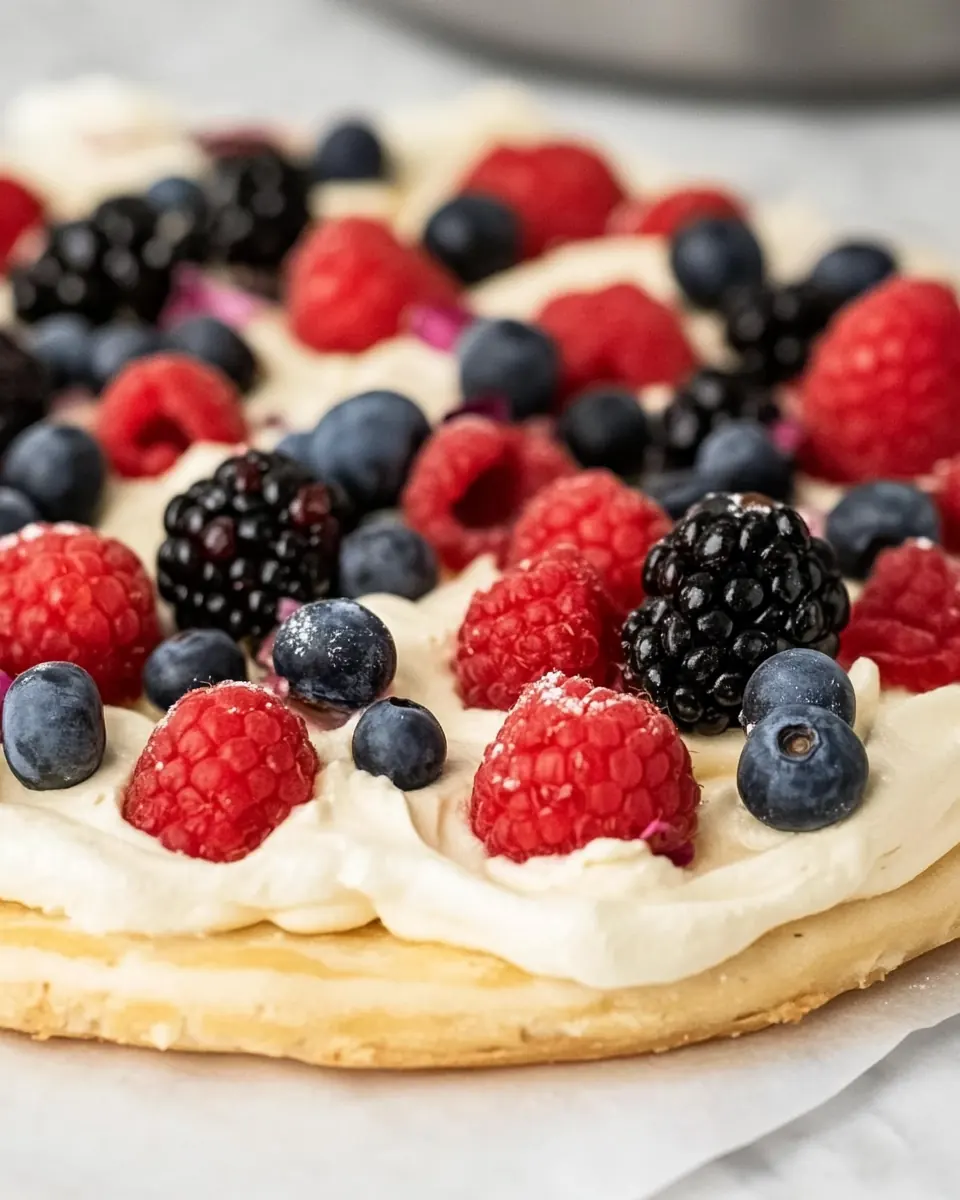
Top with assorted fruit of your choice.: Arranging the fruit is the creative part, and you will notice a burst of color and fresh fragrance as slices and berries go down. The contrast of textures is immediate, with tender fruit resting on creamy filling and supported by a crisp crust. Placing fruit close together creates a mosaic, while spacing pieces gives a lighter presentation; either choice tastes wonderful. One pitfall is adding wet, very juicy fruit directly after slicing, which can release too much juice and make the filling runny, so pat certain fruits dry if needed. The visual payoff is high, and the finished surface should gleam and look inviting.
Serve immediately, or cover and refrigerate for up to 2 days.: When you serve right away, the crust remains at its peak texture and the fruit is freshest. If you refrigerate, cover the pizza to protect it from absorbing odors, and plan to eat within 2 days to avoid sogginess. Cooling changes the mouthfeel slightly, with the filling becoming firmer and the crust softening a little, which is fine for short storage. A common error is leaving it uncovered, which dries the fruit and dulls the filling, so always cover tightly. When ready to serve, bring to a cool room temperature for the best balance between firmness and flavor.