In a small saucepan, add the coconut milk, spices, garlic, and ginger together over medium-high heat. Continue heating until all the spices are integrated into the coconut milk and the coconut milk is hot, smooth and creamy, about 5 minutes.: You will smell the spices bloom almost immediately as the warm coconut milk releases aromatics, a heady mix of cumin , coriander and paprika . The surface of the coconut milk will start to shimmer and small wisps of steam will rise, carrying a fragrant spice perfume. As the mixture warms, the minced garlic and grated ginger soften and infuse the liquid, creating a silky, spiced broth. This step matters because gentle heat helps the fat in the coconut milk draw out the essential oils from the dry spices, producing depth you would miss if you tossed everything cold into the pot. A common mistake is overheating and letting the milk scorch, so keep the heat at medium-high and stir frequently to prevent sticking.
Transfer the coconut milk/spice mixture to a large crock pot (6-quart or larger), along with the lamb meat and diced tomatoes.: Listen for a gentle simmer and watch for uniform color, there should be no grainy powdery specks floating, just a glossy, unified sauce. The aroma becomes rounder and less sharp as the spices marry with the coconut milk , and the texture will shift from watery to slightly thicker and velvety. Why this is important, the integration ensures even flavor distribution so every bite of lamb gets the same spice balance. Avoid rushing this step, as undercooked spice pockets can taste raw; however, do not let it boil vigorously which can break the emulsion and lead to separation.
Give everything a big stir until well-combined. Secure the lid on the crock pot, and turn it on the low setting. Cook 8 hours, or until the lamb stew meat shreds easily when pulled with a fork.: When you pour the warm spiced coconut milk over the chunks of lamb , you should see the sauce nestle around the meat, coating each piece. The diced tomatoes will introduce flecks of red and a fresh tang that cuts through the richness. This layering helps the meat begin to absorb flavor immediately, which is why I always transfer while the mixture is still warm rather than cold. A typical slip is crowding the pot with too much meat, which prevents even cooking, so use a 6 quart or larger crock pot as recommended.
Depending on how fatty your lamb meat is, consider absorbing some of the fat that collects at the surface with a napkin or paper towel. There will be a lot of juices in the crock pot. If you’d like to thicken the juice, remove cover of crock pot for the last hour and place on high (leave crock pot uncovered).: The sound here is gentle shuffling as sauce finds its way between the pieces, and visually you want every piece of lamb to be coated in the spiced liquid. Stirring distributes the tomatoes and spices evenly, preventing flavor pockets and ensuring consistent seasoning. This step also lets you check for any unmixed spice clumps or bits stuck to the bottom. Be careful not to over stir during long cooks, as constant agitation can break down the meat too quickly; a thorough initial stir is perfect.
Taste curry for flavor and add more sea salt to taste.: You will hear the faint hum of the appliance and soon sense a warm, cozy steam scent filling the kitchen. Low, slow heat lets tough connective tissue in the lamb dissolve without drying the meat, producing tender shreds that flake apart with gentle pressure. This technique matters because long, gentle cooking yields silky texture, whereas high heat can toughen meat. A common error is selecting high to speed things up, which can result in uneven tenderness and reduced flavor integration.
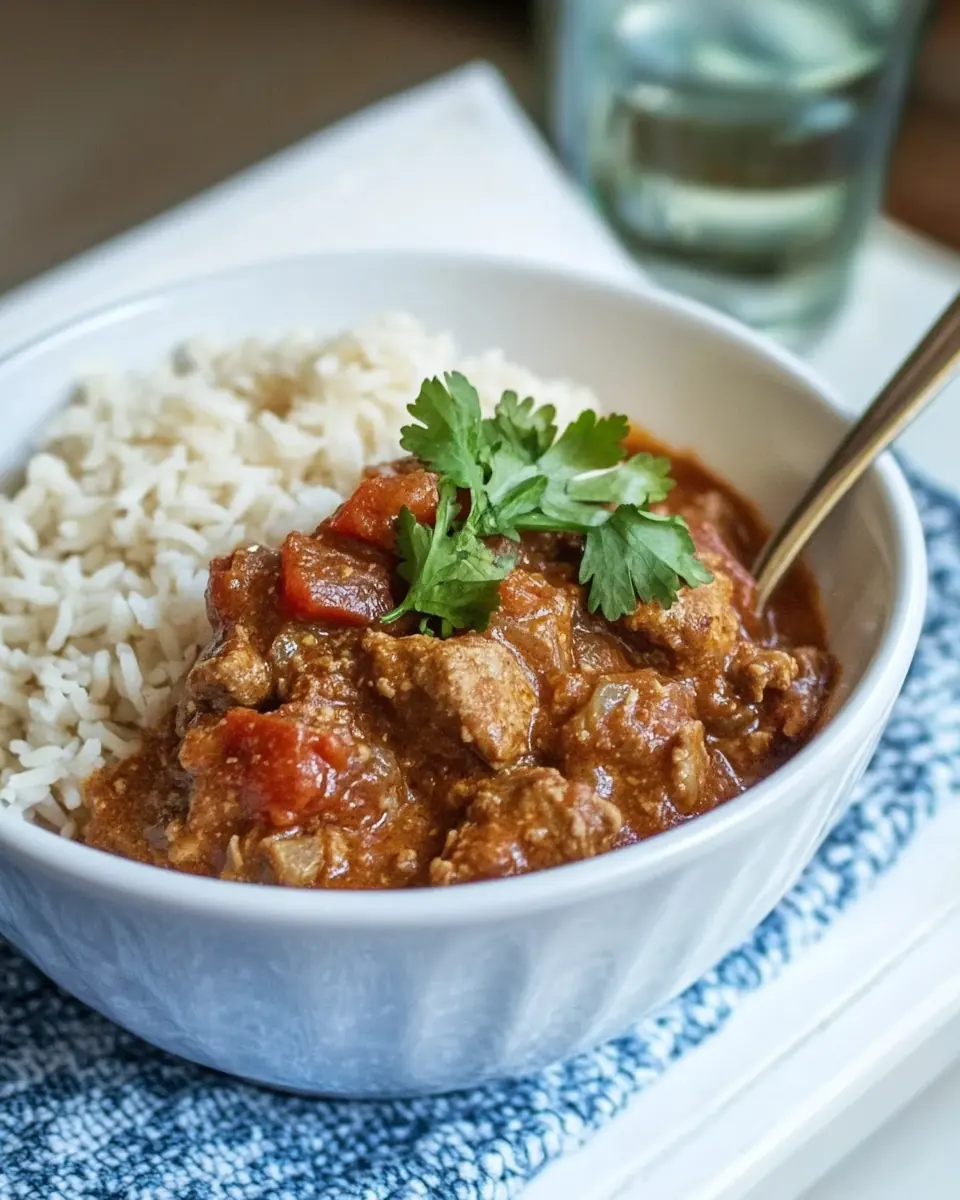
Serve lamb curry over brown basmati rice with a dollop of plain yogurt on top.: The most satisfying cue is when a fork slides in and the meat yields into soft ribbons, releasing juices that mingle with the sauce. The kitchen will smell richly spiced, and the sauce will have darkened slightly as the flavors concentrate. This long timing allows collagen to break down into gelatin, producing a silky mouthfeel you can see in the sauce clinging to the meat. Check by lifting a piece with a slotted spoon, and if the meat resists, give it more time. Rushing this stage is the main way to end up with tough or chewy pieces.
Depending on how fatty your lamb meat is, consider absorbing some of the fat that collects at the surface with a napkin or paper towel: Visually you may notice a sheen of rendered fat on top, which can carry flavor but feel heavy. Gently blotting the surface with a folded napkin held with tongs removes excess fat while leaving the sauce intact. This step improves mouthfeel for those who prefer a lighter finish. The trick to avoid is stirring vigorously while blotting, which can reincorporate the fat back into the sauce, so do it carefully and briefly.
There will be a lot of juices in the crock pot. If you’d like to thicken the juice, remove cover of crock pot for the last hour and place on high (leave crock pot uncovered): You will see the sauce reduce visually, bubbling gently and concentrating flavor, and the scent will become more pronounced. Reducing at the end evaporates water and intensifies the sauce, giving it a clingier texture that coats rice beautifully. This matters because a thicker sauce improves presentation and mouthfeel. Avoid rushing by turning up to high for too long, which can dry out the meat; one hour uncovered is usually enough to reach a nice consistency.
Taste curry for flavor and add more sea salt to taste: Use a spoon to sample the sauce, noticing the balance between sweet coconut milk , tangy diced tomatoes , and savory depth from the spices. Salt brightens and lifts those flavors, so add it incrementally until the curry sings. Tasting and adjusting is essential because salt levels differ by brand of canned goods and the cut of lamb . A common mistake is over salting too early, so add in small amounts and recheck after a few minutes for true integration.
Serve lamb curry over brown basmati rice with a dollop of plain yogurt on top: The final presentation should show glossy sauce draped over fluffy brown basmati rice , with a cooling spoonful of plain yogurt to contrast the warm spices. The first bite will mix creamy, tangy and savory notes, and the rice soaks up the sauce creating a balanced mouthful. Serving hot ensures the sauce remains silky; avoid assembling too far in advance or the rice can soak up all the sauce and become dry.