Place the sugar and water in a small saucepan set over medium-low heat, and stir until the sugar dissolves. Simmer for 3 minutes and remove from the heat.: Warmth will bring the syrup to life, and you should see the liquid go from cloudy to clear with a glossy sheen, a sign the sugar has fully dissolved. The gentle hiss as tiny bubbles form tells you the syrup is heating evenly, and the aroma should be clean and slightly sweet rather than caramel like. This step stabilizes the meringue, so accurate simmering is important. If you overheat, the syrup can darken and taste burnt, so watch carefully and remove it promptly when the timer is up.
Using a hand mixer, beat the egg whites until soft peaks form, and add the sugar water in a thin stream. Continue beating the meringue until the peaks are firm but still glossy.: You will notice the sound change as the mixer runs, the volume increasing and the mixture becoming cloudlike and billowy. Look for soft peaks first, then pour in the warm syrup slowly to avoid deflating the foam. After the syrup is added, keep beating until the peaks stand tall and have a shiny sheen, indicating the sugar is fully incorporated. A dull or grainy texture means the sugar did not dissolve properly. One common mistake is adding the syrup too quickly, which can collapse the foam, so take your time and stream it in thinly.
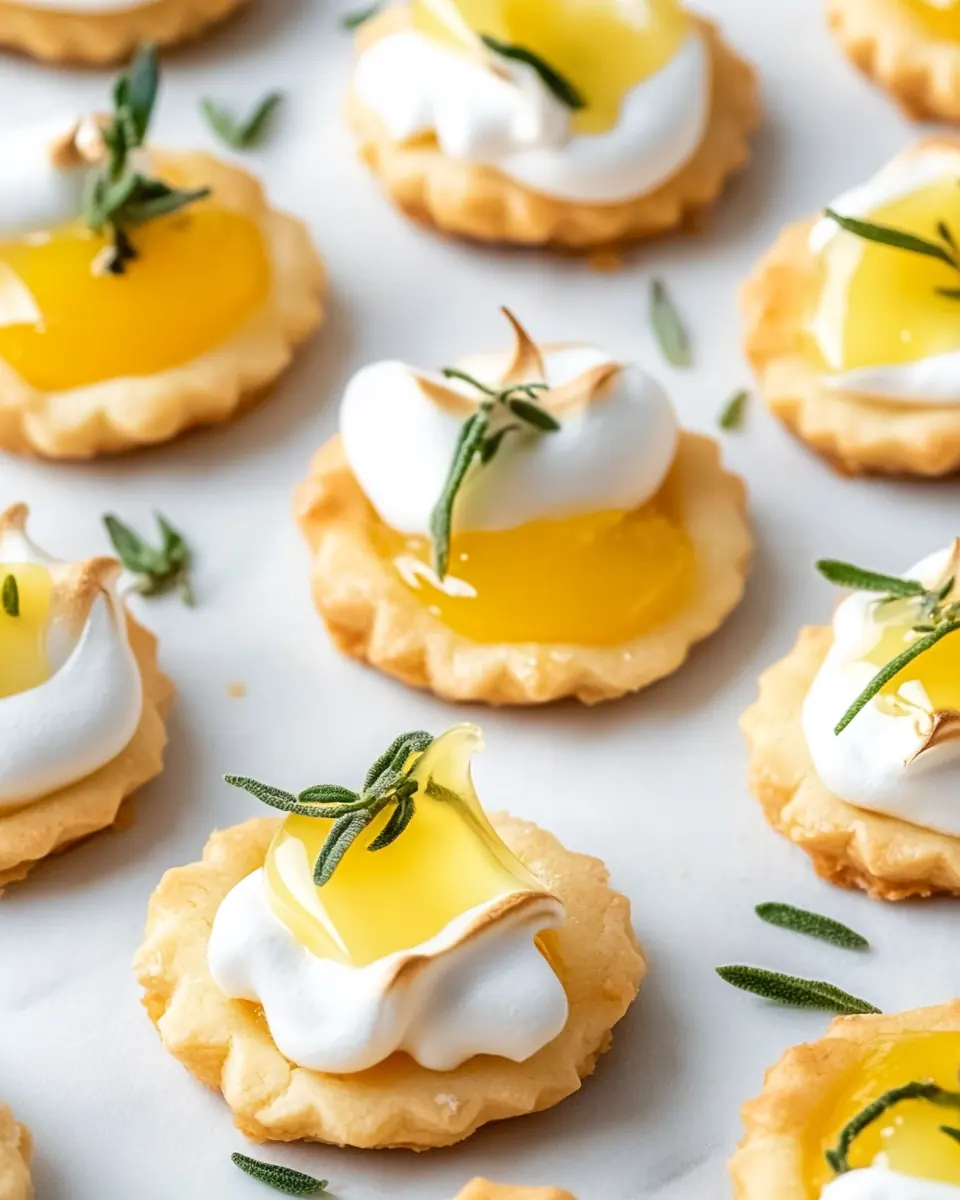
Place the cookies on a serving platter and spoon a dollop of lemon curd on top of each one. Pipe or spoon the desired amount of meringue on top of the curd. Use a small kitchen blowtorch to slightly brown the meringue, if desired.: As you work, the cool, velvety lemon curd should contrast with the crisp cookie, and you will feel a satisfying resistance as the spoon transfers the curd onto each triangle. Use a measured spoonful to keep portions consistent, and give the curd a gentle wobble if you want to check its set; it should hold but still look glossy. Avoid piling too much curd, because excess moisture can soften the base over time.
Garnish each cookie with a mint leaf, if desired.: The meringue should feel light and marshmallow like, and when you pipe it, it will hold its shape. Listen for a soft thud as the piping bag squeezes, and watch the surface for a smooth, satiny finish. Use gentle pressure to avoid air pockets, and smooth any rough edges with a small offset spatula if needed. A frequent error is overworking the meringue at this stage, which can flatten peaks, so shape them with confidence but without excessive handling.
Use a small kitchen blowtorch to slightly brown the meringue, if desired.: When toasting the meringue, you will see the color shift from white to pale gold, then to deeper amber at the tips, releasing a warm, toasty aroma that complements the citrus. Move the flame in even, circular motions to avoid singeing one spot, and keep the torch a safe distance to create a gentle caramelized surface. If you do not have a torch, a brief stint under a broiler will work but watch closely because the meringue can go from lightly browned to burnt in seconds. A common slip is holding the torch too close which creates dark spots rather than an even golden finish.
Garnish each cookie with a mint leaf, if desired.: The tiny green leaf adds a fresh herbal note and a pop of color, making the plate visually appealing. Place the garnish carefully on the meringue so it sits delicately without sinking. Fresh herbs should be patted dry so they do not introduce moisture. Avoid using heavy garnishes that weigh the meringue down, and serve soon after garnishing to keep everything looking pristine.