Melt the butter and olive oil in a 3-quart, 10-inch, high-sided saute pan or a 12-inch skillet. Add the onion and cook for 4-5 minutes, stirring often, until the onion becomes soft and transparent. If the onion begins to brown, reduce the heat to medium-low.: When the butter and olive oil first heat, you will notice a soft shimmer across the pan and a faint buttery aroma. The combination raises the smoke point and gives a satiny coating so the onion sweats rather than browns quickly. Work at medium heat, watching the fats so the butter melts smoothly but does not sizzle aggressively. If you hear loud popping, lower the heat, because overheating can brown the butter and introduce a toasty, slightly bitter note you do not want here. A common error is using too high a flame, which rushes the onion and prevents that soft, sweet flavor development that forms the base of the dish.
Add the orzo to the skillet and mix into the onions. Add enough broth to cover the orzo, and gently stir, then bring to a low boil, and reduce to a simmer so that the pasta gently bubbles. Stir often, until the broth is absorbed or about 10 minutes. Add the lemon juice and half of the lemon zest to the risotto and continue adding the broth 1/2 to 1 cup at a time, stirring often, until the liquid is absorbed and the pasta is al dente, about 30 minutes.: As you stir, look for the onion to turn glossy and slightly translucent, releasing a warm, sweet fragrance. The gentle movement helps sweat the pieces evenly, creating a mellow background flavor. If the edges start to brown, reduce to medium low heat, because browning will shift the taste from sweet to caramelized, altering the intended profile. One mistake to avoid is leaving the onion unattended, which can quickly take it from translucent to browned.
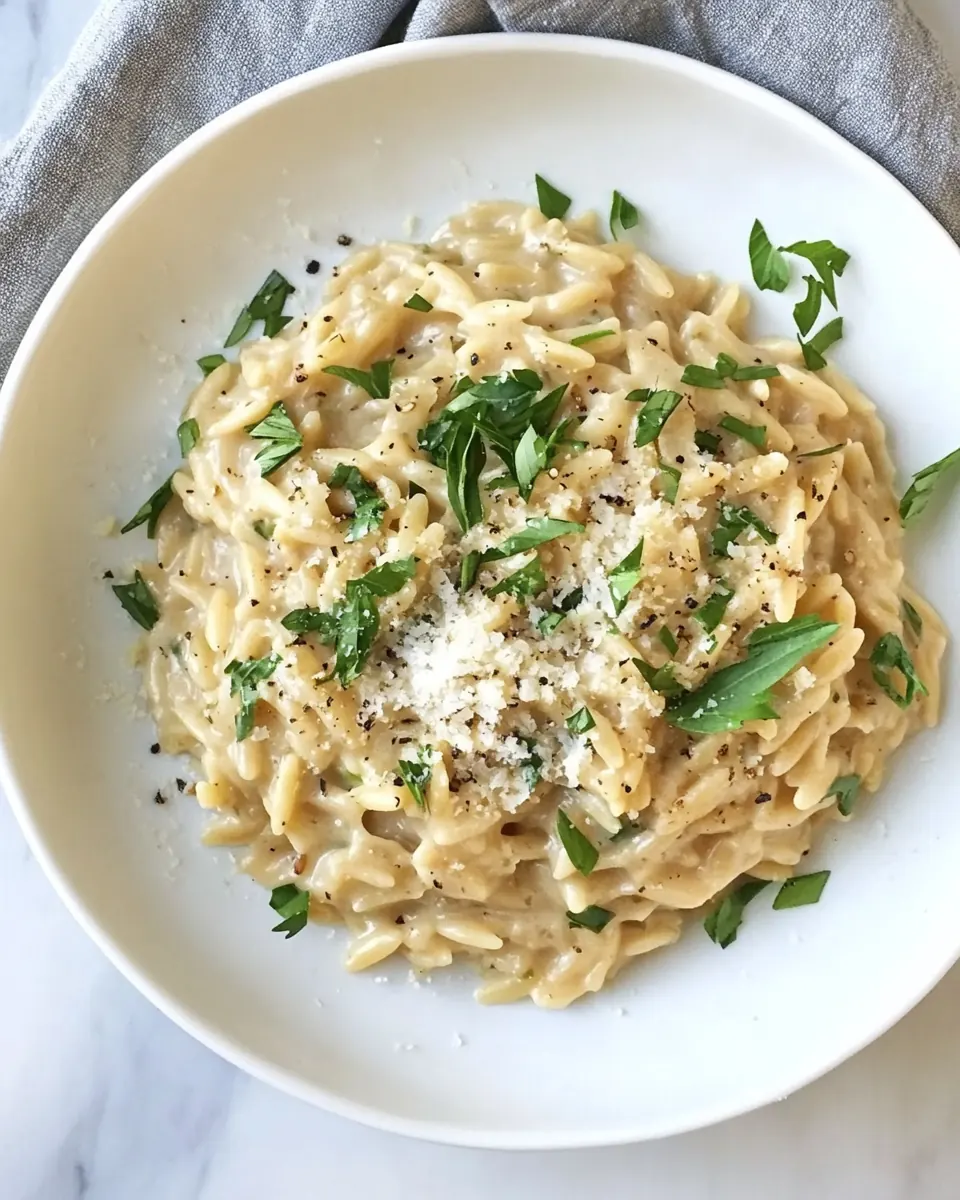
Remove from the heat, season with kosher salt and freshly ground black pepper and stir in the parmesan cheese. Sprinkle with the Italian parsley and the remaining lemon zest.: This step is about control, not speed. The smell will change from sweet to nutty if browning starts, which is fine in many dishes but not for this delicate risotto style. Turning down the heat keeps the onion tender and allows flavors to build gently. New cooks sometimes overcompensate and turn off the heat entirely, but a low steady warmth is what helps the layers develop without drying the pan.
Add the orzo to the skillet and mix into the onions: When the orzo hits the warm pan, it will make a soft toasty scent for a moment as the little pasta warms. Toss it with the onion so each piece is lightly coated in fat, which primes the grains to absorb broth evenly. Stirring at this point distributes flavors and prevents sticking. One slip is adding cold broth too fast, which can shock the orzo and cause uneven cooking.
Add enough broth to cover the orzo, and gently stir, then bring to a low boil, and reduce to a simmer so that the pasta gently bubbles: The visual cue here is a gentle shimmer and small, steady bubbles not a rolling boil. That soft simmer allows the starches to release gradually, creating creaminess. Stir to prevent the orzo from sticking and to encourage even absorption. If it bubbles aggressively, the liquid can evaporate too quickly and leave undercooked centers, so lower the heat to maintain the right pace.
Stir often, until the broth is absorbed or about 10 minutes: You will feel the spoon move through a thicker, more cohesive mass as the first round of liquid reduces. The aroma deepens and the texture shifts from loose to slightly creamy. Frequent stirring helps coax out starch without making the dish gluey. A frequent pitfall is under stirring, which can leave dry pockets or cause the bottom to scorch.
Add the lemon juice and half of the lemon zest to the risotto and continue adding the broth 1/2 to 1 cup at a time, stirring often, until the liquid is absorbed and the pasta is al dente: The moment you add the lemon juice , the scent brightens noticeably, and the flavor cuts through the richness. Adding broth in small increments encourages a slow release of starch, giving that creamy coating around each grain of orzo . Watch for the surface to look glossy and slightly thickened between additions, and taste a piece to check for that tender yet firm bite. If you pour too much liquid at once, the process becomes longer and you lose control over texture.
About 30 minutes: As you near the end of the cooking window, the orzo will be plump, tender, and the pan will show a thin sheen of sauce. The scent will be a mingling of citrus, savory broth, and sweet onion . This is the time to fine tune seasoning, because the texture is set and any additional salt or pepper will be absorbed. A frequent mistake is skipping the tasting, which can leave the dish underseasoned or overly tart.
Remove from the heat, season with kosher salt and freshly ground black pepper and stir in the parmesan cheese: Off the heat, the residual warmth melts the parmesan cheese into a velvety coating rather than causing it to clamp up. You will see the surface go glossy and silkier as the cheese dissolves, and the aroma deepens into umami richness. Add salt sparingly because both the broth and cheese bring sodium. A common error is stirring in cheese on high heat, which can make the texture grainy and separated.
Sprinkle with the Italian parsley and the remaining lemon zest: The final garnishes add color and a fresh lift. The herb gives a green brightness, and the reserved lemon zest delivers an immediate citrus perfume when you plate. Scatter them at the end so they retain color and aroma. Overcooking the parsley will dull its freshness, so add it just before serving.