Go Back
Easy Madeleines with Lavender and Lemon

Easy Madeleines with Lavender and Lemon

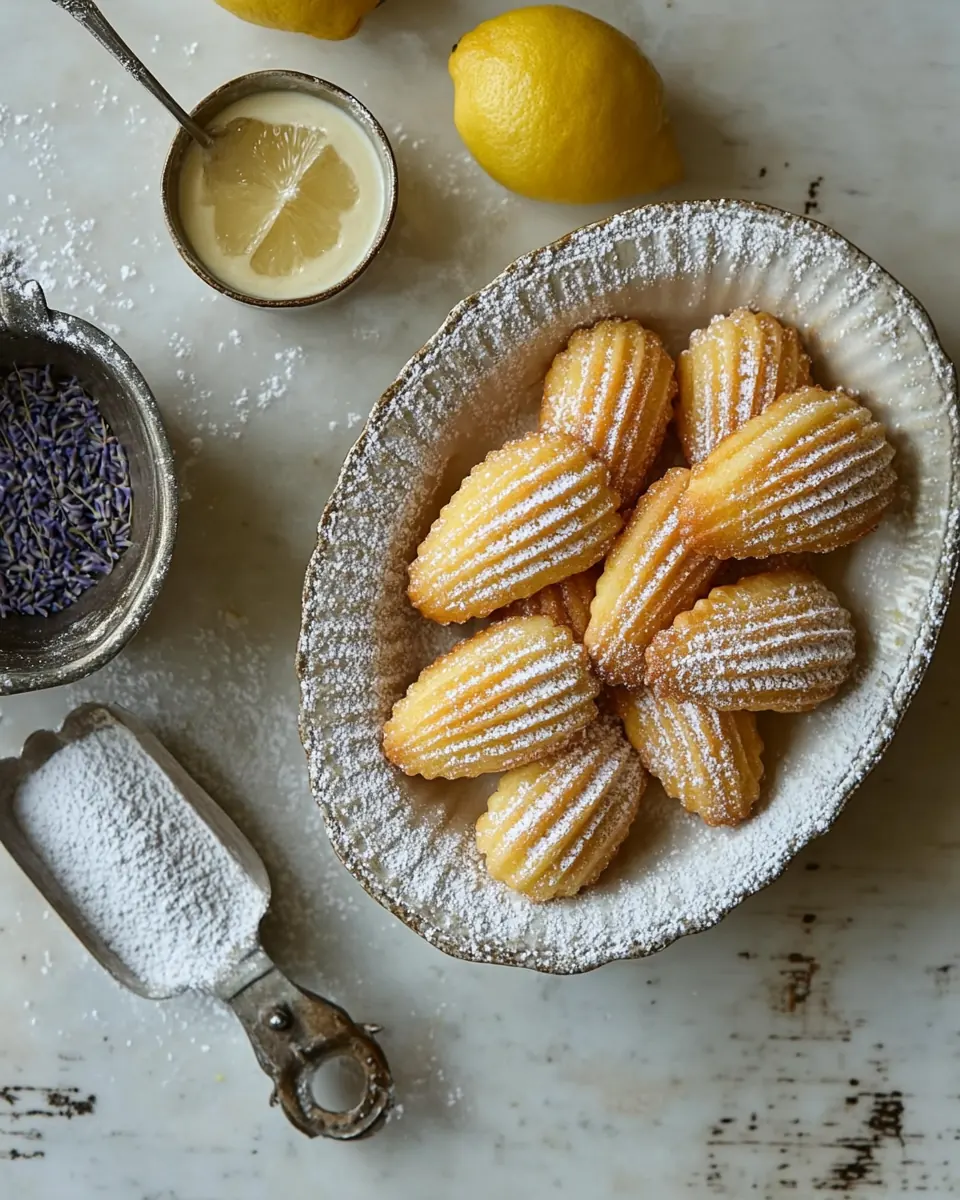
Easy Madeleines with Lavender and Lemon are delicate, buttery sponge cakes scented with floral lavender and bright lemon rind. These small, shell shaped treats are soft inside with lightly caramelized edges, perfect for afternoon tea or gifting. Easy to make and impressive to present, they deliver bakery style charm with simple pantry ingredients, making them a wonderful reason to bake today.
Prep Time 10 minutes
Cook Time 10 minutes
Total Time 20 minutes
Servings: 24 servings
Course: Desserts
Cuisine: French
Calories: 150

Ingredients
  

  • 1 cup 150 g plain all-purpose flour Provides structure and bulk to the batter, creating the crumb and body of the madeleines; sift to avoid lumps and ensure even mixing. Balances moisture with fat and eggs so the cakes hold their signature hump while remaining tender.
  • 1 tsp baking powder Leavens the batter by releasing carbon dioxide during baking, helping the madeleines rise and form a light texture; use fresh powder for best lift. Blends evenly into the flour to avoid uneven pockets and maintain delicate crumb.
  • 2/3 cup 150 g caster sugar Adds sweetness and contributes to the batter's moisture and aeration when creamed with eggs; dissolves readily for a smooth texture. Enhances caramelization and helps achieve a golden color on the shells.
  • 4 free-range eggs Incorporates air and richness when beaten, providing structure and moisture; eggs set during baking to stabilize the madeleines' shape. Contribute to flavor complexity and help achieve the tender, slightly spongy interior characteristic of madeleines.
  • 160 g melted butter Adds fat that enriches flavor, improves mouthfeel, and promotes a tender, moist crumb; use melted butter to incorporate smoothly into the batter. Encourages browning and helps create the crisp edges and distinct shell pattern on the cakes.
  • 2 Tblsp honey Sweetens naturally and adds depth with floral undertones, enhancing overall flavor complexity; stir in for a subtle sticky sweetness. Helps keep the madeleines moist and complements citrus and lavender notes.
  • 2 tsp vanilla extract Imparts warm, sweet aromatic flavor that enhances the overall profile and rounds other flavors like lemon and lavender; add with wet ingredients for even distribution. A little goes a long way to lift the pastry's aroma without overpowering.
  • 3/4 cup caster sugar about 180 g Provides additional sweetness and assists in achieving a light, tender crumb when combined with eggs and air; helps with texture and browning. Using the specified amount ensures proper balance between sweetness and the delicate flavors of lavender and lemon.
  • 2 tsp lavender Introduces a floral, fragrant note that pairs with lemon to elevate the madeleines' flavor; use culinary-grade lavender and crush lightly for even distribution. Use sparingly to avoid bitterness, allowing the aroma to shine through the buttery batter.
  • Finely grated rind of a small lemon – about 1 – 1 1/2 tsp Contributes bright citrus aroma and zesty flavor that cuts through the sweetness, balancing the buttery richness; finely grate to release essential oils. Adds a fresh finish that complements lavender and enhances the overall sensory experience.

Equipment

  • Madeleine mold
  • Whisk
  • Mixing Bowl
  • Small food processor
  • Oven

Method
 

  1. Preheat the oven to 180 C / 350 F and lightly grease 2 x 12-hole madeleine molds with cooking spray (spray the area in between the indentation in case the batter spills over the edges).: As the oven warms, note a gentle steady hum from the elements and a citrus neutral warmth when you open the door, it should feel even across racks. Proper preheating ensures an immediate burst of heat that helps form the classic madeleine hump and sets the edges quickly so they caramelize. If the oven is cooler than stated you may end up with pale, underdone shells lacking that golden edge. A common mistake is skipping the greasing between indentations which causes sticking if batter spills, so pay attention to treat both cavities and the space around them.
  2. In a large bowl add the flour, baking powder, eggs, vanilla, honey, and melted butter, and using a whisk mix until you have a smooth batter.: As you combine ingredients, listen for a gentle swish from the whisk and watch the batter smooth out into a glossy, medium viscosity ribbon when lifted. The eggs provide structure and aeration, while the warm melted butter brings silkiness; whisking just until homogenous prevents overdevelopment of gluten which keeps crumbs tender. If you overmix you may lose air and end up with denser madeleines, so stop once lumps are gone and the batter looks cohesive. One error people make is adding very hot butter which can cook the eggs slightly; let the butter cool to warm before whisking in.
  3. Scoop out about a dessertspoonful per mold. You want to fill it so that it fills the area to level or just below the level.: When scooping, the batter should flow slowly from the spoon, and the surface should settle to a flat level or just below it, not mound. This amount ensures the correct balance between top rise and edge caramelization; overfilling leads to spillover and uneven baking. If your batter seems thick, it will cling and produce shallow shells, while too thin batter will overflow; adjust by gently folding if needed. A frequent misstep is an inconsistent fill level across molds, which gives mixed results; use the same sized spoon for each cavity for uniformity.
  4. Bake for 8 – 10 minutes until golden brown and firm to the touch.: During baking, you will smell a toasty, buttery aroma and see the edges turn a warm golden brown while the centers rise into small domes. The surface should spring back slightly when pressed, indicating doneness. Baking too long dries them out, while underbaking leaves a gummy center; if unsure, test by inserting a thin toothpick into the center, it should come out clean or with a few moist crumbs. A common pitfall is opening the oven repeatedly which drops the temperature and affects rise, so resist peeking until near the minimum time.
  5. While the madeleines are baking make the lavender & lemon sugar by mixing all the ingredients together and either rub between your fingers or pulse in a small food processor to break up the dried flower and allow the lemon zest to fully mix with the sugar.: As you rub the mix, inhale the fragrant combination of citrus oils and floral lavender, the sugar will pick up color and a heady aroma. This step matters because it releases essential oils into the sugar so each finished shell carries even flavor. If you skip breaking up the flowers, you may get clumps of dried lavender in a bite which can be overpowering, so ensure it’s evenly distributed. One mistake is using too much lavender, which tips into a soapy note, so stick to the measured amount and crush gently for balance.
Notes

  • Room temperature eggs: Letting your eggs come to room temperature helps them incorporate more easily into the batter, yielding a lighter texture.
  • Warm not hot butter: Use melted butter that is warm to the touch but not hot, so it blends smoothly without cooking the eggs or breaking the batter.
  • Even filling: Use the same sized spoon to fill each mold so every madeleine bakes to the same thickness and color.
  • Fresh baking powder: Check your baking powder for freshness before starting, since stale leavening will prevent the distinctive hump from forming.
  • Crush the lavender: Break up the dried lavender by rubbing it or pulsing briefly to distribute the floral note without creating large pieces that dominate a bite.
  • Store properly: Keep madeleines in an airtight container at room temperature for a few days, and wrap tightly before freezing to preserve their texture.