Preheat oven to 375 degrees. Start a large pot of salted water to boil.: The room will fill with a faint warm scent from the oven as it heats, and preheating ensures the casserole begins baking immediately, creating a steady, even heat so the top browns without drying the interior. A common mistake is not preheating, which leads to uneven baking and a longer cook time. To test readiness, the oven should beep or reach the set number on the display when it is up to temperature.
Boil pasta in salted water according to package directions until al dente, usually 9-11 minutes. Drain pasta and set aside.: You will hear the water build to a vigorous boil with rolling bubbles, which signals the right stage to add pasta; the salt seasons the pasta from within, enhancing the final dish. If you add pasta before the water is truly boiling, it may cook unevenly and stick together. Use a large pot so the Ziti pasta moves freely and separates while cooking.
Crack eggs into a large bowl then break yolks with a fork. Add ricotta cheese and mix well.: You will notice the pasta soften but still offer resistance when bitten, and it should have a slight chew, not mush. Al dente texture helps the pasta hold up during baking so the casserole does not become gummy. Overcooking here is the most common problem, so start checking a minute or two before the low end of the package range.
To the ricotta cheese add 1 cup mozzarella cheese, 1/2 cup parmesan cheese, Italian seasoning, parsley, salt, pepper and garlic. Mix the cheese mixture until combined.: The drained pasta should be warm and pliable, with steam rising gently. Draining removes excess water so the filling is not watery, but do not rinse, or you will lose surface starch that helps the sauce adhere. A mistake is letting the pasta sit too long after draining which allows it to clump, so toss it quickly into the mixing bowl.
Mix and toss the pasta in the ricotta mixture.: The eggs should form a smooth base when whisked, and the fork action helps start the emulsification that will bind the Ricotta cheese to the pasta. If the yolks are not fully broken, the filling can have streaks. Make sure the bowl is large enough to mix without spilling.
Spray a 9×13 baking dish lightly with oil, then add half of the marinara sauce (about 2 cups) to the bottom of the dish.: The ricotta will fold into the eggs becoming creamy and slightly glossy; this texture is key for a silky filling. Proper mixing prevents lumps and ensures even distribution. If the ricotta is overly watery, drain it briefly on a paper towel to avoid a loose filling.
Add the cheesy pasta to the baking dish spreading it evenly in the dish.: As you incorporate these ingredients the mixture will take on a richer aroma, with cheesy umami from the Parmesan cheese and a garlicky perfume that carries through the casserole. Mixing thoroughly ensures every bite has balanced flavor. One common oversight is adding cheeses unevenly, which causes pockets of dryness or saltiness.
Top the pasta with the remaining marinara sauce (2 cups), mozzarella (1 cup) and parmesan cheese (1/2 cup).: The bowl should show a homogenous, slightly fluffy cream with flecks of herbs and garlic visible, promising even flavor throughout. Proper emulsification helps the filling set while baking. If the mixture seems separated, beat gently until cohesive, but avoid overbeating which can make it dense.
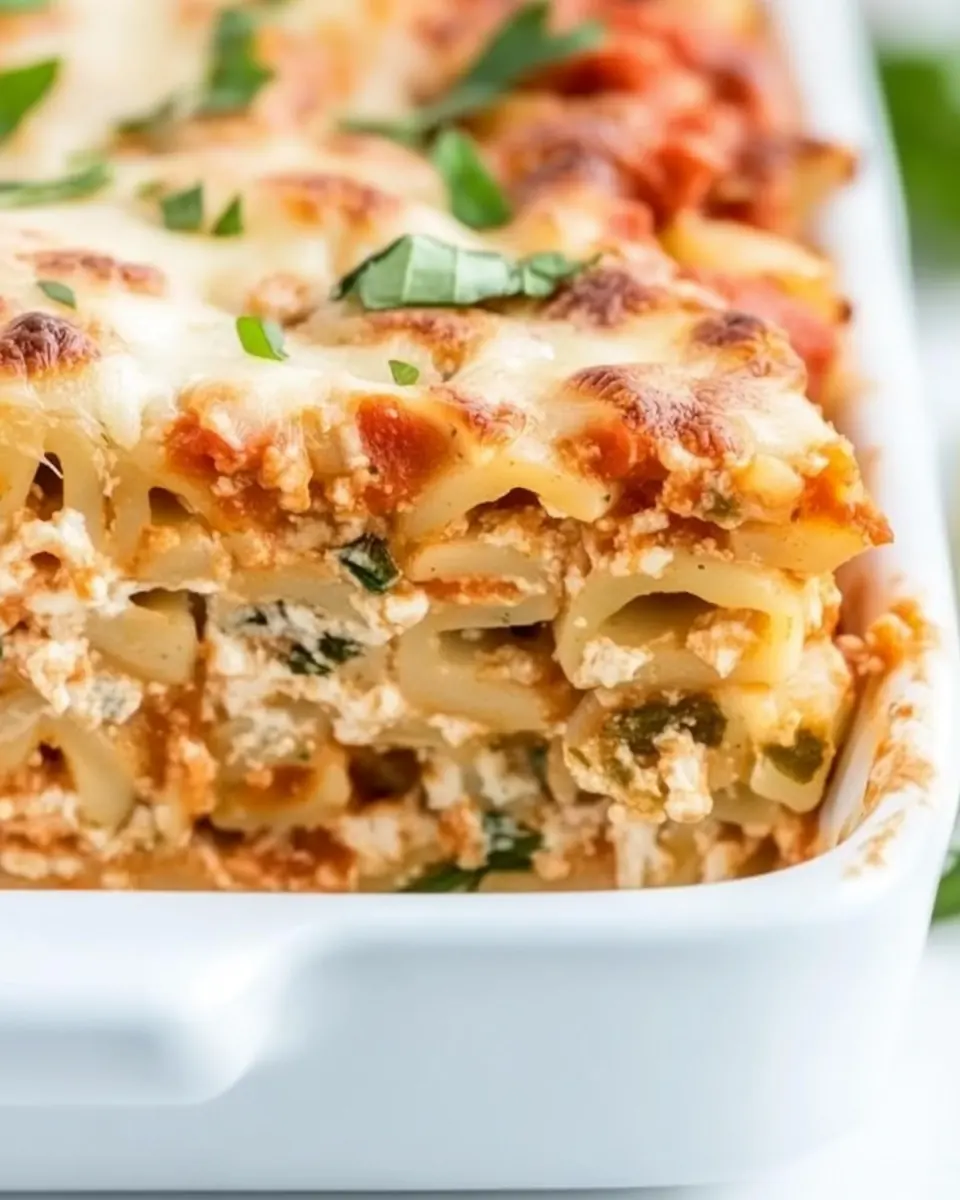
Cover with aluminum foil and place in the oven for 20-25 minutes. The sauce will be bubbling and the cheese on top will be melted and lightly browned. If the cheese is not quite melted and brown enough remove the foil and cook for an additional 3-5 minutes in the oven uncovered. Let stand for five minutes, then serve. Sprinkle with fresh parsley, fresh basil or red pepper flakes if desired.: When the warm Ziti pasta meets the cheese mixture, it will become glossy and lightly coated, each tube cradling creamy filling. Tossing helps the sauce cling to the pasta, ensuring uniformity. A mistake is overcrowding the bowl, which prevents even coating; work in batches if needed.
Spray a 9×13 baking dish lightly with oil then add half of the marinara sauce about 2 cups to the bottom of the dish: The oil prevents sticking and the layer of Marinara sauce acts as a moisture barrier, so the bottom of the pasta does not dry out. Spreading the sauce evenly creates a flavor foundation. If you skip oil, cheese can cling to the dish and make serving difficult.
Add the cheesy pasta to the baking dish spreading it evenly in the dish: You should see an even bed of pasta with filling peeking through, and the surface will be slightly textured. Even spreading ensures consistent baking and predictable slices. Pressing down too hard can compact the pasta, making the casserole dense, so gently level it instead.
Top the pasta with the remaining marinara sauce 2 cups mozzarella 1 cup and parmesan cheese 1/2 cup: The top will glisten with sauce and then with the grated cheeses it will look ready to bubble and brown in the oven. This layered approach protects the pasta and creates a beautifully browned finish. An error here is applying too much sauce on top which can prevent proper browning of the cheese.
Cover with aluminum foil and place in the oven for 20 to 25 minutes: Behind the foil you will hear gentle bubbling and smell bright tomato and baking cheese; covering traps steam so the filling sets without drying. Remove the foil if the top needs extra browning, and the uncovered minutes create attractive golden spots. Leaving it covered the entire time can result in pale cheese and a less appealing crust.
The sauce will be bubbling and the cheese on top will be melted and lightly browned: When you lift the foil you should see active bubbling and a golden surface, with little browned patches on the Mozzarella cheese . This visual cue means the casserole is done and has developed flavor through caramelization. If the center still jiggles excessively, return it to the oven a few minutes longer.
If the cheese is not quite melted and brown enough remove the foil and cook for an additional 3 to 5 minutes in the oven uncovered: Uncovering lets the heat create direct browning, bringing nutty, toasted notes to the cheese and a pleasing texture contrast. Keep a close eye so it does not burn; cheese can go from perfect to overdone quickly. Use the oven light rather than opening the door frequently which drops temperature.
Let stand for five minutes then serve: Resting allows the filling to set, making slices cleaner and the interior less likely to slump. The steam will settle and aromas concentrate, inviting the first spoonful. Cutting too soon can leave the casserole loose and soupy.
Sprinkle with fresh parsley fresh basil or red pepper flakes if desired: A final shower of herbs brightens flavors and adds color contrast, while red pepper flakes give a controlled heat that livens each bite. Add these at the end so the herbs retain freshness. Adding them too early will wilt delicate greens and mute their vibrancy.