Line and lightly grease an 8" x 8" baking pan with foil or parchment paper, set aside.: The cool, reassuring sound when the foil smooths into the pan signals readiness, and a lightly greased surface helps the fudge release cleanly after chilling, avoiding torn edges. I like to press the lining into corners so the fudge sets in a smooth block, which makes cutting easier. A common mistake is skipping the lining, which can make removal messy and wasteful.
In a medium size saucepan combine the sweetener and heavy cream. Over medium heat bring to a boil, stirring constantly.: As the mixture warms you will hear a gentle simmer and see small bubbles form around the edges, and the aroma will shift to a rich, dairy sweetness. Stirring constantly ensures the sugar dissolves fully into the heavy cream , preventing graininess. If you let it stick to the pan bottom, the sugar can scorch, giving an off taste, so maintain motion.
Add pumpkin puree, butter, pumpkin pie spice, salt, and vanilla extract. Whisk until the ingredients are well incorporated and the butter has melted.: Visually, the pot will change from pale to a warm, pumpkin colored hue and steam will carry the spice notes, which is a comforting cue. The butter melting into the mix creates a glossy sheen that foreshadows the fudge's richness. If any butter floats unincorporated, tilt the pan and stir until smooth, otherwise pockets of fat can affect texture.
Bring ingredients to a boil until a candy thermometer reaches a soft ball stage at 240°F.: You will hear a more vigorous bubbling and smell a concentrated sweetness as water evaporates and the mixture thickens. That 240°F reading is crucial because it indicates the right sugar concentration for a soft but firm set. Mistiming this step will lead to fudge that is too soft or too hard, so trust the thermometer and avoid relying solely on timing.
Remove pumpkin fudge from the stovetop and cool to 110°F.: As it cools, the bubbling calms and the surface loses its high gloss, becoming slightly dulled, which is the visual cue you want before whipping. Cooling to about 110°F lets the sugars begin to crystallize in a controlled way, producing the classic fudge texture. If you skip cooling and whip too hot, the texture will remain too fluid and may not set correctly.
Whisk fudge with a hand whisk or hand mixer until loses its gloss color. Be careful not to over beat.: You will notice the mixture change from glossy to matte, and a thicker, creamier texture will develop under your whisk, which signals readiness. This step builds the delicate crystal structure that yields a tender bite. Over beating can make the fudge grainy or overly stiff, so stop once the gloss is gone and the texture looks smooth but not dry.
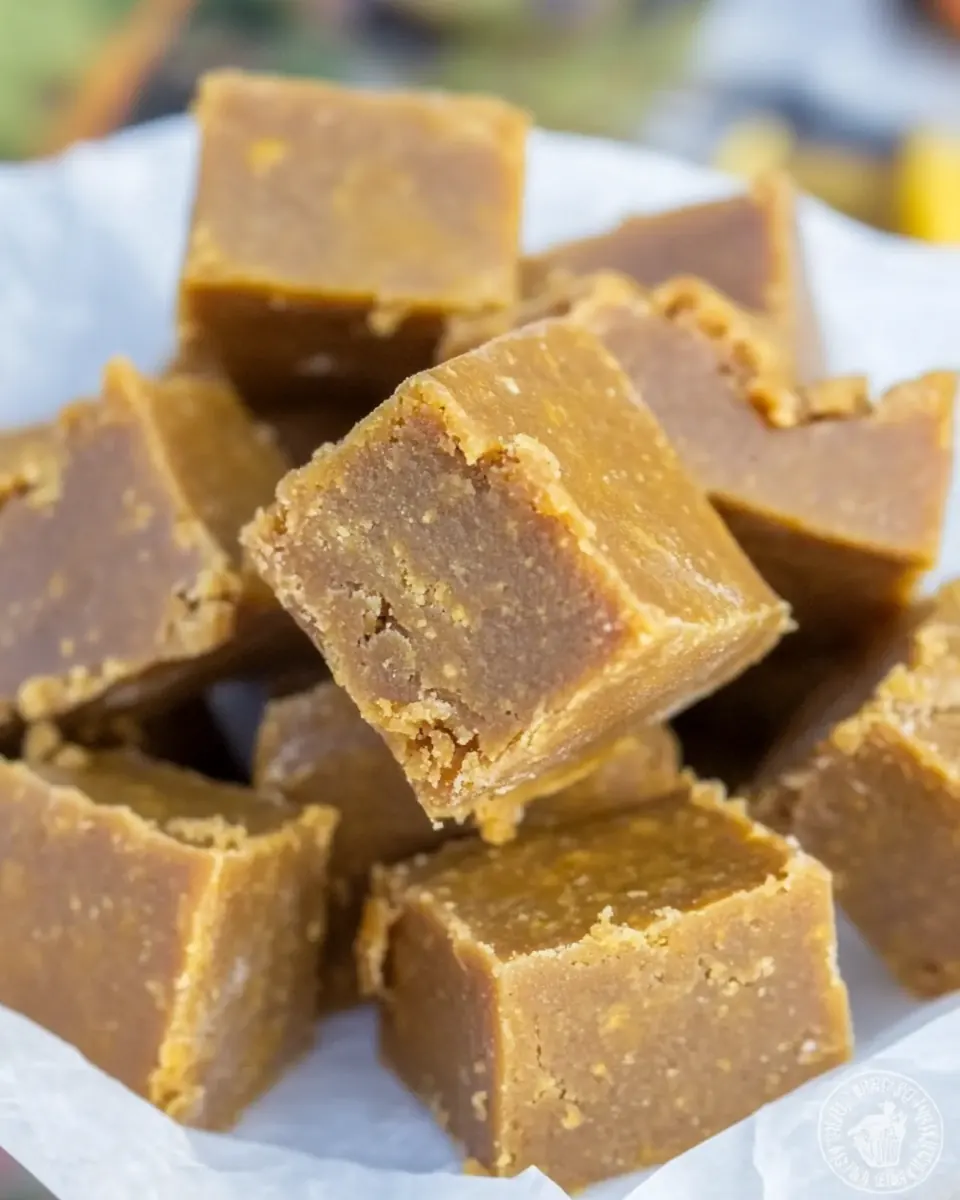
Pour pumpkin fudge into prepared baking pan. Cool for about 2 hours before cutting into 1-inch squares.: When you pour, listen to the soft plop and watch the surface settle; as it chills the aroma will mellow and the color deepen. Cooling for the suggested time gives the candy time to firm up so the edges cut cleanly. Cutting too soon will cause squashed pieces and an uneven surface, so be patient and use a sharp knife for neat squares.